


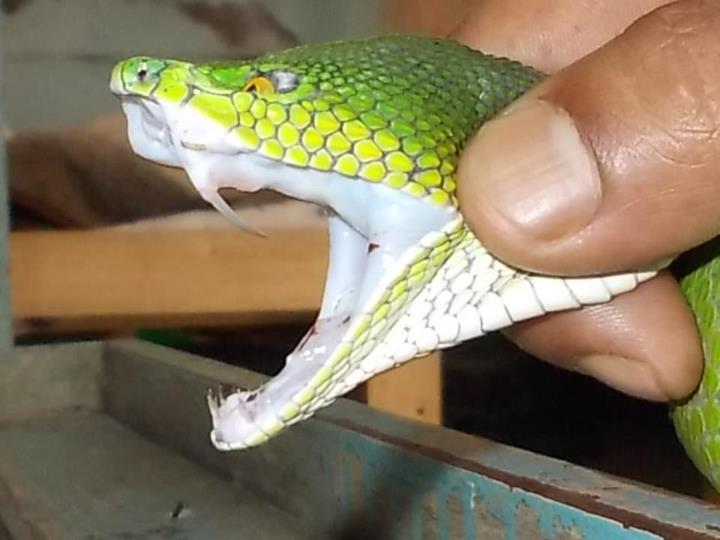
Venomous snakes, a fascinating and often misunderstood group of reptiles, possess a sophisticated biological system for producing and delivering their potent venoms. Far from being a simple sac, the venom is generated and stored in specialized glands located on either side of their head, typically situated behind the eyes and beneath the upper jaw. These glands are not unlike the salivary glands found in many other animals, having evolved over millions of years to secrete a complex cocktail of proteins and enzymes that serve primarily as a hunting tool, but also as a powerful defense mechanism.
Within these venom glands, an intricate biochemical factory operates, synthesizing the various components that make up snake venom. This complex mixture can include neurotoxins, which attack the nervous system; hemotoxins, affecting blood and tissue; cytotoxins, which cause cell damage; and various enzymes that aid in digestion. The specific composition and potency of venom vary greatly between different snake species, adapted to their particular prey and environment. The glands themselves are encapsulated in muscle, ready to play their crucial role in the venom delivery process.
The connection between the venom glands and the fangs is critical for effective venom delivery. Fangs are highly specialized, elongated teeth that act as hypodermic needles. They can be broadly categorized into two main types: fixed fangs, which are permanently erect and found in snakes like cobras and coral snakes, and hinged or solenoglyphous fangs, characteristic of vipers and rattlesnakes, which fold back against the roof of the mouth when not in use and erect when the snake strikes. Regardless of their type, these fangs are either hollow, like a needle, or deeply grooved, allowing venom to flow efficiently from the gland to the target.
When a venomous snake strikes and bites, a series of coordinated muscle contractions occurs. Muscles surrounding the venom glands contract, squeezing the venom through ducts that lead directly to the base of each fang. The unique structure of the fangs then facilitates the rapid injection of venom deep into the prey's tissue. This process is a rapid and efficient means of incapacitating prey, allowing the snake to subdue and digest its meal without prolonged struggle, which could otherwise lead to injury for the snake itself.
A common misconception is that venomous snakes always inject their full dose of venom with every bite. In reality, snakes have a degree of control over how much, if any, venom they inject. This ability allows them to conserve their valuable venom, which takes energy to produce. A "dry bite" occurs when a venomous snake bites but does not inject venom, or only a minimal amount. This might happen as a warning, or if the snake is defensively striking at something it doesn't intend to eat. However, it is impossible for a human to know if a bite is dry, and all bites from venomous species should be treated as serious.
The sophisticated venom delivery system is a testament to the incredible evolutionary adaptations of snakes. It has allowed venomous species to thrive in diverse environments across the globe, playing a crucial role in maintaining ecological balance by controlling populations of rodents and other small animals. Understanding this complex biology not only demystifies these creatures but also highlights their significance within natural ecosystems, reminding us of the intricate web of life.
Encounters with venomous snakes can be alarming, but understanding their biology can help promote respect and safe coexistence. If you encounter a snake, the most important rule is to maintain a safe distance and never attempt to handle, approach, or provoke it. If you need to identify a snake, especially after an unexpected sighting in your yard or on a trail, safely photograph it from a distance. The SerpentID app can then help you compare its markings and features against local species, providing valuable information. In the rare event of a snake bite, seek professional medical help immediately; never rely on folk remedies or attempt to capture the snake. Your safety and the snake's well-being are paramount.