


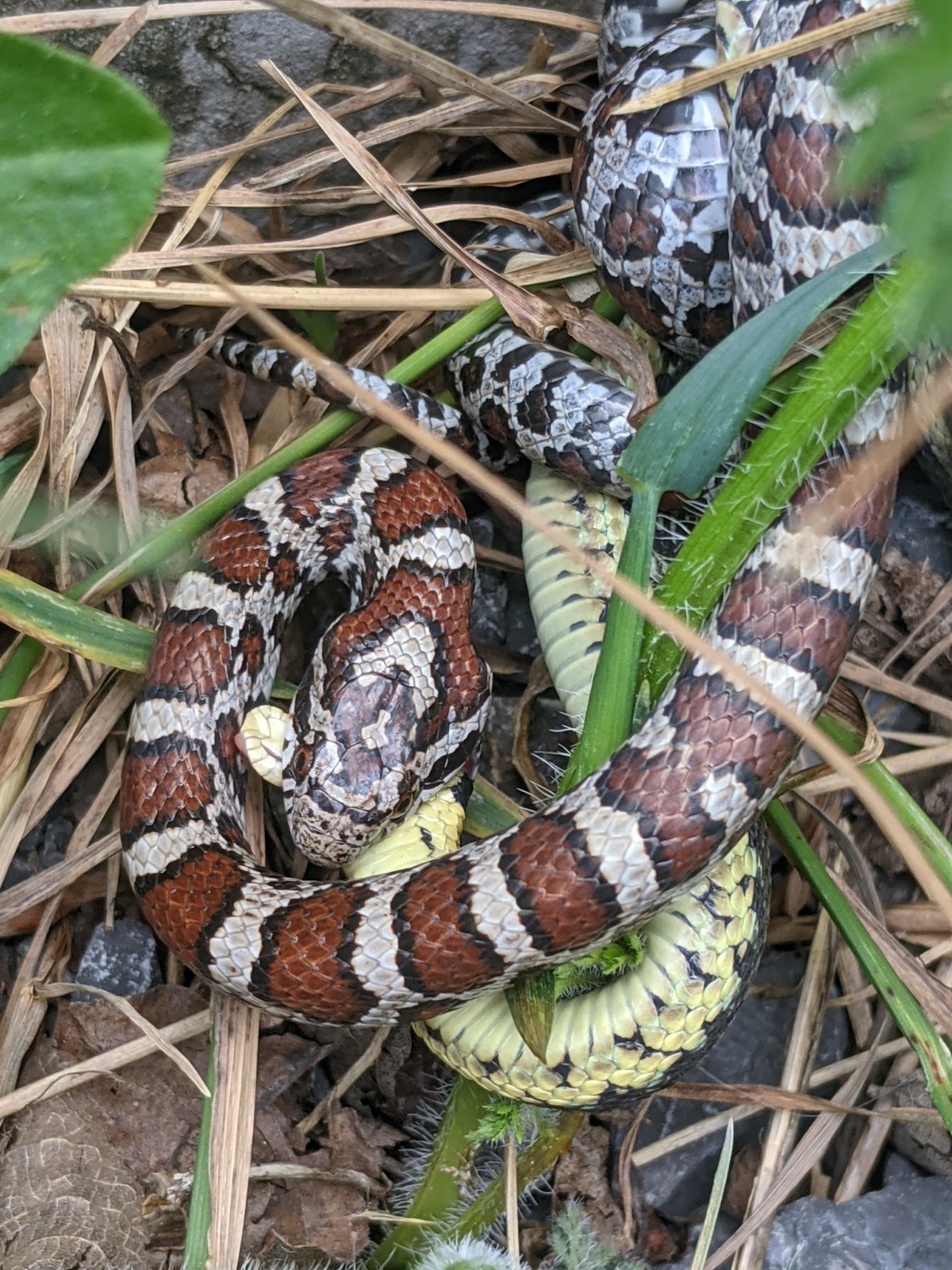
Where do snakes go in winter is a question with a precise answer that surprises most people: they do not truly hibernate, they brumate. Brumation is a cold-blooded animal's version of dormancy — metabolism slows dramatically, the snake stops eating, and it shelters in a frost-free spot, but it is not in the deep, continuous sleep of a hibernating mammal. On warm winter days a brumating snake may briefly rouse, shift position, drink, or even surface, which is why a January or February sighting is not as strange as it sounds.
The shelters snakes use for brumation are called hibernacula. A good hibernaculum stays above freezing all winter and holds stable humidity: rodent burrows, deep rock crevices, root channels, hollow stumps, old wells and cisterns, and the gaps under and inside building foundations. Because frost-free underground space is limited, many snakes return to the same site year after year, and in some regions dozens or even hundreds of snakes — sometimes of several species — share a single communal den. Garter snakes are famous for these mass aggregations in northern climates.
Temperature is the trigger. As autumn ground temperatures fall, snakes feed heavily, then move — sometimes surprisingly long distances — toward their overwintering sites. This fall migration is one of the two big activity peaks of the year and the reason snakes suddenly show up in garages, sheds, crawl spaces, and basements in September and October: they are looking for stable shelter, and a heated or insulated structure with a foundation gap is an ideal hibernaculum. Sealing those gaps before the first cold snap is the most effective way to keep overwintering snakes out of living space.
This is why the 'snake in the basement in winter' scenario happens. A snake that entered through a foundation crack in fall may spend the whole winter in a crawl space or basement wall, then become visible during a warm spell or when the furnace warms the space. It is not a sign of aggression or infestation — it is an animal that found exactly the frost-free pocket it was looking for. The fix is exclusion: find and seal the entry point, ideally in late summer, and check vent screens, sill plates, and utility penetrations.
Regional differences are large. In the southern United States, Mediterranean climates, and much of mainland Australia, winters are mild enough that snakes remain partly active year-round, and warm days routinely produce sightings. In cold-winter regions, brumation is genuine and prolonged, with snakes effectively absent from the surface for months. Elevation matters too: a mountain population may brumate while a lowland population of the same species an hour away stays active. Knowing your local pattern tells you when to relax and when to stay alert.
Spring emergence is the flip side and a key safety window. As the den warms, snakes emerge — often in numbers, often sluggish, and often basking in the open on rocks, trails, and sunlit walls to raise their body temperature. This concentrates a lot of snakes in predictable spots over a short period, which is why early spring is one of the higher-risk times for encounters. If you have a known den site near the home, the weeks around emergence are the time to be most careful with yard work and to keep pets clear of rock walls and foundation edges.
If you find a snake in a basement, crawl space, or den site over winter, identify before you act. A safe photo compared in SerpentID tells you whether you are dealing with a harmless overwintering rat snake or milk snake — best left to be removed gently or to leave on its own as it warms — or a venomous species that warrants a licensed professional. Then seal the route it used so the same frost-free pocket does not host a guest again next winter.