


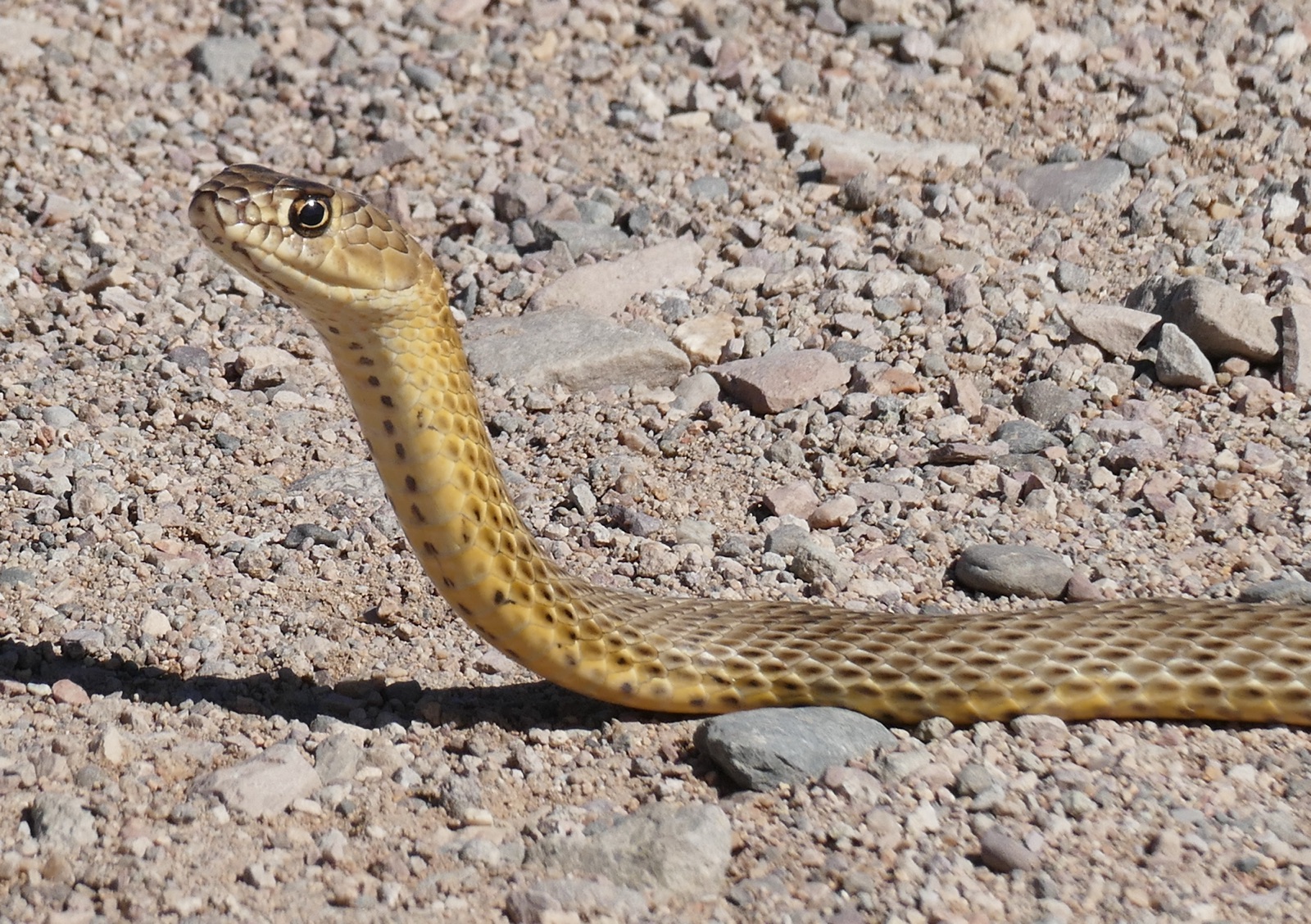
Seeing a snake while hiking is far more common than being harmed by one, and the difference between a non-event and a bite is almost entirely about what you do in the first few seconds. The single most important rule is this: the overwhelming majority of snakebites happen when someone tries to catch, move, kill, or get a closer look at the animal. A snake you simply leave alone is very unlikely to hurt you. So the first response is not to act — it is to stop.
When you spot a snake on or near the trail, freeze and locate it precisely before you take another step. People often see one snake, step back without looking, and put a foot near a second one or a rock the snake is using for cover. Once you know exactly where it is, calmly back away to put distance between you. A safe buffer is at least the snake's body length, and several feet beyond that is better; a snake can only strike a fraction of its length, so distance alone removes nearly all of the risk.
Do not try to step over the snake, scoot past it on a narrow ledge, or nudge it off the trail with a pole. Give it a clear, open route and wait — most snakes want to leave a busy trail as much as you want them gone, and a basking snake will usually move on within a few minutes once it feels unthreatened. If it is blocking a narrow path and will not move, turn around or take a wide detour through open ground where you can see your footing rather than forcing the issue.
Read the snake's behavior rather than its species in the moment. A snake stretched out and moving is traveling and not interested in you. A snake that has pulled into a tight coil, is holding its ground, is hissing, gaping to show a white mouth, or rattling is telling you it feels cornered and wants more space — the correct answer is always to back off, never to test it. You do not need to identify the species to respond safely; you respond to the distance and the warning, not the name.
Prevention on the trail is mostly about feet and hands. Stay on the path where you can see the ground, wear closed boots and consider gaiters in rattlesnake country, and never put a hand or foot where you cannot see — onto a rock ledge, over a log, into a crevice, or into leaf litter and brush. Step onto logs and rocks rather than over them so you can see the far side first. Hike with awareness at dawn and dusk in warm weather, when many snakes are most active, and keep dogs leashed, since off-leash dogs account for a large share of trail encounters that turn into bites.
If a bite does happen, treat it as a medical emergency and keep it simple. Move away from the snake, stay as calm and still as you can, remove rings and tight clothing near the bite before swelling starts, keep the bitten limb roughly at heart level, and get to a hospital as fast as safely possible. Do not cut the wound, do not try to suck out venom, do not apply a tourniquet, and do not pack it in ice — those old methods cause harm. You do not need to capture or kill the snake; a clear photo from a safe distance is all the identification a hospital needs.
That photo is where an identification app earns its place on a hike. From several feet away, SerpentID lets you confirm whether the snake you are giving space to is a harmless rat snake or racer or a venomous species worth extra caution — and if someone is ever bitten, a calm photo of the animal helps clinicians choose treatment without anyone going near it again. Identify from a distance, keep moving, and let the snake have the trail.