


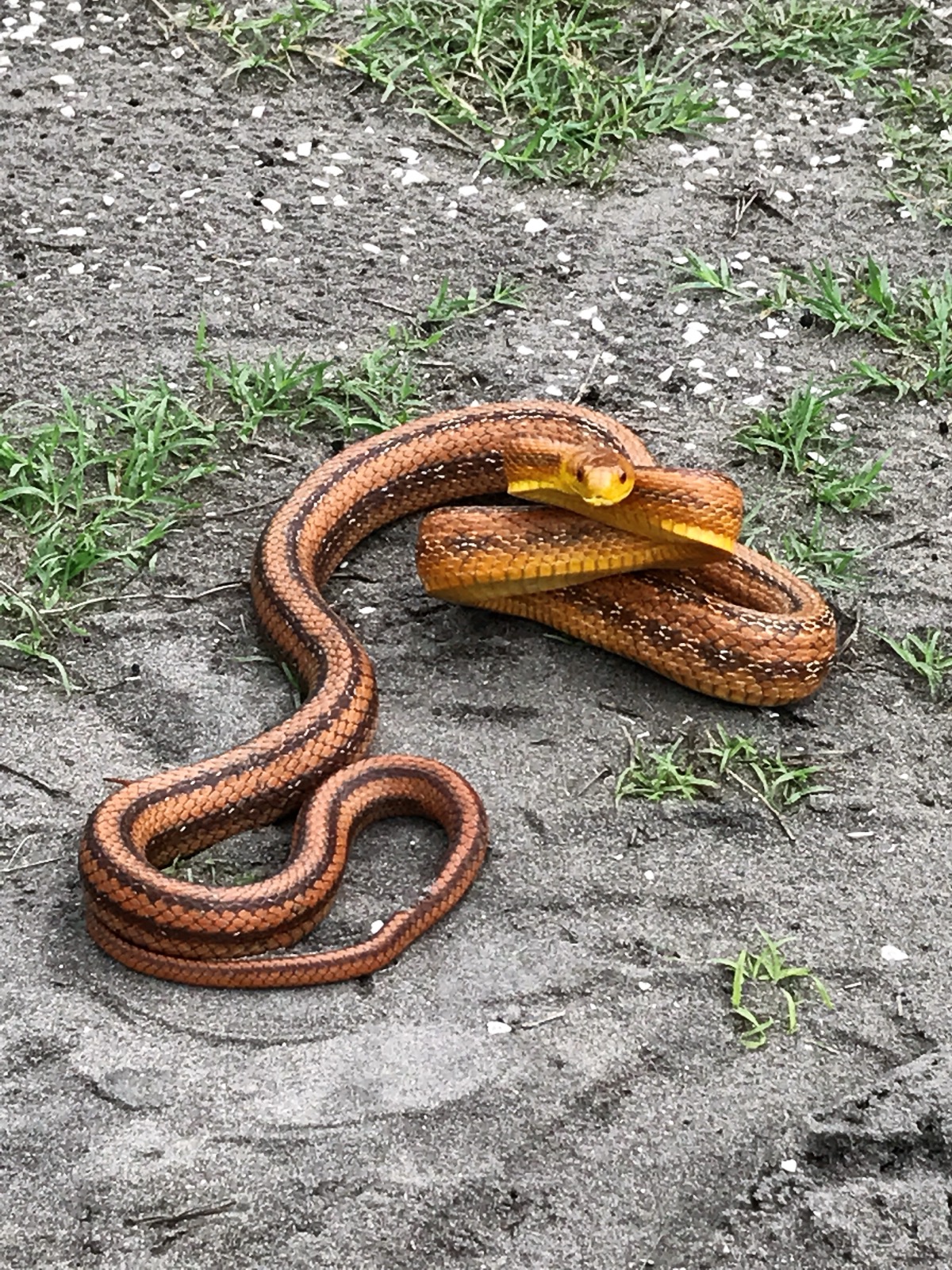
Snake eggs in yard is a search that peaks in late spring and summer when most oviparous snake species are laying. The typical scenario is a clutch discovered under mulch, in a compost pile, under a board or debris pile, or in a loose soil area that receives warmth. The first instinct is often to destroy the eggs immediately, but that response skips a useful question: which species laid them, and do they actually pose a concern once hatched?
Snake eggs are leathery and oblong, not rigid like bird eggs, and they tend to be clustered loosely in a damp, sheltered spot rather than in a constructed nest. Most eggs found in North American yards belong to non-venomous species: rat snakes, black racers, corn snakes, and king snakes are common layers. Venomous pit vipers — rattlesnakes, copperheads, cottonmouths — are live-bearing and do not lay eggs, which eliminates the most commonly feared species from the egg-finding scenario entirely. Coral snakes do lay eggs but are rare finds in most regions.
Do not pick up, rotate, or reposition the eggs. Embryos orient to gravity during development and moving the eggs disrupts that orientation, which can kill the clutch. If the clutch is in a location you need to access — under a shed, in an active garden bed — photograph the site first and then contact a local wildlife or pest professional who can assess and relocate the eggs properly if needed.
The parent snake is likely nearby or may return to the clutch site. Some species will stay in the area intermittently during incubation. If you find eggs, treat the surrounding habitat as potentially occupied and check the area carefully before reaching into adjacent debris, mulch, or boards. Use tools rather than bare hands for any work near where the clutch was found until the eggs have hatched and the area has been cleared.
If you want to know what species is using your yard, photograph the eggs and any snake you see nearby from a safe distance and run the photo through SerpentID. Knowing whether your yard hosts a rat snake or a king snake can shift the response from alarm to appreciation — both species reduce rodent activity significantly. If identification is not possible or you have concerns about young snakes hatching near high-traffic areas, consult a licensed wildlife removal service before disturbing the clutch.