


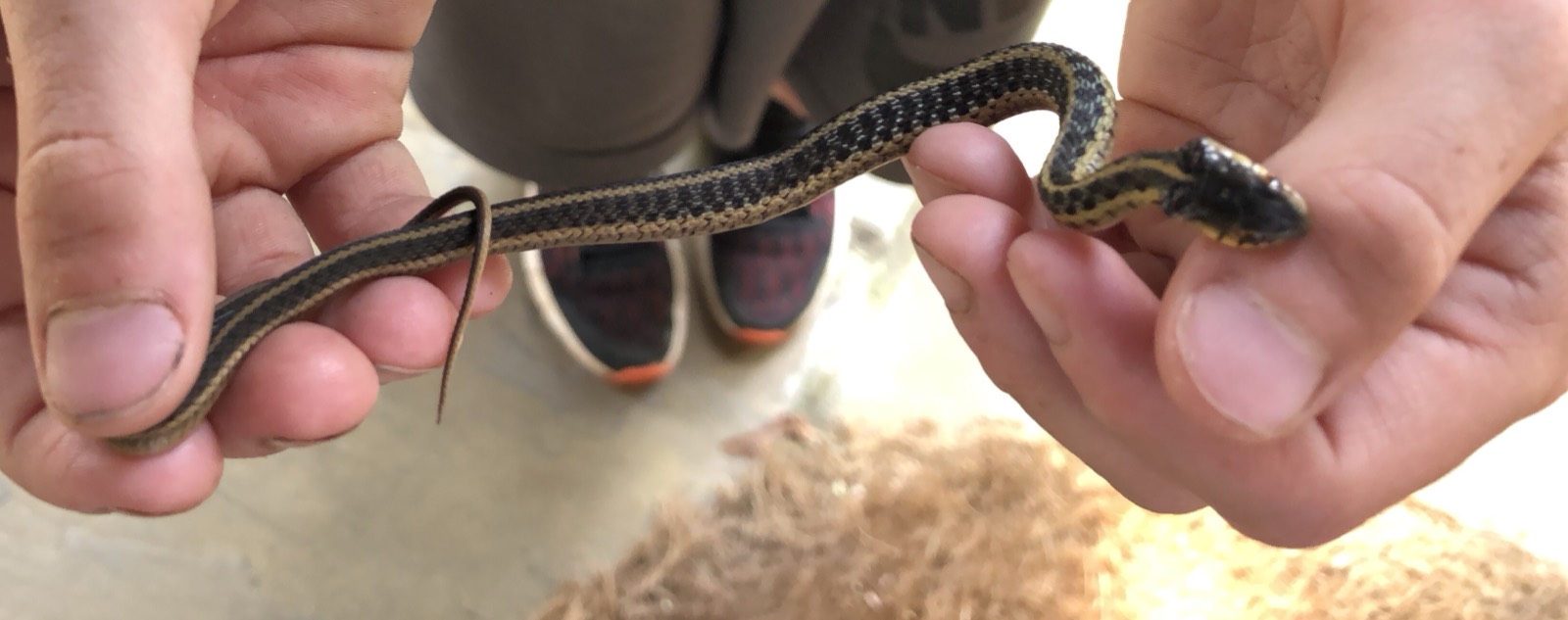
How to identify a baby snake is a question that comes up every late summer and early fall when juveniles hatch or are born and start appearing in yards and gardens. The two most common misconceptions are that small snakes are automatically harmless and that venomous baby snakes cannot control their venom. Both are wrong. Rattlesnakes, copperheads, and cottonmouths are fully capable of delivering a serious bite at any age, and juvenile venom is neither weaker nor less controlled than adult venom.
Body shape is the first thing to assess from a safe distance. Venomous pit vipers in North America — rattlesnakes, copperheads, cottonmouths — tend to have thick bodies relative to length, triangular heads that are noticeably wider than the neck, and narrow pupils visible at close range. Non-venomous juveniles like garter snakes, ribbon snakes, and ring-necked snakes are typically slender throughout with heads that blend smoothly into the body. Coral snakes are the exception among venomous species: they are slender with a rounded head and red, yellow, and black banding.
Pattern is useful but unreliable in isolation because several harmless juvenile snakes develop temporary markings that mimic venomous species. Baby black racers have blotched gray and brown patterns that look similar to copperheads at first glance. Juvenile water snakes have banded or blotched patterns that resemble cottonmouths. Hognose snakes flatten and display defensively in ways that look alarming. Focus on the combination of body proportions, head shape, and location rather than pattern alone.
Behavior can give you additional context but should not override physical assessment. A snake vibrating its tail rapidly — even a species without rattles — is a stress response that many non-venomous species use defensively. A hissing, puffing, or mock-striking hognose snake is almost certainly a hognose. A genuinely coiled and tracking snake near a body of water in the Southeast warrants more caution. Never interpret calm behavior as proof of harmlessness.
If you find a baby snake and cannot confirm the species, treat it as potentially venomous until a proper photo assessment is complete. SerpentID works well for juvenile specimens as long as you capture a clear lateral view of the body pattern and head shape from a safe distance. Do not pick the snake up to get a better photo. A slightly imperfect image from distance is always safer than a perfect close-up that puts your hand within striking range.