


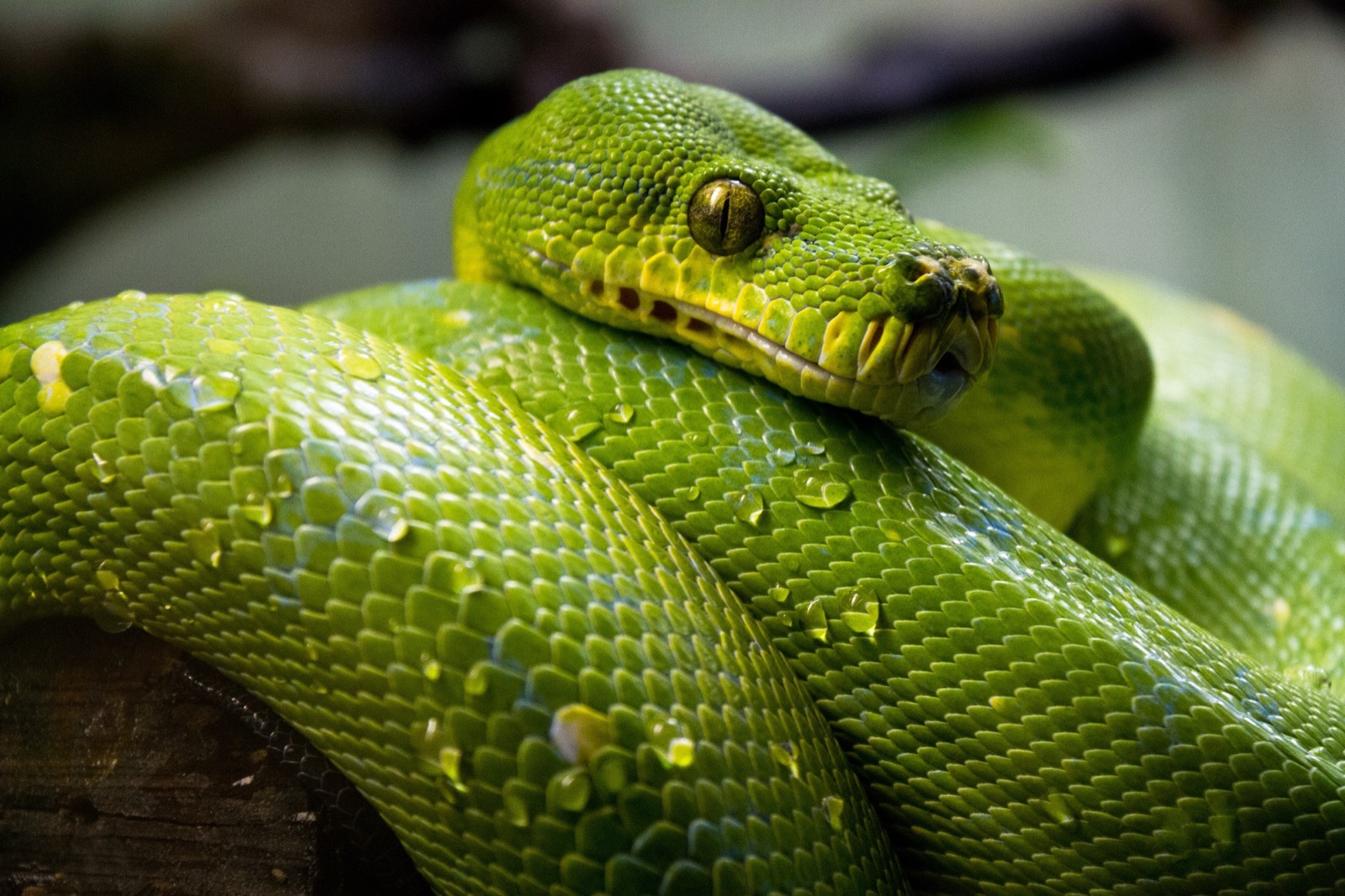
Despite their often-misunderstood reputation, snakes are incredibly strong animals, a fact that might surprise those who primarily associate them with flexibility. Their seemingly fluid movements and lack of limbs belie a formidable muscular power that is essential for every aspect of their lives. From subduing prey to navigating complex environments, a snake's strength is a finely tuned adaptation, allowing them to thrive in diverse habitats across the globe. This strength is not just about raw power, but also about the efficient and coordinated application of force.
The secret to a snake's impressive strength lies in its unique anatomy. Unlike mammals with a relatively small number of vertebrae, snakes possess hundreds of vertebrae, each connected by a complex network of muscles. These muscles run the entire length of their body, allowing for incredibly precise and powerful movements. While often perceived as 'boneless,' snakes have a robust skeletal structure, including ribs that extend along most of their body. This arrangement provides a strong framework for muscle attachment and protection for internal organs, enabling the powerful forces they can exert without compromising their flexibility.
Perhaps the most iconic display of snake strength is constriction. Constrictor snakes, such as pythons, boas, and some rat snakes, use their powerful bodies to wrap around prey. Contrary to popular myth, they do not crush bones or suffocate their victims by preventing breathing. Instead, they apply pressure that rapidly cuts off blood flow to the brain and other vital organs, leading to unconsciousness and eventual death. The force exerted can be immense, with large constrictors capable of applying pressure equivalent to a small car, allowing them to overcome prey much larger and heavier than themselves.
Beyond constriction, snakes exhibit remarkable strength in their locomotion and climbing abilities. Arboreal (tree-dwelling) snakes, like the green tree python or vine snake, demonstrate incredible grip and muscle control to navigate branches, often hanging precariously with only a few coils. Terrestrial snakes use their muscles to push off surfaces, propelling themselves forward with surprising speed and agility, even over challenging terrain. The coordination of hundreds of muscle segments allows them to exert continuous force, enabling them to climb vertical surfaces, cross wide gaps, or burrow through soil.
Even seemingly 'small' or 'harmless' snakes possess significant strength relative to their size. A garter snake, for instance, can powerfully grip small prey like earthworms or amphibians. This inherent strength is also a vital defensive mechanism. When threatened, a snake can exert considerable force to resist being moved or captured, making it difficult for predators or humans to handle them. Their muscular bodies allow for quick, explosive strikes and rapid retreats, further underscoring the functional power packed into their elongated forms.
Understanding the true strength of snakes helps us appreciate these fascinating creatures while also promoting safe interactions. Whether it's the crushing power of a constrictor or the climbing prowess of an arboreal species, a snake's body is a testament to efficient biological engineering. This power is a tool for survival, not aggression, and is primarily used for hunting and defense. Respecting their capabilities means maintaining a safe distance and never attempting to handle a snake in the wild.
If you encounter a snake and are unsure of its species or potential danger, the best course of action is always to observe from a safe distance. Snap a clear photo if possible, and use the SerpentID app to identify the snake without getting too close. If you suspect it is venomous or if it's in an unwelcome location, contact your local wildlife services or a professional snake handler for assistance. Never attempt to approach, corner, or kill a snake, as this is when bites are most likely to occur.