


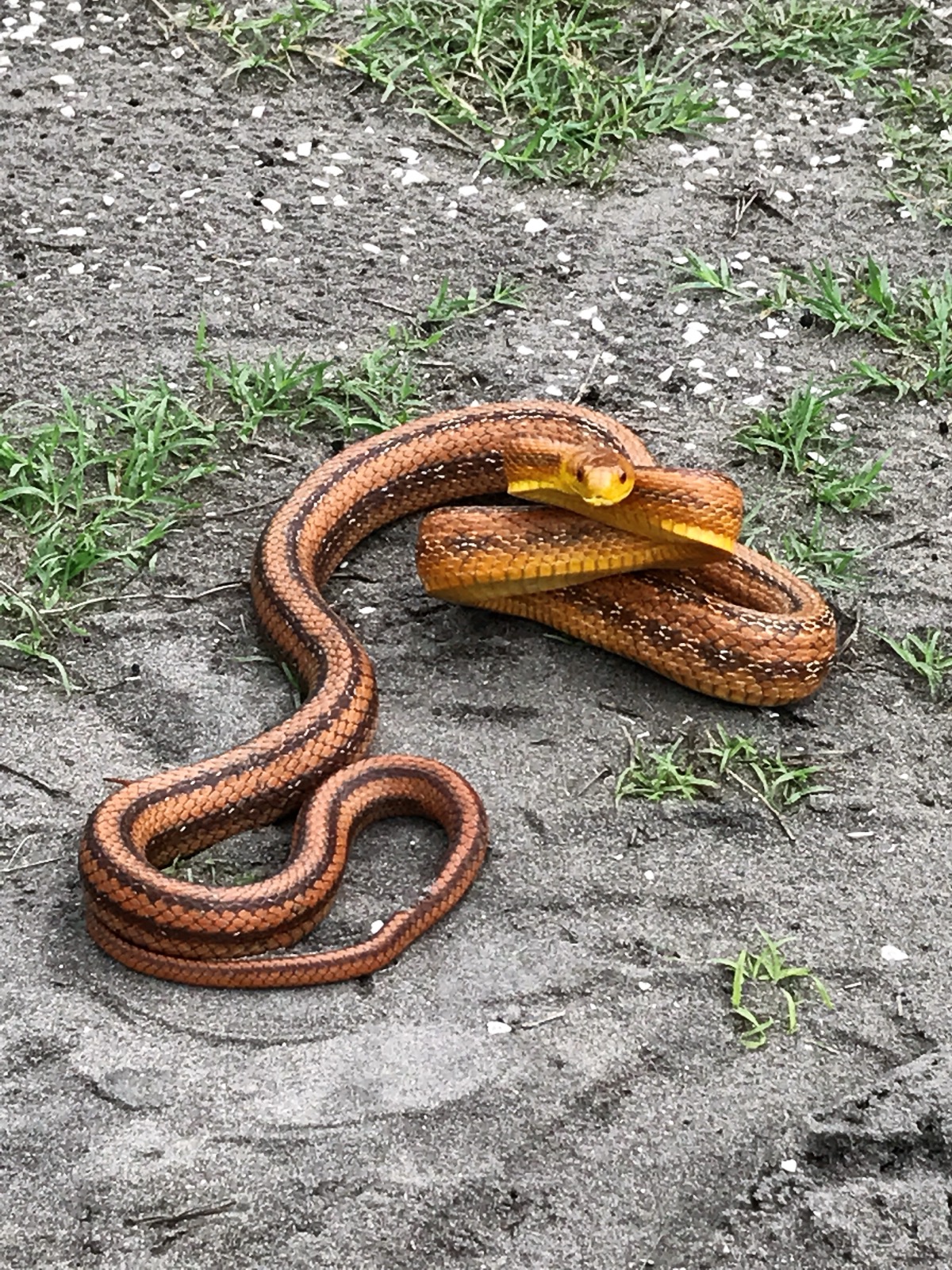
When people first encounter a snake, its fluid, seemingly boneless movement can be quite startling, often leading to the misconception that these reptiles lack a substantial skeleton. However, nothing could be further from the truth. Snakes possess an incredibly complex and bone-rich internal structure, a marvel of evolutionary engineering that underpins their extraordinary flexibility and diverse modes of locomotion. Far from being boneless, a snake's body is primarily a long, intricate chain of highly specialized bones, each playing a crucial role in its survival and movement.
The most striking feature of a snake's skeleton is its vertebral column, or spine. While humans have around 33 vertebrae, a snake can have anywhere from 200 to over 400 vertebrae, sometimes even more in exceptionally long species. Each of these vertebrae is relatively short and connected to the next by flexible joints, allowing for a vast range of motion in multiple directions. This extensive chain of individual bony segments provides the snake with the incredible ability to bend, coil, and stretch its body into countless configurations, essential for navigating complex environments, ambushing prey, and escaping predators.
Complementing this elongated spine is an equally impressive array of ribs. Unlike most mammals where ribs primarily enclose and protect the vital organs within a rigid rib cage, a snake's ribs are far more numerous and remarkably mobile. Almost every vertebra from the neck down to the vent (the cloacal opening) is equipped with a pair of ribs, often hundreds in total. These ribs are not fused at the belly, allowing them to expand and contract with breathing and digestion, but more importantly, they are crucial for movement. Muscles attached to these ribs allow them to act like miniature legs, lifting and pushing against surfaces to propel the snake forward.
This unique skeletal design is the secret behind a snake's diverse methods of locomotion. Whether it's the undulating S-shape of serpentine movement, the straight-line crawl of rectilinear motion, the sidewinding across loose sand, or the accordion-like concertina climbing, each movement relies on the precise coordination of hundreds of vertebrae and ribs. The sheer number of pivot points along the spine, combined with the flexible attachment of the ribs, allows for an unparalleled degree of control and adaptability, enabling snakes to thrive in habitats ranging from dense forests to arid deserts and aquatic environments.
It is also important to note what snakes generally lack in their skeletal structure: limb bones. While some primitive snakes like boas and pythons retain tiny, vestigial pelvic spurs – remnants of hind limbs from their evolutionary ancestors – the vast majority of snake species are completely limbless. This absence of appendages has driven the extreme specialization of their axial skeleton, meaning their spine and ribs, becoming the primary apparatus for all forms of interaction with their environment, from hunting and traveling to defense.
Understanding the intricate skeletal system of snakes helps to dispel common myths and deepen our appreciation for these fascinating creatures. They are not 'boneless' or 'slimy' as folklore sometimes suggests; rather, they are highly refined biological machines, each bone contributing to their remarkable prowess. This incredible flexibility and adaptability, stemming directly from their unique bone count and arrangement, is a testament to the power of natural selection in shaping life on Earth.
Encountering a snake in the wild, whether in your garden or on a hiking trail, can be a moment of awe. If you see a snake, remember to always observe it from a safe distance. Its unique movements and patterns can provide clues to its identity. If you need assistance identifying a snake, especially to determine if it's a venomous species, take a clear photo from a safe distance and use the SerpentID app. If you suspect a snake is venomous or injured, contact your local wildlife services for expert assistance, ensuring both your safety and the snake's well-being.