


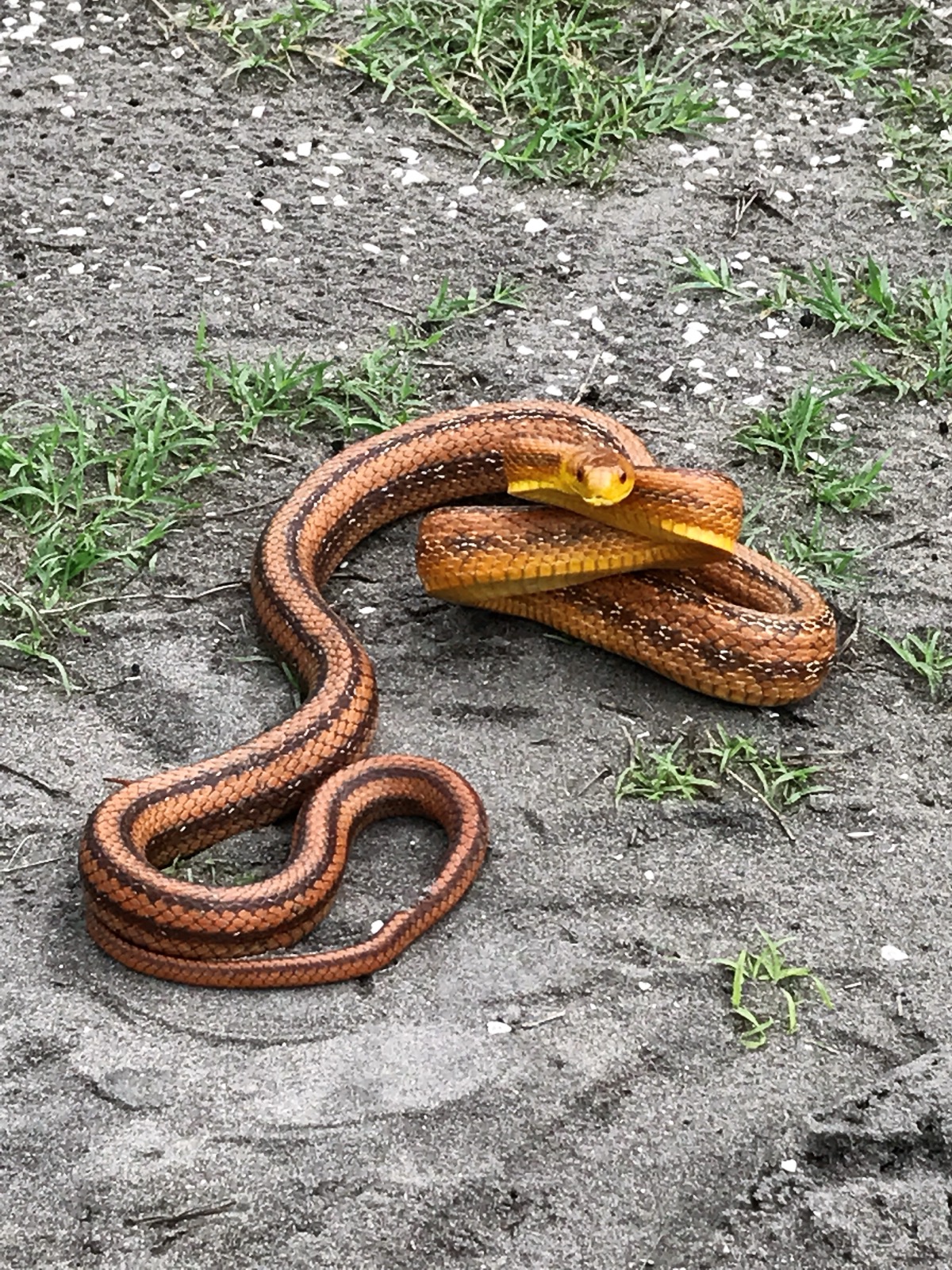
While snakes famously lack external ear openings, this absence does not mean they are deaf to their surroundings. Instead, snakes have evolved a remarkable ability to perceive their environment through vibrations, particularly those traveling through the ground. This specialized form of sensory input allows them to detect movements from a considerable distance, providing vital information for hunting and avoiding danger. Unlike airborne sounds that reach our eardrums, snakes are primarily tuned into the subtle tremors and oscillations of the earth beneath them, processing these signals in a unique and highly effective way.
The primary mechanism for sensing ground vibrations involves the snake's jawbone. When a snake rests its head on the ground, its lower jawbone, specifically the quadrate bone, acts as a receiver. This bone is not rigidly attached to the skull as it is in many other animals, but instead has a flexible connection. Vibrations traveling through the ground are picked up by the jaw and transmitted directly to the inner ear, bypassing the need for an external eardrum. This direct pathway allows for an incredibly efficient transfer of vibrational energy, providing the snake with a clear picture of what's moving in its vicinity.
Beyond the jawbone, a snake's entire body plays a significant role in sensing vibrations. The hundreds of scales that cover a snake's ventral (belly) surface, along with its ribs, are in constant contact with the ground. These scales and the underlying musculature are highly sensitive to even the slightest tremors. As vibrations ripple through the substrate, they are picked up by these numerous contact points across the snake's body. These signals then travel through the snake's skeletal structure, up the spine, and ultimately to the inner ear, effectively turning the snake's whole body into a massive, distributed sensor.
This acute sense of ground vibrations is indispensable for a snake's survival. For predatory snakes, it means they can detect the footsteps of small mammals, the rustling of insects, or the subtle movements of birds long before they come into visual range. This allows them to ambush prey effectively, striking with precision. Similarly, for defensive purposes, the ability to feel the approach of a large predator or a human enables the snake to take evasive action, hide, or prepare a defensive posture. It's a critical early warning system that compensates for their limited ability to hear higher-frequency airborne sounds.
It is important to differentiate between sensing ground vibrations and hearing airborne sounds. While snakes can detect some very low-frequency airborne sounds, their primary auditory perception relies on these ground-borne vibrations. This is why a snake might not react to a loud shout from a distance, but will certainly respond to the heavy thud of footsteps or the vibration caused by machinery. The vibrations they detect are not just about volume; they carry information about the direction, intensity, and even the size of the source, allowing the snake to make informed decisions about its next move.
The effectiveness of a snake's vibrational sense varies depending on the substrate. Loose sand or soft soil might dampen vibrations, while solid rock or compacted earth can transmit them over greater distances. This adaptation highlights the snake's close connection to its environment, constantly interpreting the subtle language of the earth. It is a testament to their evolutionary success, allowing them to thrive in diverse habitats where this unique form of 'hearing' gives them a distinct advantage.
Understanding how snakes perceive vibrations underscores the importance of maintaining a respectful distance when encountering one. A snake will almost always detect your presence long before you see it, and its reaction will be based on whether it perceives you as a threat. If you encounter a snake, resist the urge to approach it. Instead, take a clear photograph from a safe distance, allowing the SerpentID app to help you identify the species. If it's a venomous snake, contact local wildlife services for assistance, ensuring both your safety and the snake's well-being.