


Do snakes lay eggs or give birth? The honest answer is both, depending on the species. Roughly 70 percent of snakes are oviparous — they lay eggs — while the remaining 30 percent are viviparous or ovoviviparous, meaning the young develop inside the mother and are born live. There is no single rule that covers all snakes, which is exactly why finding eggs versus finding tiny live snakes in your yard tells you about different species and different situations.
The egg-layers include most of the familiar non-venomous species people encounter around homes: rat snakes, corn snakes, kingsnakes, and racers, along with pythons and most cobras worldwide. Their eggs are not hard and brittle like a bird's — they are soft, leathery, and slightly oblong, and the female deposits them in a warm, humid, hidden spot such as a compost pile, a rotting log, loose mulch, or the cavity under a shed. In most species the mother leaves once the clutch is laid; pythons are a notable exception, coiling around the eggs and even shivering to warm them until they hatch.
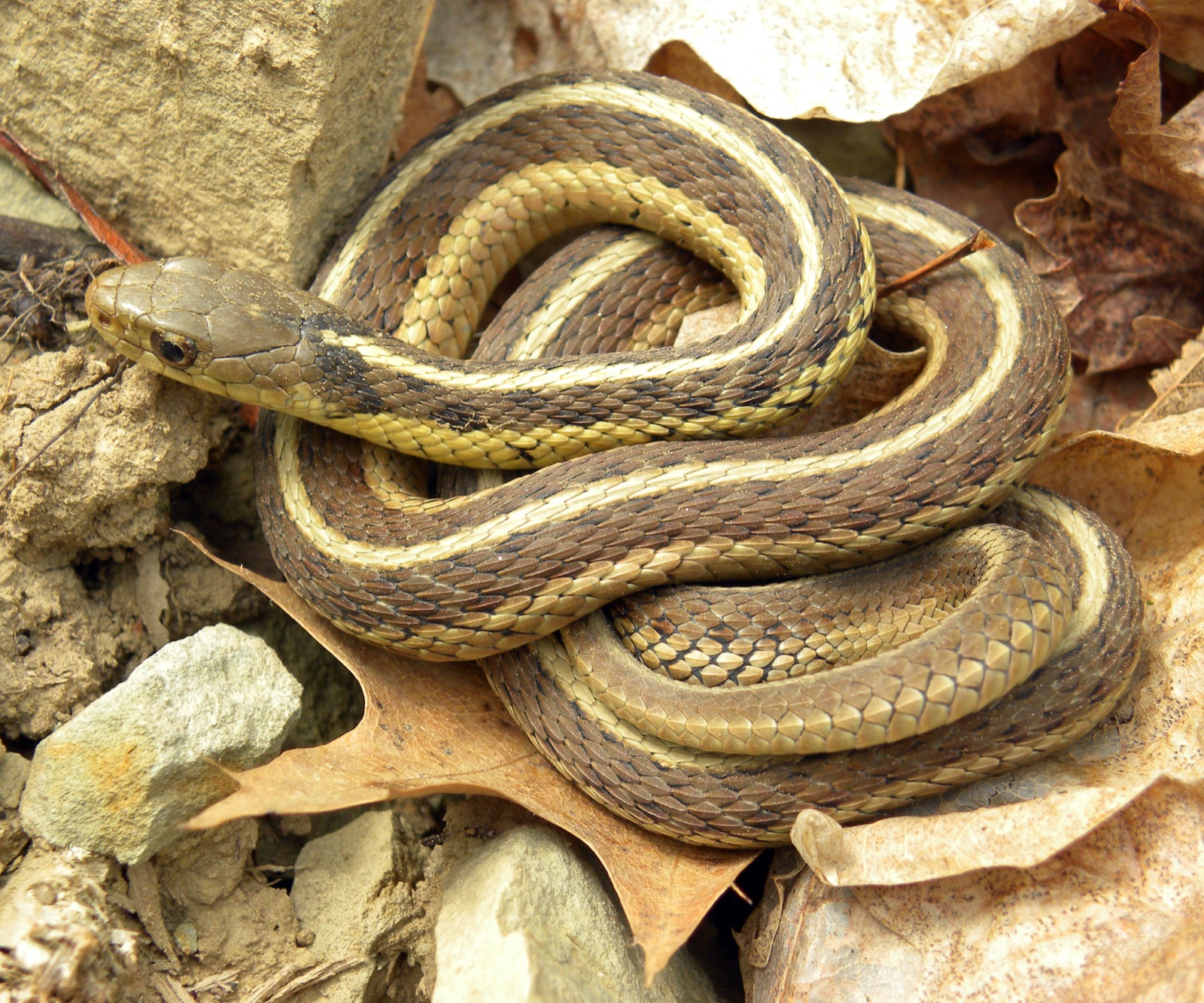
The live-bearers are a different and important group. Most North American vipers — rattlesnakes, copperheads, and cottonmouths — give birth to live young rather than laying eggs, and so do garter snakes, water snakes, and boas. The young are born in late summer to early fall, fully formed and immediately independent, often in or near the same sheltered, rocky, or brushy areas the adults use. The garter snakes pictured are a classic live-bearing example, producing litters that can range from a handful to dozens of neonates.
Why does the distinction matter outdoors? Because what you find changes what you can conclude. A cluster of leathery eggs in your mulch or compost means an egg-laying species used the spot — frequently a harmless rat snake or kingsnake taking advantage of the warmth — and the adult is usually long gone. A scatter of very small, pencil-thin live snakes in late summer points to a live-bearing species that recently gave birth nearby. In neither case does the mother typically stay to guard the young, so the presence of eggs or neonates is not evidence that a defensive adult is lurking right beside them.
It also helps to correct two common myths. First, finding snake eggs does not mean you have a permanent infestation; it means the conditions — warmth, moisture, cover, and a nearby food supply — were attractive for nesting, and changing those conditions is what reduces future use. Second, baby snakes are not more dangerous than adults; the old claim that neonates cannot control their venom is not supported by evidence. They are simply smaller, and like any snake they deserve distance rather than handling.
If you discover eggs or hatchlings and want to respond well, the move is the same as with any snake situation: do not handle them, do not try to destroy a clutch by hand, and clean up the attractants — accessible rodent food, dense ground cover, standing water, and undisturbed clutter — that made the area appealing. Eggs that are clearly abandoned in a spot you need to use can be relocated with a shovel rather than bare hands, but if you are unsure whether they are snake eggs at all, leave them and consult a local wildlife professional.
Telling an egg-layer from a live-bearer ultimately comes down to identifying the snake, not the eggs. If you can photograph the adult — or a hatchling — from a safe distance, SerpentID lets you compare it against common local species and tells you whether you are looking at a harmless egg-laying rat snake or a live-bearing viper that warrants more caution. Identify first, then decide how careful to be.