


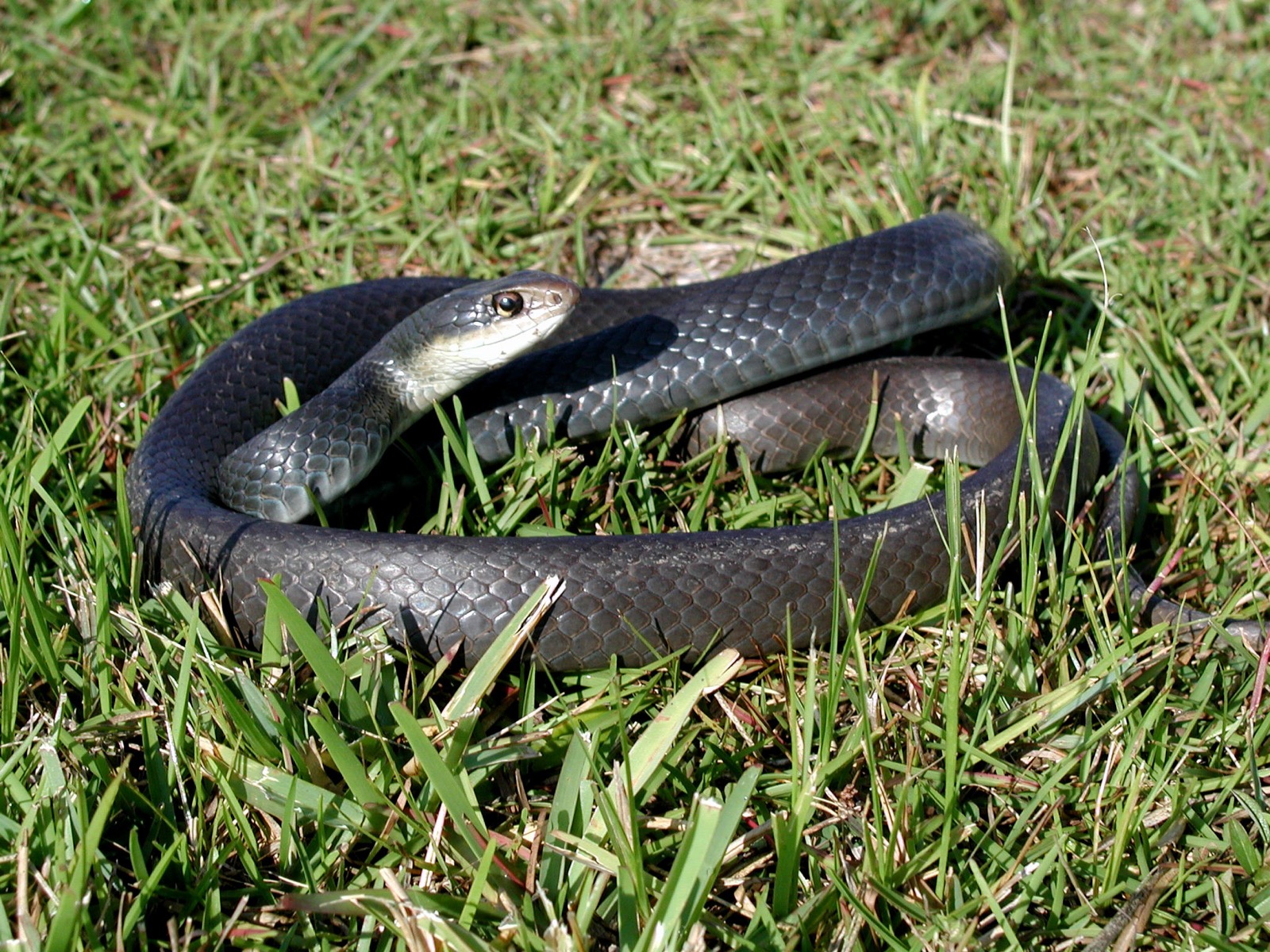
Do snakes chase people is one of the most persistent fears about snakes, and for almost every species the answer is no. Snakes are small, vulnerable animals with no interest in pursuing something hundreds of times their size. They cannot eat a human, they gain nothing from a confrontation, and a chase would burn energy and expose them to exactly the kind of large predator they spend their lives avoiding. What gets reported as a chase nearly always has a simpler explanation.
The most common one is escape geometry. A startled snake bolts for the nearest cover — a burrow, a rock pile, dense brush, or water. If a person is standing between the snake and that cover, or moving toward it, the snake's straight-line dash for safety looks exactly like a charge. From the snake's perspective it is fleeing; from the human's perspective it appears to be coming straight at them. Stepping to the side almost always reveals that the snake was never interested in the person at all.
A few species have reputations that feed the myth. Black racers and coachwhips are fast, alert, and curious; they sometimes raise the head, approach to investigate, or move quickly in the open, which startled hikers interpret as aggression. The North American cottonmouth is often accused of chasing, but studies that deliberately approached and even stepped near wild cottonmouths found they overwhelmingly chose to flee, freeze, or display defensively rather than advance. The famous open-mouth 'gaping' is a warning to be left alone, not a prelude to pursuit.
Defensive displays get mistaken for offense constantly. A cornered snake may coil, flatten its body, hiss, vibrate its tail, strike toward a threat, or rear up — all of which are designed to make a predator back off so the snake does not have to fight. A short lunge or strike from a defensive coil is not a chase; it is a bluff or a last-resort jab with a hard limit on range. Give the snake room and the display ends.
Breeding season and territorial behavior can add edge cases. Some male snakes are more active and bold during mating periods, and a few species guard nests, but even then the behavior is localized and brief, not a sustained pursuit across a field. If a snake seems unusually persistent, the realistic explanation is that you are repeatedly ending up between it and its escape route or shelter — not that it has decided to hunt you.
The practical response is the same regardless of species: stop moving toward the snake, identify which way it wants to go, and back away to give it a clear escape path. Most encounters resolve in seconds once the snake has an open route to cover. Do not try to kill or corner it — the majority of bites happen when people attempt to handle, capture, or attack a snake, precisely the situations that turn a fleeing animal into a defensive one.
If a snake's behavior genuinely unsettles you, the useful move is to identify it rather than run a story in your head. SerpentID lets you compare a photo taken from a safe distance against common local species, so you learn whether the 'aggressive' snake on your trail is a harmless racer doing what racers do or a venomous species that warrants a wide berth. Understanding the behavior turns most 'it chased me' encounters into what they actually were — a frightened animal running for cover.