


Do snake repellents work is one of the most-searched snake questions, and the honest answer is: mostly no, or not reliably. The repellent industry is large and the marketing is confident, but independent testing has repeatedly found that the popular products do little to change where snakes go. Understanding why helps you spend your money and effort on the measures that actually reduce snake encounters.
Granular and powder repellents — usually based on sulfur, naphthalene, cinnamon, clove oil, or cedar — are the most common commercial products. Controlled studies have generally found weak or inconsistent effects. Snakes navigate primarily by following scent trails and prey, and a sprinkled perimeter does not form a barrier they cannot or will not cross, especially when food or shelter lies on the other side. Rain, watering, and time degrade these products quickly, so even any marginal effect fades within days.
Ultrasonic and vibrating stakes are heavily marketed and widely sold, but snakes have no external ears and are largely insensitive to airborne sound. They detect ground vibration through their jawbones, but the steady, predictable hum of a stake does not reliably drive them away — and snakes habituate fast to constant stimuli. Multiple consumer tests have found these devices make no measurable difference to snake presence. They are among the clearest examples of money spent for reassurance rather than results.
Mothballs are the classic home remedy and one of the worst choices. The active ingredient (naphthalene or paradichlorobenzene) is a registered pesticide with specific legal uses, and scattering it in a yard is both ineffective against snakes and an environmental and health hazard — it is toxic to children, pets, and beneficial wildlife, and contaminates soil and groundwater. Using mothballs outdoors is illegal in many places precisely because it is misuse of a pesticide. Skip them entirely.
Home remedies like cinnamon oil, clove oil, vinegar, garlic, and lime get passed around endlessly. A few essential oils show mild short-range avoidance in lab conditions, but that does not translate into a practical yard barrier, and the effect disappears as the oil evaporates. At best these are temporary, spot-level deterrents; at worst they give a false sense of protection that delays the real fixes.
What actually works is habitat modification: remove the rodents that feed snakes, clear the woodpiles, brush, tall grass, and clutter that shelter them, fix standing water, and seal the foundation gaps and rodent runs that let both rodents and snakes in. These steps address the reasons snakes come, so they reduce snake presence durably instead of for a few days. Physical exclusion — a properly built snake-proof fence with fine mesh buried at the base and angled outward — is the only barrier method with consistent evidence behind it, and it is most practical around small, high-value areas like a chicken run, a play yard, or a patio rather than an entire property.
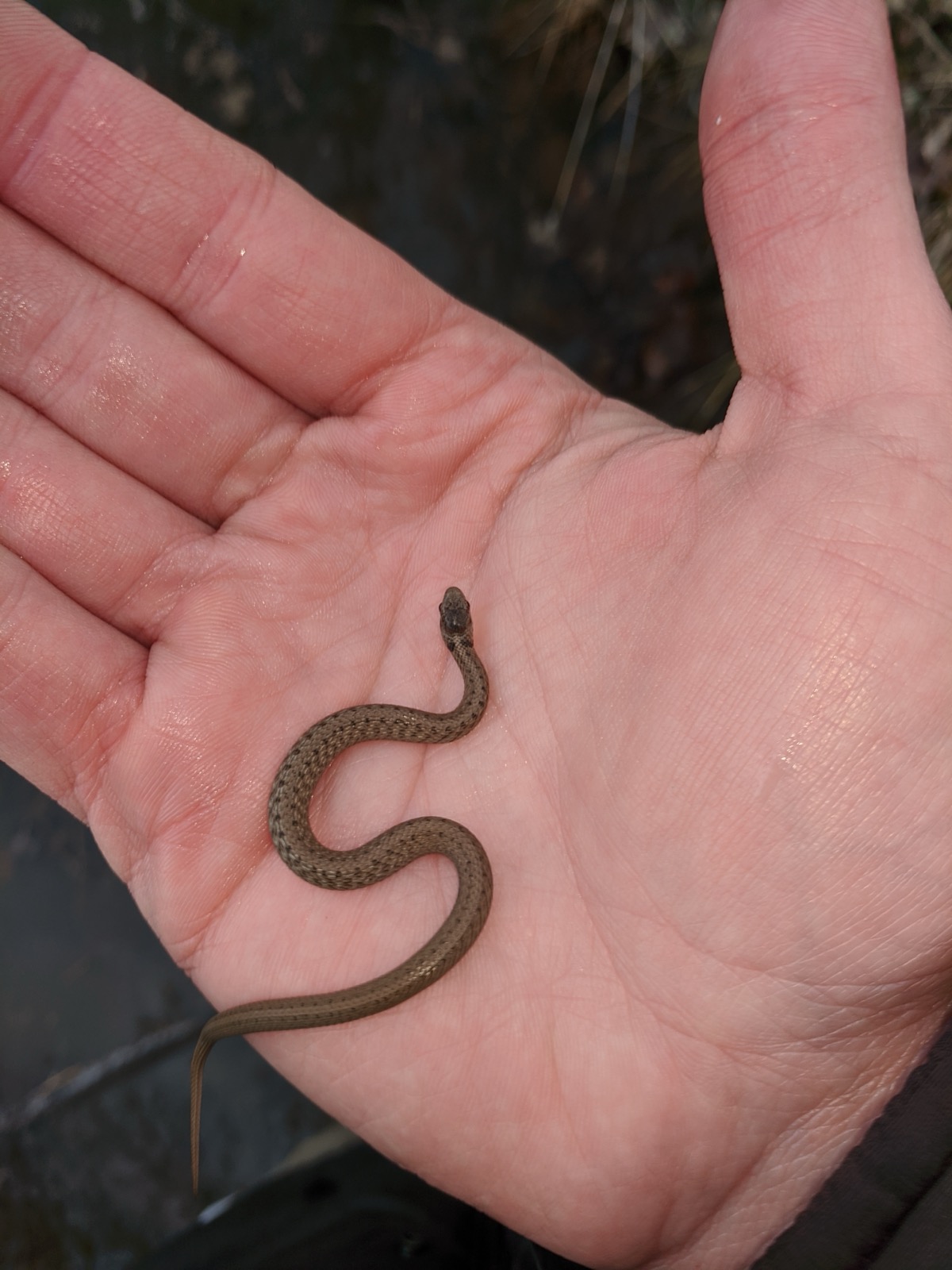
If your real concern is a specific snake you keep seeing, identification changes the response. A harmless rodent-eating species is doing free pest control and is usually best left alone; a venomous species near a high-traffic area is worth a call to a licensed wildlife professional. SerpentID lets you photograph the snake from a safe distance and compare it against common local species so you can make that call on facts instead of on a repellent label's promises. Spend on exclusion and habitat control, identify what you actually have, and treat the repellent aisle as the marketing it mostly is.