


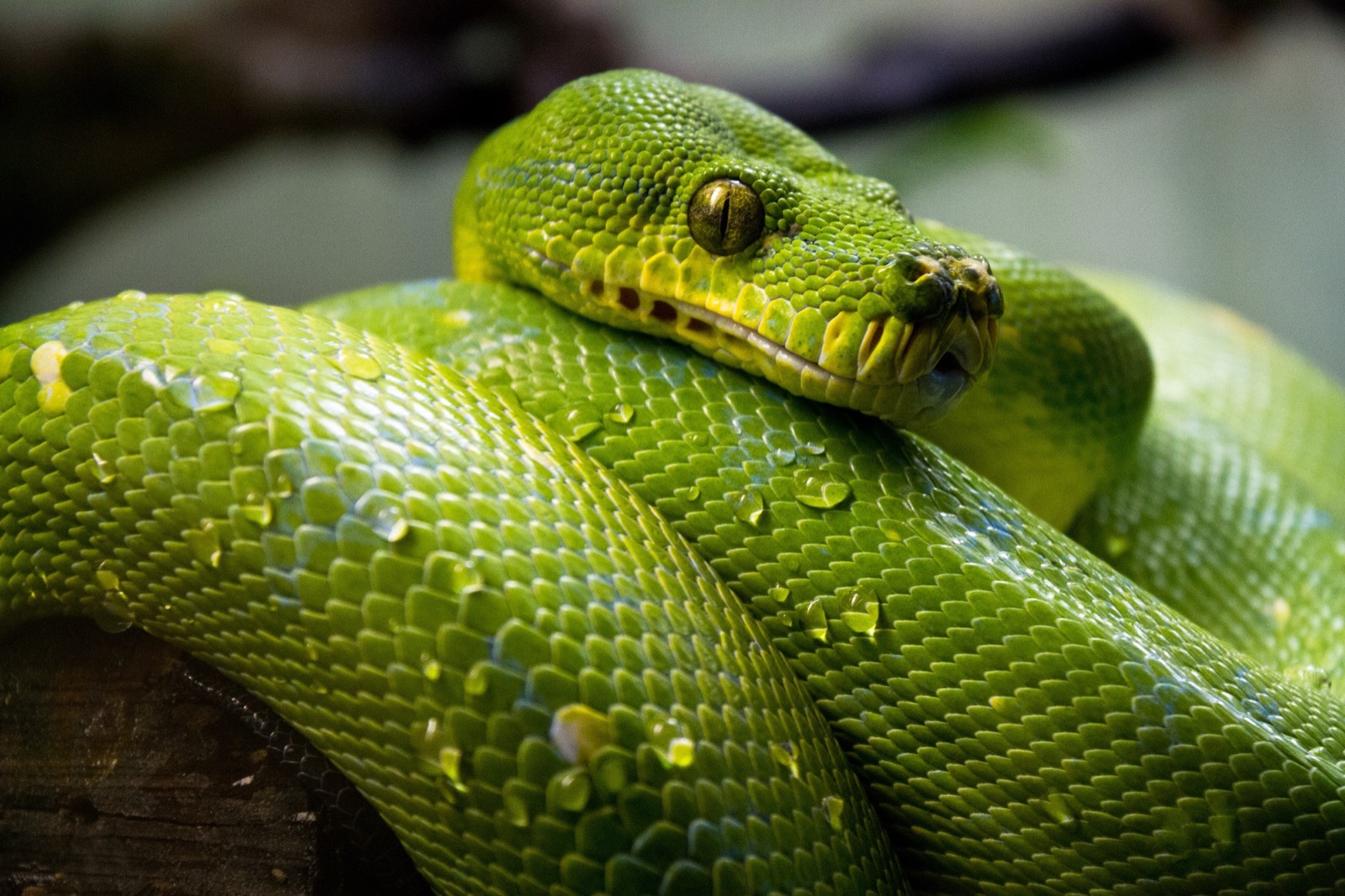
Snakes are incredibly agile creatures, known for their ability to navigate diverse terrains, from dense undergrowth to tree branches. Their legless locomotion allows them to glide, undulate, and even climb with surprising grace. However, the idea that snakes can climb any surface, particularly perfectly smooth, vertical ones like glass or polished walls, is a common misconception. While their climbing prowess is undeniable on textured surfaces, truly slick planes present a significant challenge to even the most adept serpent.
The secret to a snake's climbing ability lies primarily in its unique musculature and the structure of its belly scales. These broad, overlapping scales, known as ventral scales, provide grip by catching on minute irregularities in a surface. As the snake moves, powerful muscles contract, lifting and pulling the ventral scales forward, then pressing them down to create friction and push the body along. This combination of scale texture, muscle action, and the ability to distribute weight across many points allows snakes to ascend rough bark, brick, and even some textured painted walls.
However, this mechanism relies entirely on the presence of sufficient friction and something for the ventral scales to "hook" into. Perfectly smooth surfaces, such as clean glass, polished metal, or slick plastic, offer virtually no purchase. Unlike geckos, which possess specialized adhesive lamellae on their feet, or insects with microscopic hairs, snakes lack any biological mechanism for creating suction or sticking to a truly frictionless vertical plane. Without these tiny points of contact, their scales simply slide, making vertical ascent impossible.
Despite this, there are scenarios where it might seem a snake has climbed a smooth surface. A windowpane covered in dust, pollen, or grime might offer enough micro-texture for a small snake to gain a temporary, precarious grip. Similarly, a snake might exploit a narrow corner or a seam between two smooth surfaces, wedging its body to create enough pressure to push upwards. What sometimes appears to be climbing a smooth surface might also be a snake leveraging a nearby rough surface, such as a curtain, a plant, or a piece of furniture, to reach a higher point.
This distinction is important for homeowners. While a snake might easily scale a brick wall, a stucco exterior, or a fence to reach an open window, it is highly unlikely to climb a perfectly clean, vertical glass pane from the outside. Inside a home, a snake that finds itself in a clean bathtub or sink, with their slick, curved surfaces, often becomes trapped because it cannot gain purchase to climb out, not because it can't climb anything. These smooth, enclosed spaces effectively become barriers.
Understanding these limitations can help manage expectations and reduce fear. If you find a snake indoors, especially in a smooth-sided container or area, it's probably not because it scaled a sheer, slick wall to get there. More likely, it entered through a different access point – a gap under a door, an unsealed pipe entry, or a foundation crack – and then found itself in a situation where its natural climbing abilities were thwarted by the lack of friction.
While snakes' climbing abilities are impressive, their limitations on smooth surfaces offer a measure of reassurance in certain household situations. If you encounter a snake, whether it's indoors or out, always maintain a safe distance. Photographing it from afar allows the SerpentID app to help identify the species, giving you crucial information. If it's a venomous snake or you're unsure, contact local wildlife services for safe removal, rather than attempting to handle it yourself.