


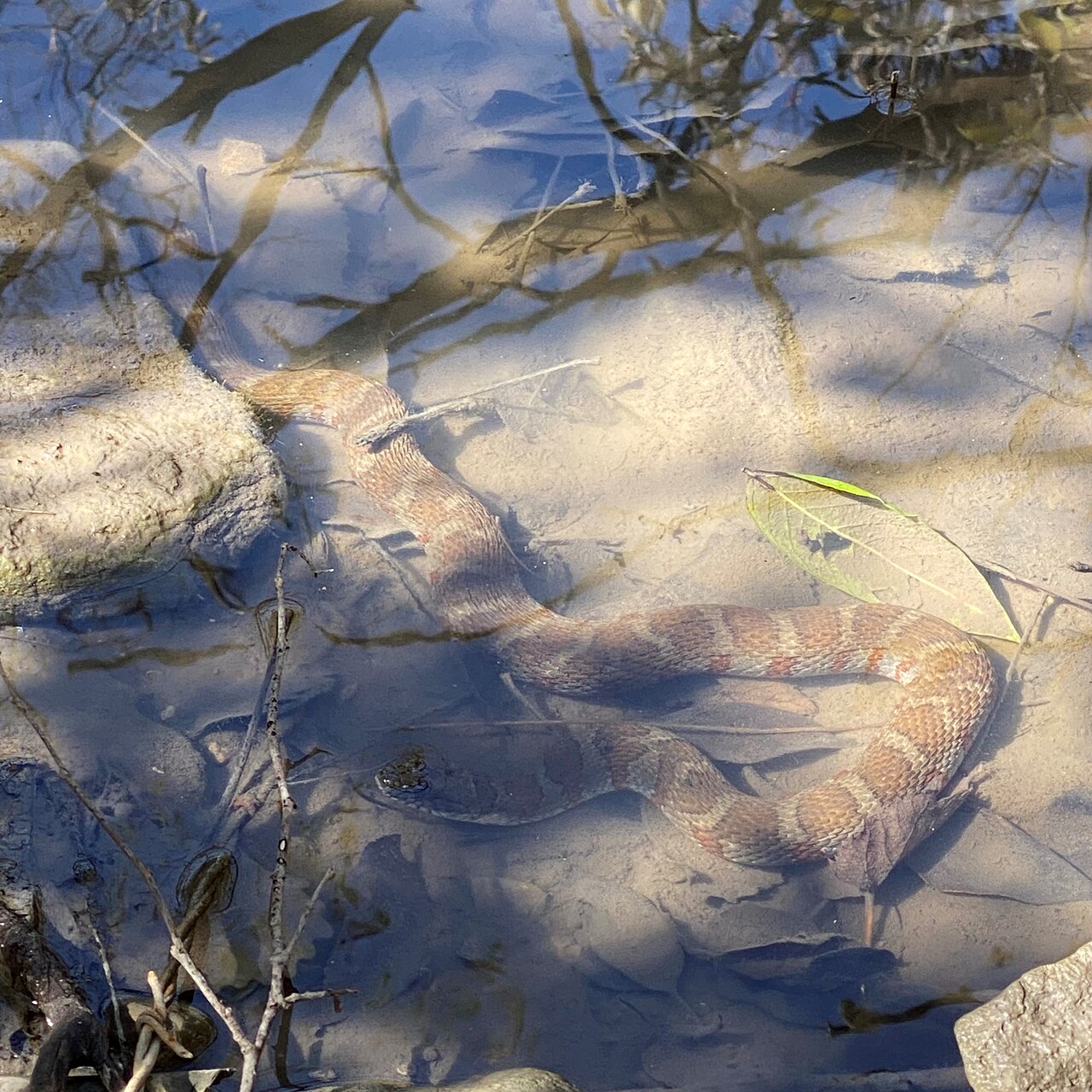
Can snakes bite underwater? Yes, they can — and the widely repeated claim that a snake is physically unable to open its mouth or bite below the surface is simply false. Cottonmouths catch and swallow fish and frogs underwater, and sea snakes spend nearly their whole lives hunting and biting beneath the surface. A snake has a glottis, a small breathing tube it can close to keep water out of its airway, which lets it open its mouth and bite without drowning. So the anatomy that the myth relies on does not exist.
The more useful question is whether a snake is likely to bite you underwater, and there the news is reassuring. Documented cases of a snake attacking a swimmer unprovoked beneath the surface are genuinely rare. The large majority of water-snake bites are defensive and happen at or above the surface, when a person grabs a snake, steps on one hidden along a bank or submerged log, corners it while wading, or tries to move or kill it. Snakes do not see a human as prey, and a snake in the water is almost always trying to get away from you, not toward you.
Most of the fear gets aimed at the wrong animal. Across most of North America, the snake people see swimming is a harmless water snake (genus Nerodia), not a venomous one. Cottonmouths — the venomous semi-aquatic species — live only in the southeastern United States in and around slow water and wetlands. Outside that range, a swimming snake is overwhelmingly likely to be non-venomous, so knowing whether cottonmouths even occur where you swim removes most of the real concern before you look closer.
Behavior tells you more than the fact that a snake is wet. A cornered cottonmouth often holds its ground and gapes to show the white lining of its mouth, the display that gives it its name, and it can absolutely deliver a venomous bite in shallow water. A harmless water snake almost always flees — diving, or dropping off a log — when approached, though it will bite hard if grabbed, and that defensive bite, while not venomous, can bleed freely because of anticoagulant properties in the saliva. Neither outcome is worth provoking.
Staying safe around water is mostly about not creating the defensive situation in the first place. Never grab, poke, or try to relocate a snake in the water, even one that looks dead. Do not reach into murky water, under docks and overhangs, or into vegetation and brush at the waterline where you cannot see. Watch where you place hands and feet around logs, rocks, and banks, keep dogs leashed near wetland edges, and if a snake is swimming your way, move aside and give it a clear line to the bank rather than splashing at it.
If you need to know what is sharing the water with you, identify it from a safe distance instead of guessing or getting closer. SerpentID lets you photograph a snake from the dock, the bank, or across the water and compare it against common local species, so you can tell a harmless water snake from a cottonmouth on real markers and your region. Confirm what it is, give it space, and the question of whether it can bite underwater stays purely academic.