

Africa dangerous snakes is a query that mixes travel anxiety and real epidemiology. Sub-Saharan Africa records hundreds of thousands of snakebites every year, and the species responsible are not always the ones with the highest reputation. The most dangerous snake in any region is usually the one that combines potent venom with high encounter rate near people — not the rarest or most photogenic.
The puff adder (Bitis arietans) is the most clinically important snake across most of sub-Saharan Africa. It is short, thick-bodied, slow to flee, and beautifully camouflaged in leaf litter and grass. People step on it before they see it. The venom is cytotoxic, causing severe tissue damage, swelling, and necrosis. Treatment requires polyvalent antivenom and prompt hospital care; field first aid is the same as for other pit-viper-style envenomations.
The black mamba (Dendroaspis polylepis) is Africa's most famous venomous snake and one of the longest elapids in the world. It is fast, alert, and capable of repeated bites, with potent neurotoxic venom that can cause respiratory failure within hours if untreated. Despite the reputation, black mambas usually flee from people and bite defensively when cornered, surprised, or stepped on. Behavior around suspected mambas should focus on freezing, backing away slowly, and avoiding sudden movement near dense cover, rocky areas, and termite mounds.
Green mambas (Dendroaspis angusticeps and Dendroaspis viridis) are smaller and more arboreal than black mambas, usually encountered in coastal forest, mangroves, and gardens with mature trees. Bites are rarer but medically serious. Eastern green mambas in particular show up in suburban gardens in parts of East Africa, so trimmers and gardeners working in dense canopy are at the highest risk.
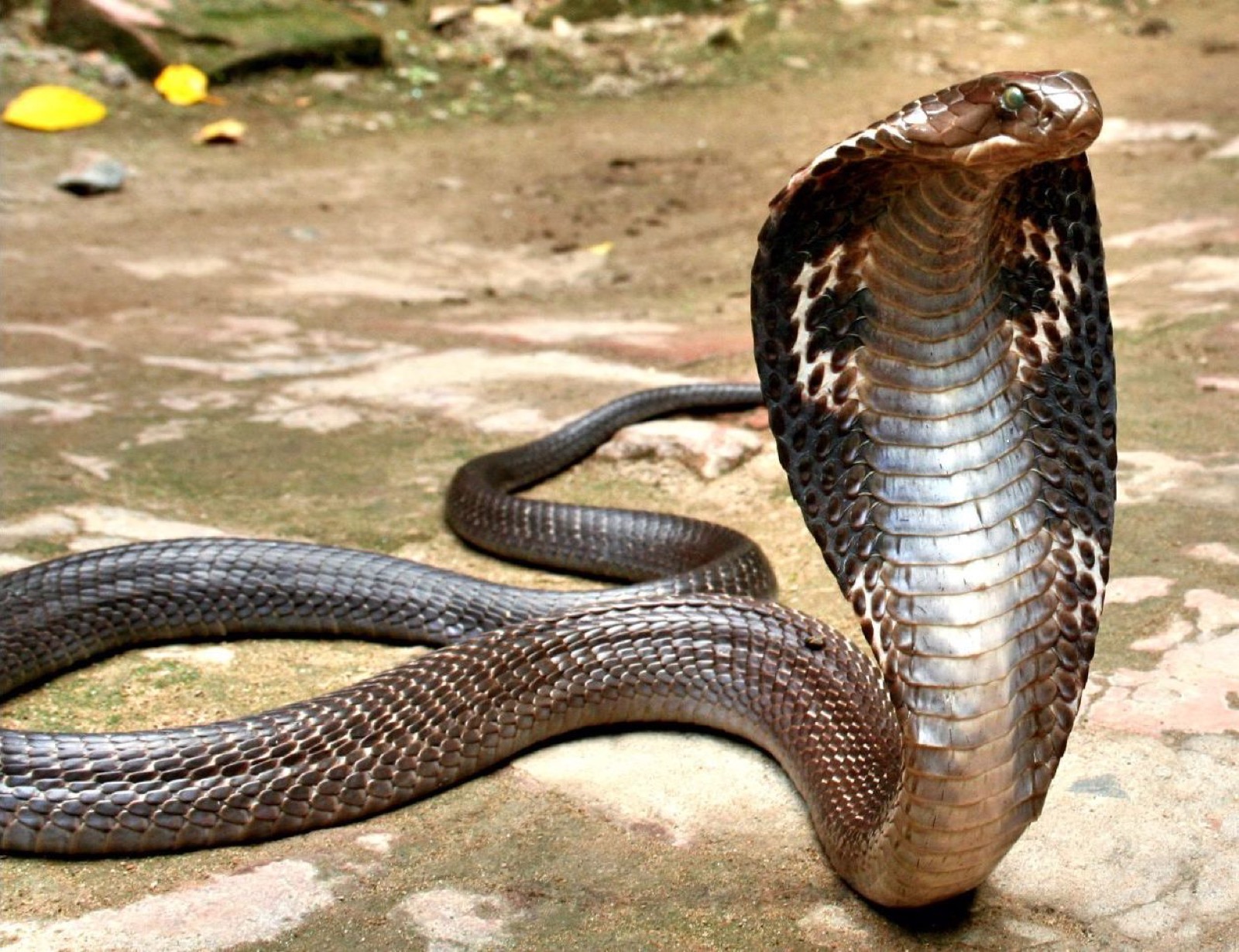
Cobras across Africa include the Cape cobra (Naja nivea) in southern Africa, the forest cobra (Naja melanoleuca complex) in central and western regions, the Egyptian cobra (Naja haje) across the north, and several spitting cobras (Naja nigricollis, Naja mossambica, Naja nubiae). Spitting cobras add the additional hazard of venom spray that can cause severe corneal damage, so any cobra-like snake encountered at close range warrants eye protection if available and immediate eye irrigation with water if spray contact occurs.
The boomslang (Dispholidus typus) is a rear-fanged colubrid with hemotoxic venom that can cause delayed, severe bleeding. It is generally docile and bites are rare, but envenomations are dangerous and require specific monovalent antivenom that may not be stocked at every regional hospital. Boomslangs are arboreal and well camouflaged in green vegetation; bites usually involve handlers or people reaching into shrubs and trees without looking.
Regional standouts worth knowing include the saw-scaled viper (Echis ocellatus and relatives) across the Sahel and West Africa, the Gaboon viper (Bitis gabonica) in central African forests, the Mozambique spitting cobra in southeastern Africa, and the burrowing asps (Atractaspis species) that cause unusual bites when stepped on at night. Each region's medical guidance and antivenom availability differs, so travelers should look up the specific country's snakebite protocols before going off-grid.
Behavior in snake country matters more than memorizing species. Wear closed shoes and long pants in grass, brush, and rocky terrain. Use a headlamp at night near campsites and outhouses. Do not put hands or feet into places you cannot see. Sleep on raised cots or under tucked mosquito nets where ground-active species are common. If you encounter a snake on a trail, freeze, identify the direction it is moving, and back away rather than try to pass it.
If a bite happens, the priority is transport to a hospital with antivenom. Pressure-immobilisation bandaging is recommended for elapid bites (mambas, cobras) where systemic venom spread is the main threat; it is not recommended for cytotoxic viper bites where it can worsen tissue damage. Do not cut, suck, ice, or tourniquet. Keep the patient calm, immobilize the limb at heart level, and get moving. A safe photo of the snake can help clinicians match antivenom but should never delay transport.
SerpentID can compare a photo taken from safe distance against common African species, which is useful for travelers, expats, and field workers who may not recognize regional fauna at a glance. The app is a tool for narrowing possibilities and supporting a calm decision — it does not replace local guides, antivenom availability, or hospital care. Save the nearest emergency number before you head into snake country and confirm which hospital in your region stocks the appropriate antivenom.