


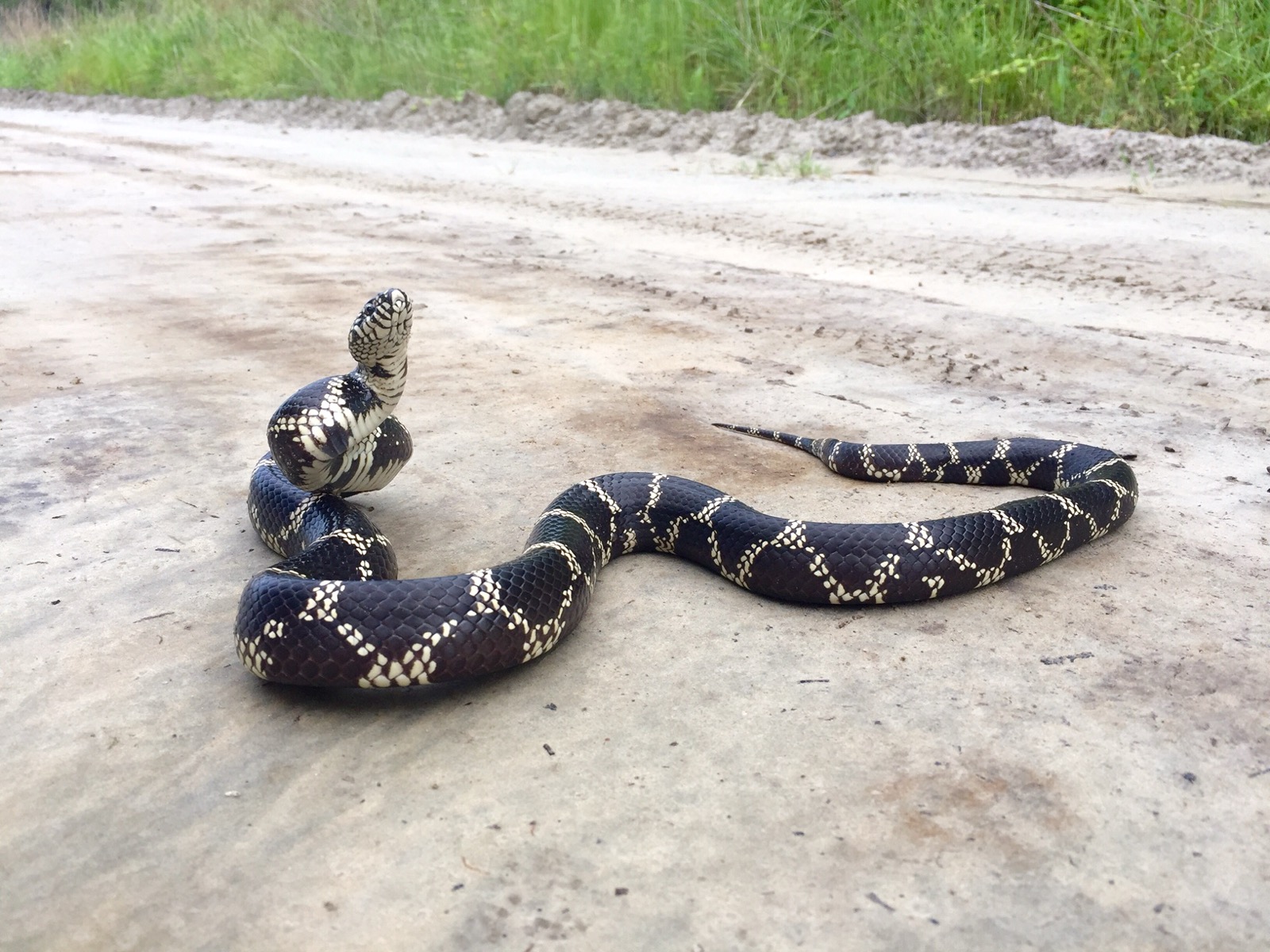
If you have ever watched a nature video of a snake eating a mouse, a frog, or another snake, you may have noticed a pattern. The meal almost always goes in nose first. This is not a coincidence, and it is not purely instinct with no reason behind it. Snakes cannot chew or tear food into pieces, so every meal has to be swallowed whole. The direction a snake chooses makes a real difference to how quickly, smoothly, and safely that swallow goes.
The biggest reason is anatomy, both the snake's and the prey's. Mammals, birds, lizards, and fish are built so that their outer coverings lie backward along the body. Fur slopes toward the tail. Feathers overlap from front to back. Fish scales and fin spines angle rearward. Legs and wings fold naturally toward the hindquarters. When prey goes in head first, all of these features flatten against the body and slide past the snake's backward-curving teeth with little resistance. Going in tail first means pushing against the grain. Limbs can splay outward, spines can catch, and the whole process takes longer and costs the snake more effort.
Safety is the second reason. A rodent's sharp incisors, a bird's beak, and a lizard's jaws are all at the front of the animal. Swallowing from the head end points those weapons into the snake's throat instead of toward its face and eyes, where a bite or scratch could do lasting harm. This matters most when a snake eats prey that is still alive. Many garter snakes and water snakes, for example, swallow frogs and fish without constricting or envenomating them first. Constrictors and venomous snakes usually wait until prey has stopped struggling before they start, but they still tend to begin at the head.
How does a snake find the head, especially at night or in a dark burrow? Researchers who have watched feeding snakes describe a fairly consistent routine. After a strike, constriction, or envenomation, the snake often releases or loosens its hold and explores the prey with its tongue and snout. It may follow the scent trail along the body, and it can probably feel the direction of fur or scales as it moves. Then it repositions its jaws at the front end. Fish-eating snakes are often seen turning a fish around in their mouths before swallowing. A kingsnake that has caught another snake will usually work its way to the victim's head before it begins to ingest it.
The swallow itself relies on flexible jaws, not dislocated ones, which is a common myth. A snake's lower jaw is split into left and right halves joined by stretchy tissue at the chin. Loose connections at the back of the skull let each side move on its own. The snake ratchets one side of its jaw forward, hooks its teeth in, then advances the other side. This alternating motion, sometimes called a pterygoid walk, pulls the snake over its meal more than it pushes the meal down. Once the prey passes the jaws, muscle contractions along the neck and body move it toward the stomach. A specially reinforced windpipe that reaches forward along the floor of the mouth lets the snake keep breathing during a long swallow.
Head first is the strong tendency, not an unbreakable law. Small prey that poses no risk and has no awkward limbs or spines is sometimes swallowed tail first or even sideways, because the effort hardly matters. Snakes that eat eggs, slugs, or earthworms face no fur or feathers at all. Occasionally a snake starts at the wrong end, struggles, and backs off to try again. Now and then it gives up and regurgitates the meal. That is especially likely if the snake is disturbed while feeding. If you come across a snake eating in your yard or on a trail, the kindest and safest thing to do is leave it alone. It is busy, and it may drop its meal and become defensive if crowded.
A feeding snake is also a good chance to learn what lives near you, as long as you keep your distance. Watch from well out of reach and do not try to move the snake or take away its prey. Take a clear photo of the body pattern and head shape, then let SerpentID compare the markings against the species likely in your area. Many backyard snakes seen eating rodents, frogs, or other snakes are harmless and helpful. If the app suggests the snake may be venomous, keep people and pets away and contact your local wildlife services or a licensed snake catcher. If anyone is bitten, seek professional medical help immediately.