


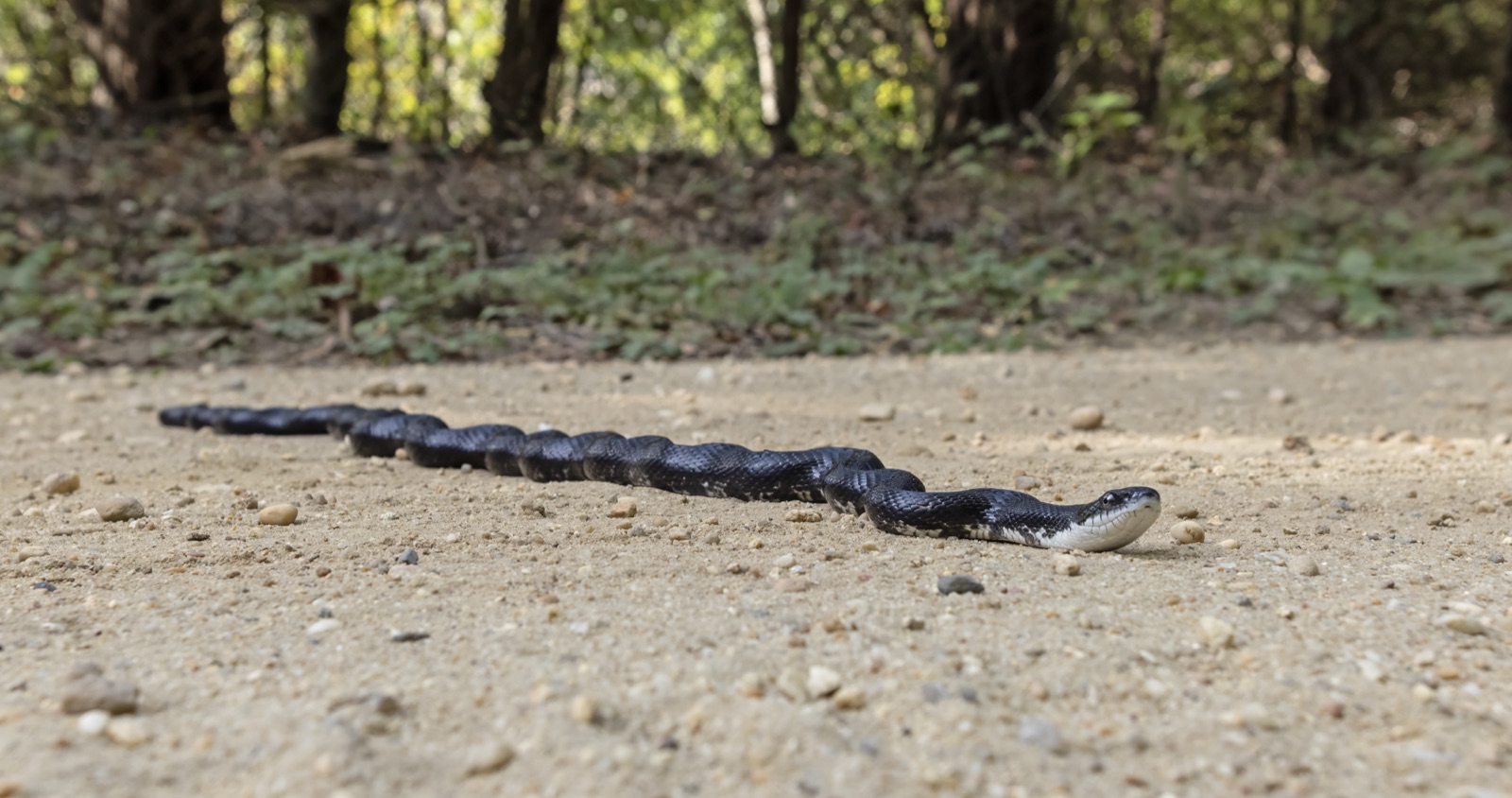
If you have ever heard a dry, rapid buzzing sound in your garden bed or along a hiking trail, your first instinct was likely to assume a rattlesnake was coiling nearby. However, tail shaking is actually an ancient behavioral trait shared by dozens of snake species across the globe, including many harmless non-venomous ones. When a snake feels cornered, startled, or threatened, its nervous system triggers rapid muscle contractions near the tip of its tail. This vibration serves as a clear, high-energy warning signal meant to ward off potential danger before any physical conflict occurs.
While rattlesnakes have evolved specialized, hollow segments of keratin at the end of their tails to amplify this sound into a loud, unmistakable rattle, other species rely on their environment to make noise. Non-venomous snakes like rat snakes, milk snakes, garter snakes, and racers frequently buzz their smooth tails against dry leaves, twigs, bark, or loose gravel. In dry vegetation, the resulting sound can be surprisingly loud and remarkably similar to a true rattlesnake, leading many homeowners and hikers to misidentify harmless yard neighbors as dangerous pit vipers.
Herpetologists debate whether non-venomous snakes shake their tails as a deliberate form of acoustic mimicry—copying the rattlesnake to scare off predators—or if the behavior is simply an ancient ancestral trait that predates the evolution of the rattle itself. Evidence suggests that tail buzzing was already a common stress response among early pit vipers and colubrids millions of years ago. Rattlesnakes simply developed an anatomical upgrade to make an existing behavioral reflex much louder and more efficient.
Regardless of the evolutionary origins, tail shaking is purely a defensive posture rather than a sign of aggression. A snake buzzing its tail is expressing fear and attempting to establish a safe boundary. It is telling any nearby creature that it feels trapped and is prepared to defend itself if pressed further. If you give the snake space and retreat slowly, the muscle contractions will settle down, and the snake will typically seek the nearest escape route or dense cover as soon as it feels safe to move.
Because tail vibration is so common across both venomous and harmless species, hearing or seeing a buzzing tail is not enough to confirm what kind of snake you are dealing with. If you encounter a snake shaking its tail in your yard or on a path, keep a safe distance of at least six to eight feet. Take a clear photograph from that distance and let SerpentID compare its markings, head shape, and scale texture against local species; if the photo suggests a venomous species like a rattlesnake or copperhead, contact a professional wildlife removal service rather than attempting to move it yourself.