


In the natural world, survival often hinges on clever strategies, and for many snakes, one of the most remarkable is mimicry. This phenomenon occurs when one species evolves to resemble another, often for protection. For snakes, mimicry typically involves a harmless species adopting the appearance or behavior of a venomous one, effectively bluffing potential predators into leaving them alone. This elaborate deception is a powerful tool in the constant struggle for survival, allowing vulnerable snakes to deter threats without possessing actual dangerous attributes.
The most common form seen in snakes is Batesian mimicry, where a palatable or harmless species mimics an unpalatable or dangerous one. Predators that have had a negative experience with the venomous model snake learn to avoid anything that looks similar, even if the mimic itself poses no threat. For this strategy to work, the venomous model must be common enough for predators to learn to avoid it, and the mimic must not be so abundant that predators frequently encounter it and realize the deception. It's a delicate balance that showcases the intricate relationships within an ecosystem.
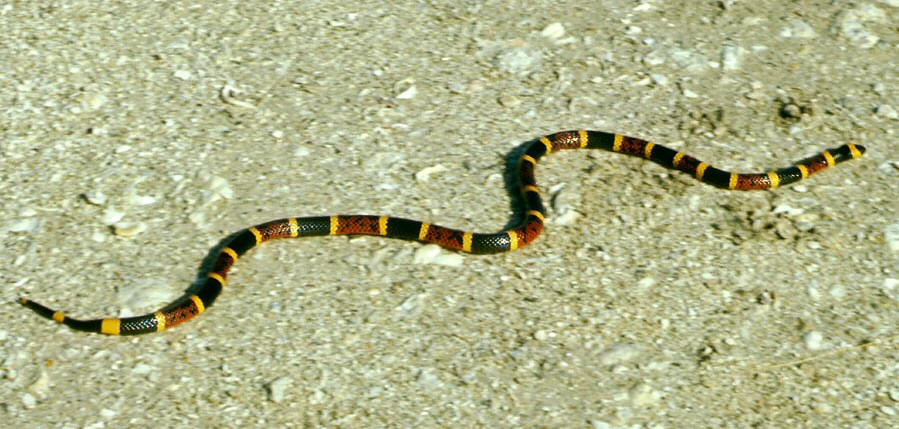
Perhaps the most famous example of snake mimicry involves the highly venomous coral snakes and several harmless species, such as kingsnakes and milk snakes. Coral snakes are known for their distinctive bands of red, yellow (or white), and black. In North America, many non-venomous snakes have evolved similar color patterns, leading to the well-known rhyme: 'Red on yellow, kill a fellow; red on black, venom lack.' While this rhyme often holds true in specific regions, it is not universally reliable across all species or even within all ranges of the same species, making identification based solely on this rule potentially dangerous.
Beyond color patterns, some snakes mimic dangerous behaviors. The Eastern hognose snake, for instance, is a master of theatrical defense. When threatened, it flattens its head and neck, sometimes even hissing loudly, to imitate the hood of a cobra. If this display fails to deter a predator, the hognose may then roll over and play dead, emitting a foul musk to complete the illusion. Similarly, some harmless rat snakes will vibrate their tails rapidly when nervous, especially in dry leaves, creating a rattling sound strikingly similar to that of a rattlesnake.
The effectiveness of mimicry relies heavily on the 'education' of predators. Birds, mammals, and other animals that prey on snakes learn to associate certain patterns or behaviors with a painful or dangerous encounter. Once this association is established, they instinctively avoid anything that resembles the dangerous model. The mimic then benefits from this learned avoidance, gaining protection without expending the energy or resources needed to produce venom or engage in a true fight. This evolutionary 'shortcut' is incredibly efficient.
Understanding snake mimicry highlights the incredible adaptability of these reptiles and the complex interactions that shape biodiversity. It also underscores why identifying snakes accurately is so important for human safety. Mistaking a harmless mimic for a dangerous venomous snake can lead to unnecessary fear or harm to the snake, while misidentifying a venomous snake as harmless can have serious consequences.
When encountering a snake, especially one with striking patterns or defensive behaviors, it's crucial to resist the urge to approach for a closer look. Mimicry can be highly convincing, and distinguishing between a harmless mimic and a truly venomous species often requires a keen eye and knowledge of local species. Instead, photograph the snake from a safe distance, making sure to capture clear images of its head, body patterns, and tail. Then, use a reliable identification app like SerpentID to compare its markings against likely local species. If the snake is identified as venomous, contact local wildlife services for guidance, ensuring both your safety and the snake's well-being.