


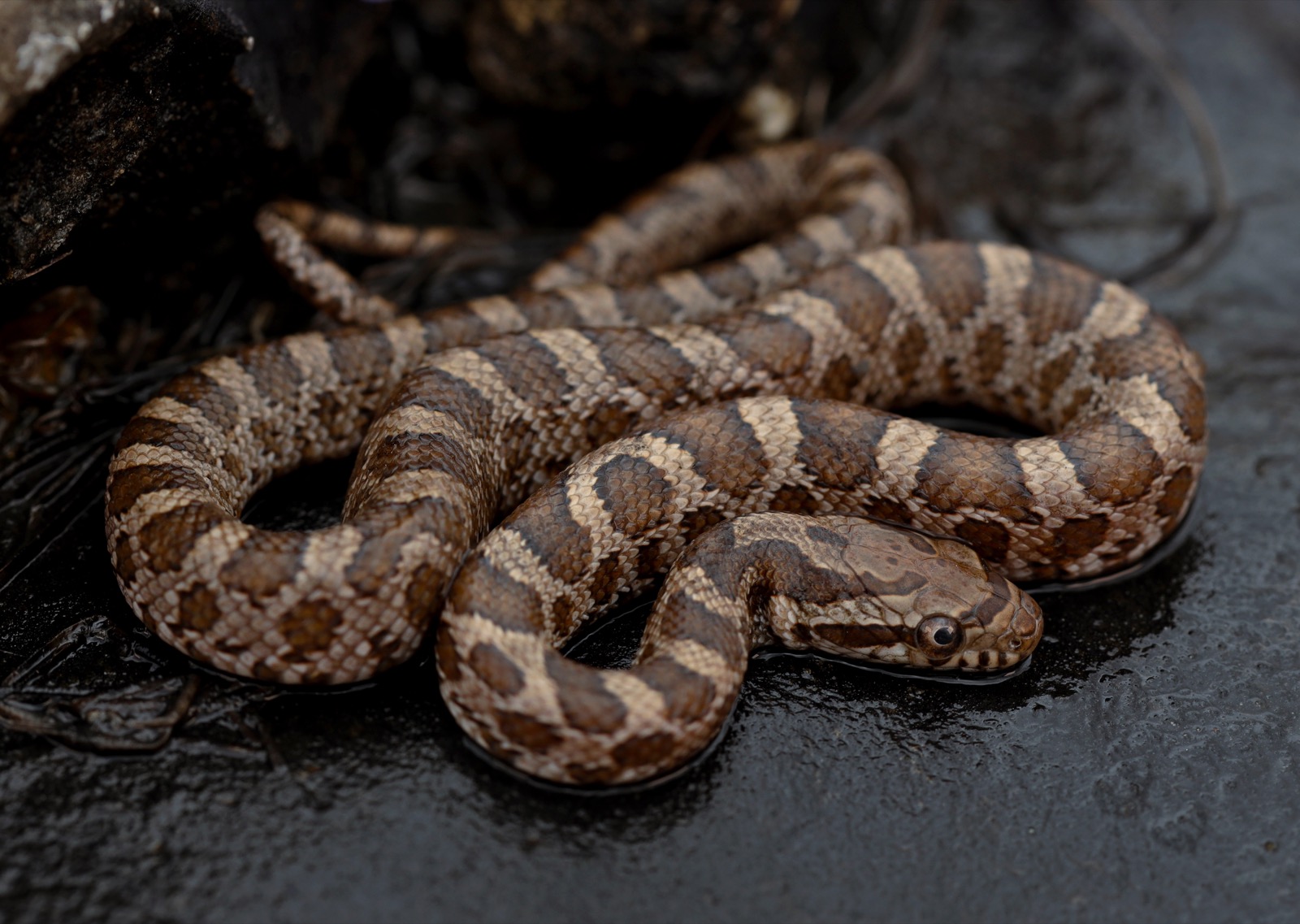
It is a common sight across rural highways, suburban driveways, and hiking trails: a snake stretched out motionless across sun-baked asphalt or a flat, dark rock. To human observers, lying on pavement that feels hot to the touch might seem uncomfortable or even dangerous, but for a snake, it is a crucial survival strategy. Snakes do not generate their own internal body heat the way mammals and birds do. Instead, they rely entirely on their environment to control their internal temperature, a biological trait known as ectothermy.
When a snake’s body temperature drops too low, its metabolic processes slow down significantly. In this cold state, the snake becomes sluggish, digests food poorly, and experiences delayed reaction times, making it vulnerable to predators. To warm up quickly, snakes utilize two primary heat sources: direct solar radiation from sunlight, and conductive heat transfer from physical surfaces that have absorbed thermal energy throughout the day. Dark pavement and concrete act as massive heat sinks, retaining high temperatures long after the sun begins to set.
This reliance on conductive heating explains why road sightings peak during late afternoon and early evening hours. As ambient air temperatures drop at dusk, asphalt remains warm, creating an ideal thermal patch for snakes looking to maintain an optimal operating temperature. Digestion is particularly energy-intensive for serpents, requiring a high body temperature to break down heavy meals before the food spoils internally. Basking on a warm surface speeds up the production of digestive enzymes, allowing the snake to process prey efficiently and return to cover.
While seeking out warm surfaces is essential for a snake's physical well-being, asphalt roads present an immense hazard. Vehicles pose an obvious threat, but extreme pavement temperatures during midday heat can also cause fatal overheating if a snake cannot find shade nearby. Because snakes lack sweat glands, they must balance their search for warmth with the risk of thermal stress, moving between sunny spots and cool burrows throughout the day to stay within a safe temperature range.
Observing a snake basking on a driveway, patio, or quiet lane is a normal part of coexisting with local wildlife, especially during spring and autumn when daytime heat is limited. If you encounter a snake soaking up heat on your property or along a path, maintain a safe distance and allow it to move off on its own. Taking a clear photograph from several feet away allows SerpentID to analyze the body shape, scale patterns, and regional data to identify the species safely; if you suspect a snake in a high-traffic area is venomous, contact a local wildlife removal professional rather than attempting to move it yourself.