


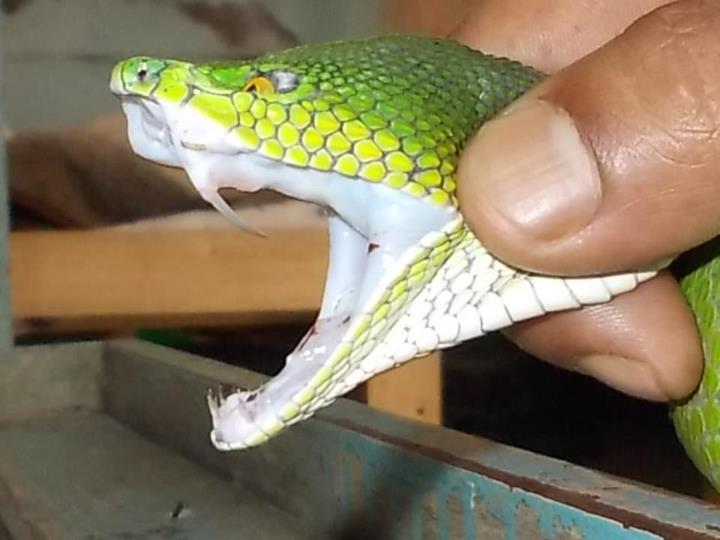
Snake venom often evokes fear, leading many to believe its primary role is to harm humans. However, this is a profound misunderstanding of its true purpose. In the vast majority of cases, venom is a highly specialized biological tool that evolved primarily for one reason: to secure food. It is a sophisticated form of modified saliva, intricately designed to immobilize, incapacitate, and often predigest the snake's prey, making hunting far more efficient and less dangerous for the serpent itself.
From an evolutionary perspective, venom provides a significant advantage. Imagine a snake trying to overpower a struggling rodent or bird using only muscle strength. Such an encounter risks injury to the snake, which could be fatal in the wild. Venom allows a snake to bite its prey, release it if necessary, and then track the envenomated animal as the toxins take effect. This “bite and release” strategy minimizes direct contact with potentially dangerous prey, conserving the snake's energy and reducing the chance of being hurt by teeth, claws, or beaks.
The delivery system for venom is equally remarkable. Specialized fangs, which can be fixed or hinged, act like hypodermic needles, injecting the complex cocktail of proteins and enzymes into the prey. These venoms vary widely between species, broadly categorized into types like neurotoxic, which attacks the nervous system to cause paralysis; hemotoxic, which damages blood cells and tissues; and cytotoxic, which destroys local cells. Each type is finely tuned to the typical prey of the snake, ensuring maximum effectiveness for its specific hunting strategy.
Beyond simply incapacitating prey, many venoms also play a crucial role in the digestive process. The enzymes within the venom begin to break down the prey's tissues internally even before the snake has swallowed it. This pre-digestion is particularly beneficial for snakes, as they swallow their prey whole and have relatively slow metabolisms. By initiating digestion externally, the snake can process its meal more quickly and efficiently, extracting nutrients vital for its survival and growth.
While venom is fundamentally a hunting tool, it can certainly be deployed defensively. A venomous snake will bite a perceived threat – including a human – if it feels cornered, startled, or unable to escape. However, producing venom is metabolically costly, requiring significant energy from the snake. Therefore, a snake is highly reluctant to waste its precious venom on something it cannot eat. Defensive bites are typically a last resort, often preceded by clear warning signs like hissing, tail rattling, or hood spreading, if the species exhibits such behaviors. Sometimes, a snake may even deliver a “dry bite,” injecting no venom at all, as a further conservation measure.
It is important to remember that the majority of snake species worldwide are non-venomous. These snakes rely on other methods for hunting and defense, such as constriction, where they wrap around their prey and suffocate it, or simply using their speed and camouflage to evade predators. The presence or absence of venom is just one of many evolutionary adaptations that snakes have developed to thrive in diverse environments across the globe.
Understanding why snakes have venom is key to appreciating their natural behavior and reducing unnecessary fear. If you encounter a snake, always remember that its primary goal is usually to avoid you. Never approach or attempt to handle any snake, as this is when defensive bites are most likely to occur. Instead, observe from a safe distance and, if you need to identify the species, take a clear photograph without getting too close. The SerpentID app can help you compare markings against local species, allowing you to determine if it's venomous and whether you need to contact local wildlife services for safe removal.