


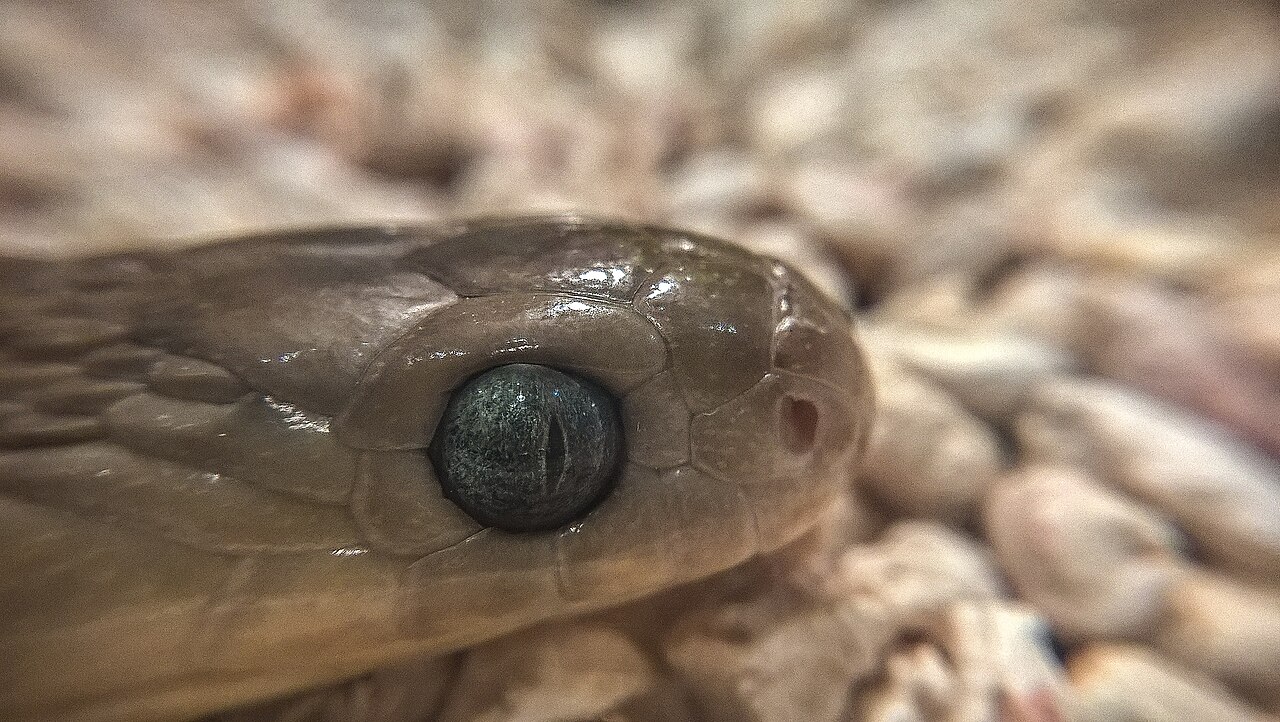
When observing a snake, one of the first features many people notice, after its overall pattern and size, is the shape of its pupils. Snakes display a range of pupil shapes, with the most common being round or vertical, often referred to as slit pupils. It's a widespread belief that pupil shape can reliably tell you whether a snake is venomous or harmless. However, this is a dangerous oversimplification. While there is a general correlation, the primary driver behind a snake's pupil shape is not its venom status, but rather its activity patterns and hunting strategies, particularly in relation to ambient light conditions.
Snakes with round pupils are typically diurnal, meaning they are most active during daylight hours. Much like humans and many other day-active animals, a round pupil allows for an even intake of light across the retina, optimizing vision in bright conditions. This shape is common in many non-venomous species such as garter snakes, rat snakes, and racers. However, it's crucial to remember that many highly venomous snakes also possess round pupils, including cobras, mambas, and coral snakes. This immediately disproves the notion that round pupils always equate to a harmless snake.
Vertical, or slit, pupils are characteristic of nocturnal or crepuscular snakes, those active primarily at night or during dawn and dusk. This pupil shape offers a significant advantage in varying light levels. In bright light, these pupils can constrict to an extremely narrow slit, protecting the retina from overexposure. Conversely, in low-light conditions, they can dilate dramatically to a wide circle, maximizing light gathering for enhanced night vision. This adaptation is particularly useful for ambush predators that hunt in the dim light, allowing them to precisely gauge distance to strike unsuspecting prey. Many pit vipers, such as rattlesnakes, copperheads, and cottonmouths, exhibit vertical pupils, but so do numerous harmless species like some cat snakes and certain geckos, which are not snakes at all.
The myth that all snakes with vertical pupils are venomous and all with round pupils are harmless is a dangerous one, often leading to misidentification and unnecessary risk. For instance, a harmless gopher snake, active during the day, has round pupils. A venomous copperhead, often active at night, has vertical pupils. This seems to support the myth. However, a highly venomous cobra has round pupils, and a harmless brown tree snake has vertical pupils. Relying on pupil shape alone for identification can lead to tragic mistakes, either by assuming a dangerous snake is harmless or by needlessly harming a beneficial, non-venomous one.
From an evolutionary perspective, the development of different pupil shapes is a testament to the diverse adaptations snakes have made to their environments. The ability to precisely control light intake and optimize vision for specific hunting times and habitats is a powerful survival tool. Vertical pupils, in particular, are thought to aid in depth perception and the accurate estimation of strike distance for ambush predators, especially when they can constrict to a slit that creates a greater depth of field. This allows them to focus sharply on prey while remaining camouflaged.
Ultimately, a snake's pupil shape is just one small piece of its complex biology, a visual clue that reveals more about its daily habits than its potential danger. Snakes possess a sophisticated array of senses—including their remarkable ability to 'smell' with their flicking tongues, detect vibrations through the ground, and in some species, sense heat with specialized pit organs—all contributing to their survival. Relying on a single feature like pupil shape provides an incomplete and often misleading picture of the animal.
When you encounter a snake in the wild, the safest course of action is always to maintain a respectful distance. Never attempt to identify a snake based on a single characteristic like pupil shape, as this can be dangerously inaccurate. Instead, observe the snake from afar, take a clear photograph if possible without approaching, and then use a reliable identification tool like the SerpentID app to compare markings and features against local species. If you suspect a snake is venomous, contact local wildlife services for assistance, and if a bite occurs, seek professional medical help immediately.