


Bird feeders are one of the most effective suburban magnets for local wildlife, but many homeowners are surprised when a songbird feeding station suddenly attracts a snake. Snakes do not eat sunflower seeds, suet, or grain, as all snake species are strict carnivores. Instead, the steady shower of spilled seed creates a high-density feeding ground for small mammals like mice, voles, rats, and chipmunks. Where rodent prey gathers consistently day after day, predatory snakes quickly take notice and establish hunting routines around the base of the feeder.
In addition to small rodents, bird feeders naturally draw fledglings, roosting songbirds, and nesting species into close quarters. Semi-arboreal snakes, such as rat snakes, corn snakes, and black racers, are extraordinary climbers that can scale shepherd hooks, wooden posts, and overhanging tree branches with ease. For an agile climbing snake, a bird feeder represents a dual hunting opportunity, offering rodent prey scavenging on the ground below and vulnerable birds or eggs accessible above.
Beyond food sources, the area directly under a bird feeder frequently offers ideal microhabitats for snakes. Accumulations of discarded seed hulls, fallen leaves, surrounding garden mulch, and nearby border stones create dark, moist shelter. These covered zones allow snakes to hide from larger predators, regulate their body temperature, and wait in ambush for unsuspecting mice. A bird feeder positioned right beside dense shrubs or woodpiles provides a seamless, low-risk corridor between safety and hunting grounds.
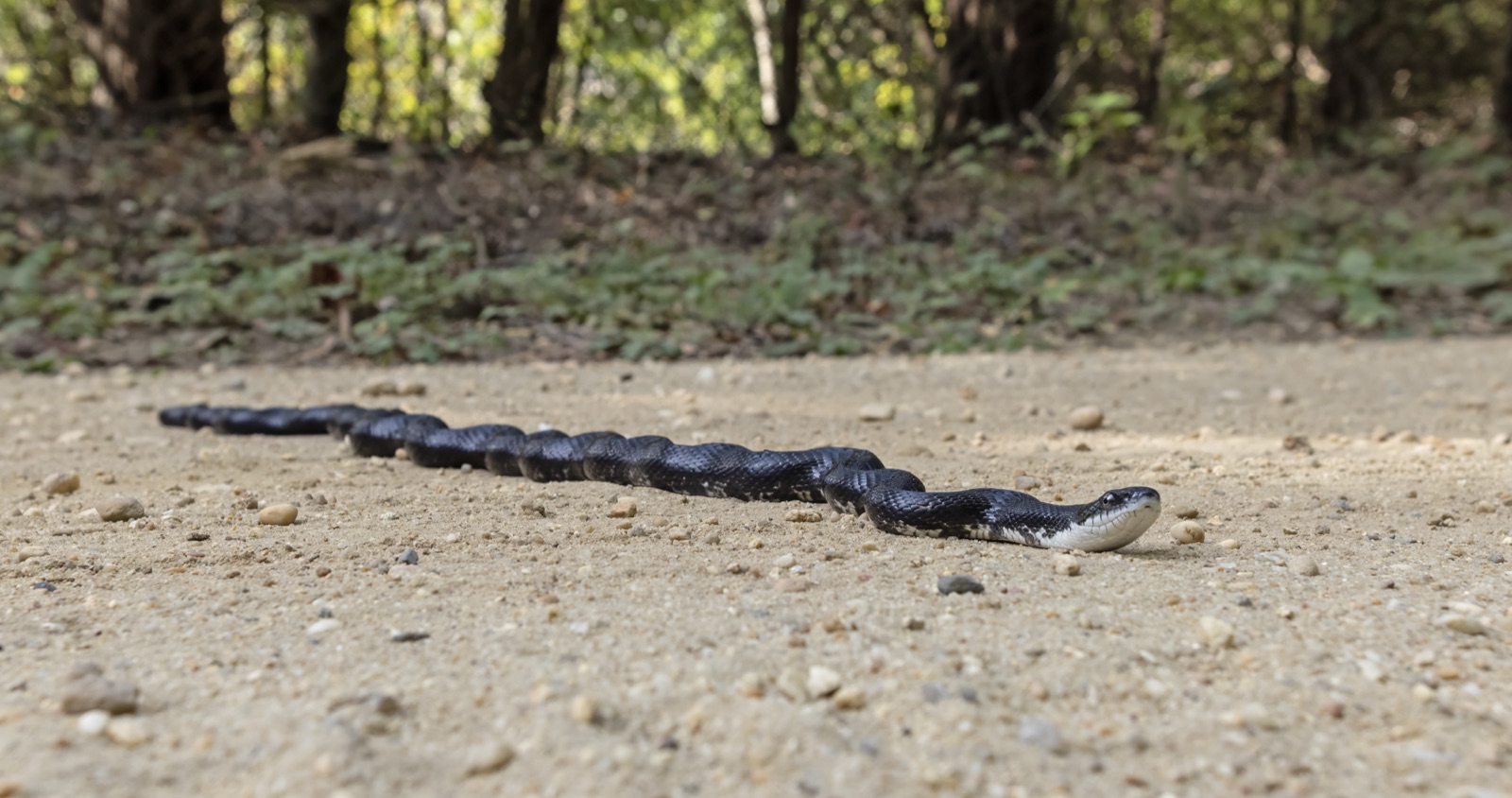
The specific snakes you might see near a bird feeder depend heavily on your geographic location and environment. Across North America, rat snakes, garter snakes, and kingsnakes are common visitors due to their heavy diet of rodents and small animals, while venomous copperheads may hunt the ground cover beneath feeders during warm summer nights. In Australia, carpet pythons frequently patrol suburban yards near bird baths and feeding areas, while in India, Indian rat snakes and cobras track rodent populations around grain stores and garden bird stations.
Managing snake activity around bird feeders does not require giving up birdwatching, but it does mean controlling rodent attraction and climbing access. Installing seed-catching trays underneath feeders dramatically reduces ground spill that feeds mice. Mounting feeders on smooth metal poles outfitted with wide stovepipe baffles prevents climbing snakes and rodents from scaling the post. Keeping grass trimmed short around the feeding zone and clearing away heavy leaf litter or rock piles eliminates the concealed staging areas snakes depend on while hunting.
If you spot a snake resting near your bird feeder or coiled around the post, remember that it is simply fulfilling its natural role as biological pest control. Keep a respectful distance and never attempt to grab, poke, or move the animal yourself, as most bites happen during deliberate physical interaction. Instead, take a clear photograph from a safe distance and let SerpentID compare the snake's markings and head shape against local species. If the snake turns out to be a venomous species posing a concern for family or pets, contact local wildlife services to relocate the animal safely.