


Finding a snake where it doesn't belong, coiled behind the washing machine, stretched across the back step, or tucked into a garage corner, usually leads to one question: who do I actually call? The answer depends on where you live, whether the snake is indoors or outdoors, and whether anyone has been hurt. One rule holds everywhere. If a person has been bitten, the snake is no longer the priority. Call your emergency number right away (911 in the United States, 000 in Australia, 112 or your local ambulance line in India) and seek professional medical help immediately. Don't try to catch or kill the snake to bring it along. A photo taken from a safe distance is far more useful and far less risky.
For a snake that hasn't hurt anyone, start by asking whether it needs removing at all. Most snakes in yards are passing through or hunting rodents and will leave on their own within hours if left alone. A snake out in the garden, along a fence line, or crossing the lawn usually needs nothing more than space and time. Keep children and pets indoors, note where it went, and check again later. Removal is worth it when the snake is inside the house, in a busy area people can't avoid, such as a doorway, garage, or play area, or when you suspect it is a dangerous species and it isn't moving on.
In the United States, many people call animal control first, but plenty of municipal animal control agencies handle only dogs, cats, and domestic animals, not wild reptiles. Your state fish and wildlife agency can usually tell you who handles snakes locally, and many states license private nuisance wildlife control operators who remove snakes for a fee. Some regions also have volunteer snake relocation groups or herpetological societies that respond to calls or keep referral lists. Fire departments in some rural areas will help with a venomous snake inside a home, but this varies widely, so call the non-emergency line rather than the emergency line unless someone is in danger. When you hire a private company, ask whether it handles live snakes humanely and is properly licensed in your state.
In Australia, all native snakes are protected, and removal is done by licensed snake catchers. Most cities and regional towns have several, and many work around the clock during the warmer months, when brown snakes, red-bellied black snakes, and tiger snakes turn up in backyards. State environment and wildlife agencies, along with wildlife rescue organizations, can refer you to licensed catchers nearby. Catchers charge a call-out fee, but it is money well spent next to the risk of handling a potentially deadly elapid yourself. It is also illegal in most states to kill or harm a native snake, and many bites in Australia happen to people trying to do exactly that.
In India, the forest department is the official authority for wildlife, including snakes, and many districts work with trained rescuers or wildlife rescue organizations that respond to snake calls in homes, shops, and farms. Local rescue networks are often the fastest option, and many people find them through municipal helplines, neighbors, or community groups. Because the Big Four (the spectacled cobra, common krait, Russell's viper, and saw-scaled viper) all live near people, never assume a snake is harmless based on size or color, and never let an untrained person try to catch it. Kraits in particular often get into homes at night and can be mistaken for harmless wolf snakes, which is one more reason to leave the job to someone trained.
While you wait for help, your job is simple: keep the snake in sight from a safe distance if you can, and keep everyone else away. Stay at least a few meters back, more than the snake's full body length, and close interior doors so it stays in one room if it's indoors. A rolled towel along the gap under a door can help keep it there. Don't spray it with chemicals, don't hit it with a broom, and don't trap it in a bucket or box, since cornering a snake is how most avoidable bites happen. If it slips out of view, note the last place you saw it so the responder knows where to start, rather than pulling out furniture or reaching under appliances yourself.
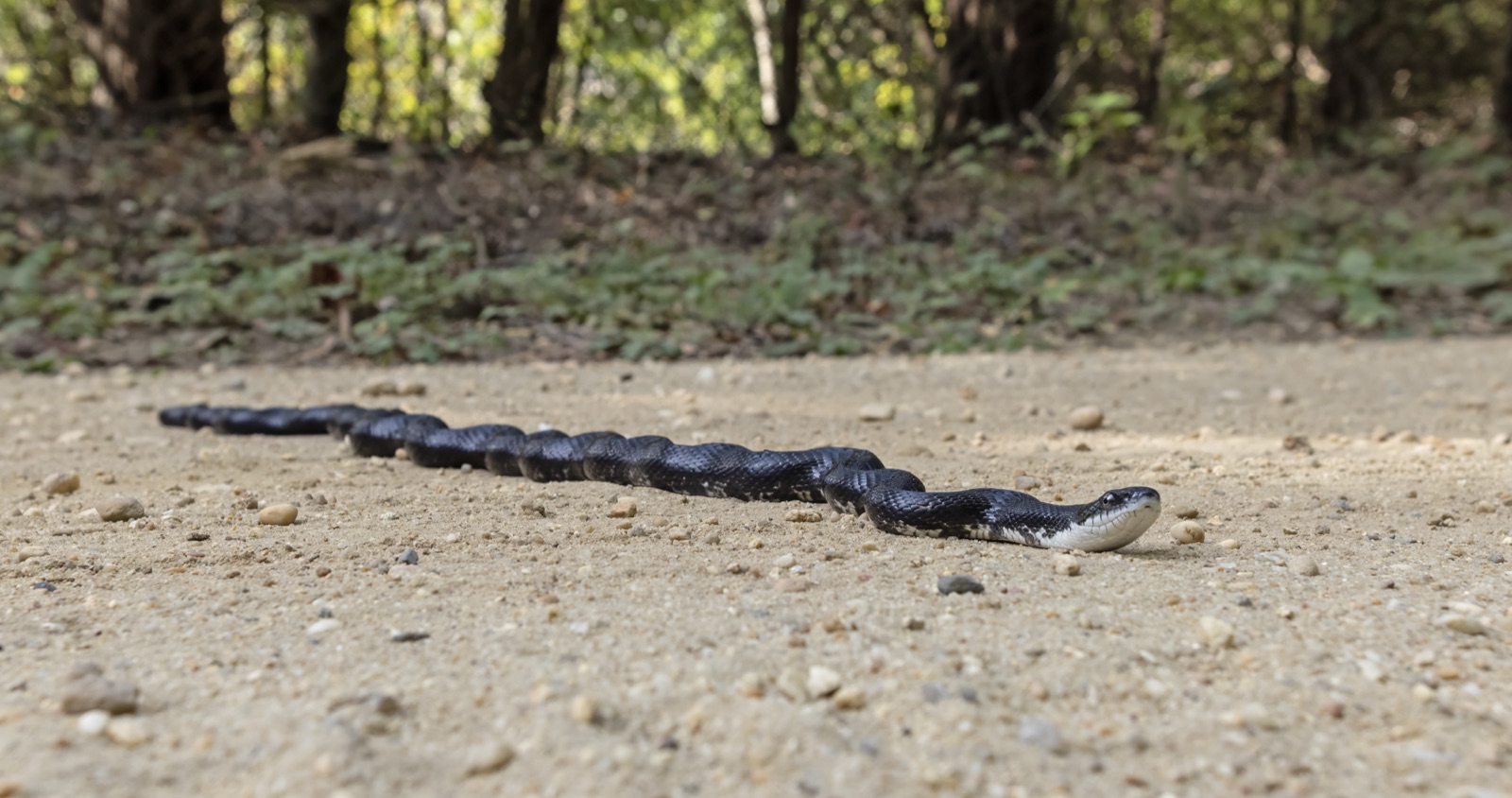
The most useful thing you can give a responder is a clear photo. Take it from a safe distance, zooming in rather than stepping closer, and try to capture the head, the body pattern, and the overall shape in decent light. SerpentID can then compare those markings against the snake species likely in your area, which helps you judge whether the visitor is a harmless rat snake or garter snake that just needs time to leave, or something that calls for professional removal right away. If the result points to a venomous species, or you're simply unsure, contact your local wildlife service or a licensed snake catcher and let trained hands take it from there.