


Venomous snakes are spread across most of the United States, so the list of states without them is short. Four states are usually named: Alaska, Hawaii, Maine, and Rhode Island. In each one, there is no known breeding population of native venomous land snakes today. Everywhere else in the lower 48 has at least one native venomous species. That may be a rattlesnake, a copperhead, a cottonmouth, or a coral snake, and many states have several. The short list is real, but each entry has its own story, and each comes with fine print worth understanding before you assume any snake you see is harmless.
Alaska is the simplest case. The state's long, cold winters and short growing season make it a very hard place for reptiles, and Alaska is essentially snake-free. There are occasional reports of common garter snakes along river corridors in the far southeast, near the British Columbia border. Garter snakes are harmless to people, and Alaska has no venomous snakes at all. Hawaii is snake-free on land for a different reason: isolation. No native land snakes ever reached the islands. The state treats snakes as a serious invasive threat, because an introduced snake could devastate native birds. A tiny, harmless, worm-like species called the Brahminy blind snake has become established there. The fine print in Hawaii is the ocean. The yellow-bellied sea snake, which is venomous, occasionally drifts into Hawaiian waters or washes ashore. It is rare, but beachgoers should never pick one up.
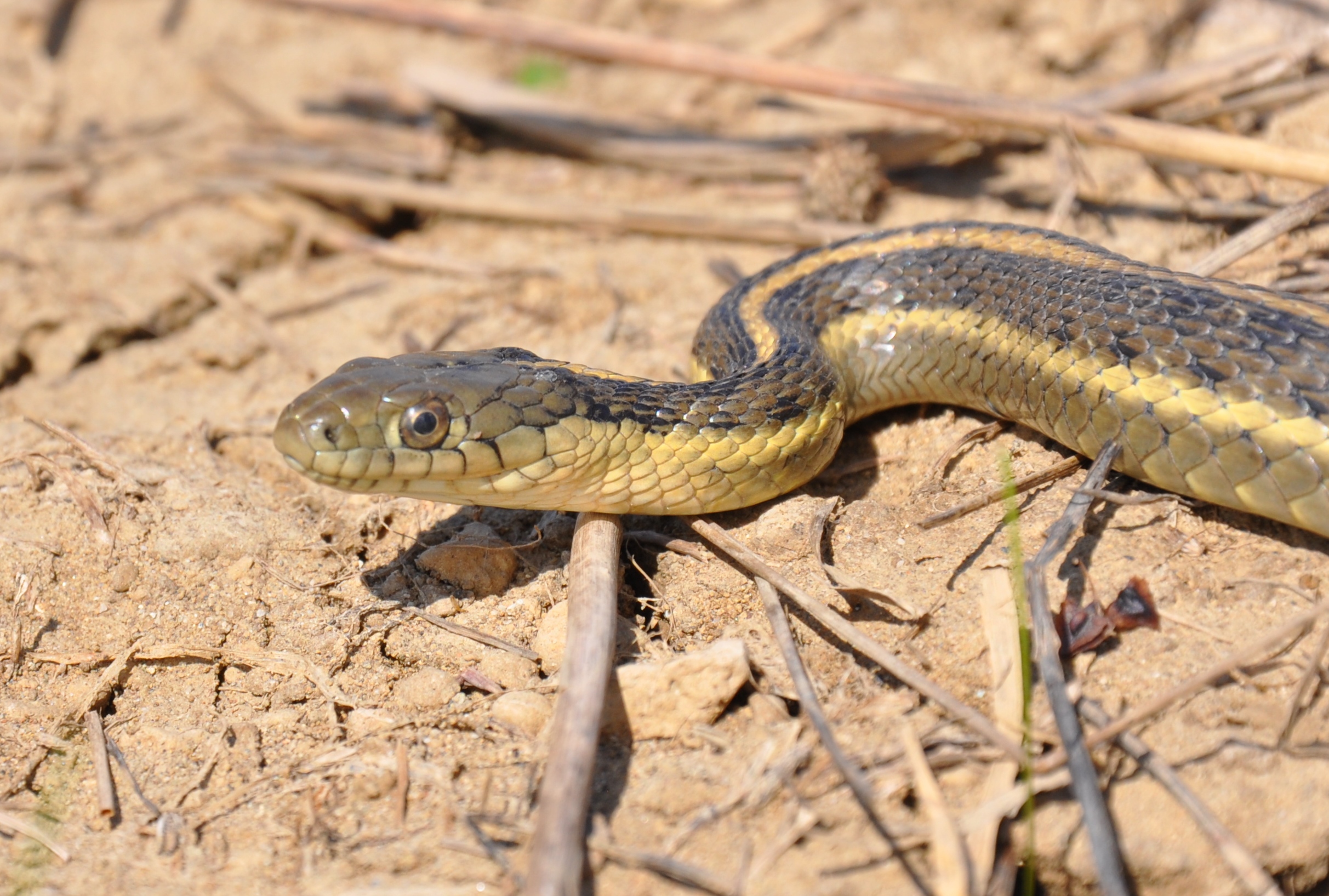
Maine and Rhode Island are on the list because of loss, not natural absence. Both states once had timber rattlesnakes. Those populations were wiped out by habitat loss, bounty hunting, and persecution, and neither state is considered to have a surviving breeding population today. That makes them free of native venomous snakes, but it is a reminder that the absence is recent and human-caused. Both states still have plenty of harmless snakes. Garter snakes, ribbon snakes, milk snakes, northern water snakes, ring-necked snakes, and small brown snakes are found there. Milk snakes and water snakes in particular get mistaken for copperheads or cottonmouths, even though neither of those species lives in either state.
It is easy to assume the rest of New England is also safe, but that is a mistake. Massachusetts and Connecticut both have timber rattlesnakes and copperheads. Vermont and New Hampshire each have small, protected timber rattlesnake populations. Farther west, the eastern massasauga persists in parts of the Great Lakes region. Prairie and western rattlesnakes range into Washington, Oregon, Idaho, and the northern plains. Some people believe cold northern states are automatically free of venomous snakes. They are not. Rattlesnakes in those regions survive winter by brumating in deep rock dens, as their relatives do farther south.
Even in the four states on the list, two practical caveats apply. First, escaped or released exotic pets do turn up occasionally, and some of them are venomous. A snake that looks unlike anything native deserves extra caution, not less. Second, people travel. A hiker from Maine visiting Massachusetts, or a family from Hawaii vacationing in Arizona, carries habits from a low-risk home into rattlesnake country. If anyone is ever bitten by an unknown snake, anywhere, seek professional medical help immediately rather than relying on assumptions about where the bite happened.
For readers outside the United States, there is no comparable list to rely on. Every Australian state and territory has native venomous snakes, including cool Tasmania, where all three resident snake species are venomous. India has venomous snakes across nearly all of its regions. Only the highest, coldest mountain zones lack them, and the Big Four species (the Indian cobra, common krait, Russell's viper, and saw-scaled viper) cover enormous ranges. In both countries, the safer default is to treat any unidentified snake as potentially dangerous and keep your distance.
Whether you live in a state with no venomous snakes or one with half a dozen, the safest habit is the same. Leave the snake alone and stay well back. Never try to handle, corner, or kill it. If you want to know what you are looking at, take a photo from a safe distance and let SerpentID compare its markings against the species most likely to occur where you are. That is especially useful when a harmless milk snake or water snake looks alarming at first glance. If the result points to a venomous species, or the snake is somewhere it cannot stay, contact local wildlife services or a licensed snake removal professional to handle it.