


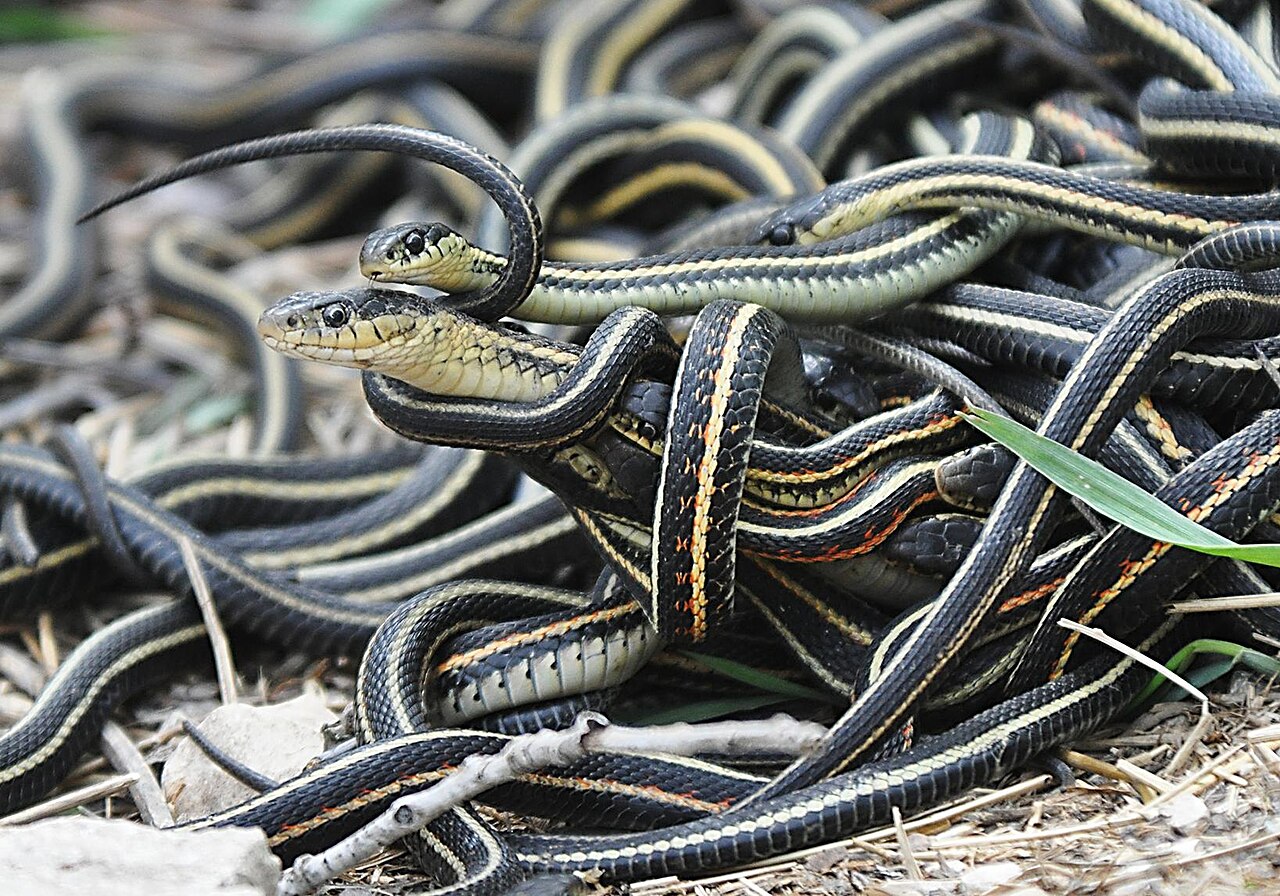
For most snake species, mating is a seasonal affair, primarily occurring in the spring or early summer months. This timing allows the female to carry her eggs or developing young through the warmest parts of the year, ensuring that hatchlings or live-born snakes emerge during a period of abundant food and favorable temperatures. However, the exact window for breeding can vary widely depending on the species' geographic location and specific environmental conditions. In tropical regions, some snakes may breed year-round or have multiple breeding cycles, while in temperate zones, the window is often much narrower, typically after snakes emerge from their winter brumation.
The initial phase of snake courtship usually involves the male actively searching for a receptive female. This quest is primarily guided by scent. Females release pheromones, chemical signals that males detect with their forked tongues and specialized Jacobson's organ. A male will follow these invisible scent trails, sometimes over considerable distances, until he locates a potential mate. Despite popular misconceptions, snakes do not typically form lasting pair bonds or travel in pairs, and any observed pairing is usually a temporary arrangement for the purpose of reproduction.
Once a male finds a female, courtship rituals can begin, which vary in complexity between species. In many cases, the male will approach the female, rubbing his chin along her back, twitching his body, and attempting to align himself. Some species, particularly males of certain vipers and constrictors, engage in a behavior often termed a 'combat dance.' This is not a fight to the death, but rather a display of strength and dominance between two rival males, each attempting to push the other to the ground to gain access to a female. The victor earns the right to mate.
Copulation itself involves the male wrapping his tail around the female's, bringing their cloacas (a single opening for waste and reproduction) into contact. Male snakes possess a pair of reproductive organs called hemipenes, which are typically inverted and stored within the base of the tail. During mating, one of these hemipenes is everted and inserted into the female's cloaca to transfer sperm. The process can last anywhere from a few minutes to several hours, depending on the species, and a female may mate with multiple males during a single breeding season.
While spring and early summer are the most common mating times, there are exceptions. Some species, like certain garter snakes, may also have a fall breeding season, with females storing sperm over winter to fertilize eggs in the spring. In regions with very mild winters, such as parts of Australia or India, the breeding season might be less distinct or even occur multiple times a year, depending on rainfall and food availability. These variations highlight the incredible adaptability of snakes to diverse climates and ecological niches.
Following successful mating, the female will either lay a clutch of eggs (oviparous species) or carry her developing young internally until they are born live (viviparous or ovoviviparous species). The gestation or incubation period varies greatly, from a few weeks to several months. Once the young are born or hatch, parental care is exceptionally rare among snakes, with most neonates being fully independent from birth. The female's role in reproduction typically ends once the eggs are laid or the live young are born, leaving the next generation to fend for themselves.
Understanding when and how snakes mate offers fascinating insight into their life cycles and behaviors. While observing these natural processes from a respectful distance can be educational, it's crucial to prioritize safety. If you encounter a snake, especially during breeding season when they might be more active or focused, give it ample space. Should you need to identify a snake you've encountered, photograph it from a safe distance and use the SerpentID app to compare its markings against likely local species. If the snake is confirmed or suspected to be venomous, contact local wildlife services for guidance, rather than attempting to approach or handle it yourself.