


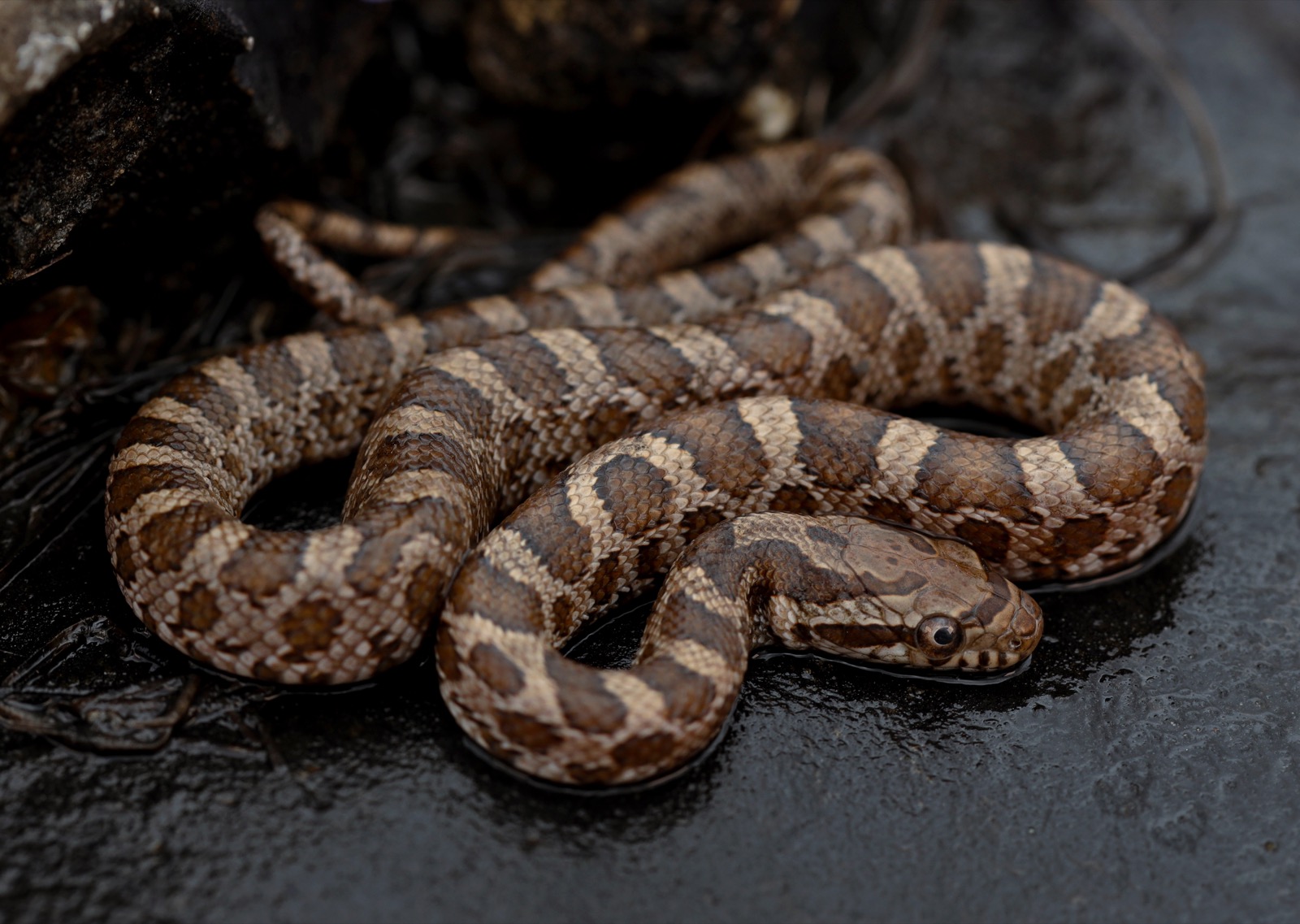
People search for an exact temperature at which snakes come out because it would make yard work and hiking easier to plan. The honest answer is a range rather than a single number. Snakes are ectotherms, which means their body temperature depends mostly on their surroundings rather than on heat their own bodies make. For many common snakes in temperate parts of the United States and southern Australia, regular activity tends to pick up once daytime air temperatures sit somewhere around the mid-60s to mid-80s Fahrenheit, roughly 18 to 30 C. Within that window a snake can warm itself enough to hunt, digest, and move efficiently. It is a useful rule of thumb, not a guarantee, and the details matter more than the headline figure.
The biggest reason a simple thermometer reading misleads people is that snakes respond to the temperatures they can actually reach, not the shade temperature on a weather app. On a clear spring morning when the air is only in the 50s Fahrenheit (around 10 to 15 C), a south-facing rock, a concrete step, a sun-warmed patch of mulch, or a stretch of asphalt can be far warmer than the air. Snakes use these surfaces to bask and raise their body temperature quickly, which is why cool but sunny days can still produce sightings along trail edges, rock walls, and driveways. Overcast days at the same air temperature usually produce fewer snakes in the open, because there is less radiant warmth to soak up.
Species also differ a great deal. Garter snakes are well known for tolerating cool conditions, and in North America they are often among the first snakes seen in early spring and the last seen in autumn, occasionally appearing on unusually warm days in late winter. Many rattlesnakes, copperheads, rat snakes, and racers become reliably active as spring settles in. In Australia, species such as eastern brown snakes and red-bellied black snakes are frequently reported as spring warms up and they begin searching for food and mates. In much of India, where winters are mild in many regions, snakes can be active for much of the year, and sightings tend to rise sharply during the monsoon, when rain floods burrows and prey such as frogs and rodents become abundant. Temperature is only one part of that picture.
Hot weather does not simply mean more snakes in the open. When surface temperatures climb well above comfortable levels, roughly the 90s Fahrenheit (mid-30s C) and higher, exposed ground can become dangerous for a snake, and prolonged overheating can kill it. Most snakes respond by retreating into burrows, under rocks, beneath decks, into dense vegetation, or into shaded and damp spots during the hottest part of the day. Many species that were active at midday in spring shift toward early morning, dusk, and night in midsummer. This is why warm summer evenings are a common time for encounters on paths, porches, and roads, and why carrying a flashlight after dark is a sensible habit in snake country.
Seasonal cues add another layer. As days shorten and temperatures fall in autumn, temperate snakes begin moving toward overwintering sites and eventually enter brumation, a period of reduced activity. In spring, rising temperatures draw them back out, and you may see several near a den area for a short time before they disperse. A common myth is that once it turns cool, snakes are gone entirely until summer. In reality, a warm spell in late autumn or early spring can bring snakes out briefly to bask, so it is wise to stay alert when moving firewood, stone, or garden debris on any mild, sunny day, not only in the height of summer.
Putting this together, the practical approach is to treat warm, sunny weather and warm evenings as the times to pay closer attention, while remembering that a cool sunny day and a sun-heated surface can still mean a basking snake. Watch where you step and where you put your hands, use a light at night, and give any snake you see plenty of room to move away on its own. Never try to handle, approach, or kill a snake, and if anyone is bitten, seek professional medical help immediately.
If you do spot a snake, the most useful thing you can do is stay back and take a clear photograph from a safe distance, zooming in rather than stepping closer. SerpentID can then compare the markings, head shape, and body pattern in your photo against the species most likely to occur in your area, helping you understand what you saw without guesswork. If the result suggests a venomous species near your home, trail, or workplace, contact your local wildlife service or a licensed snake removal professional so the animal can be dealt with safely.