


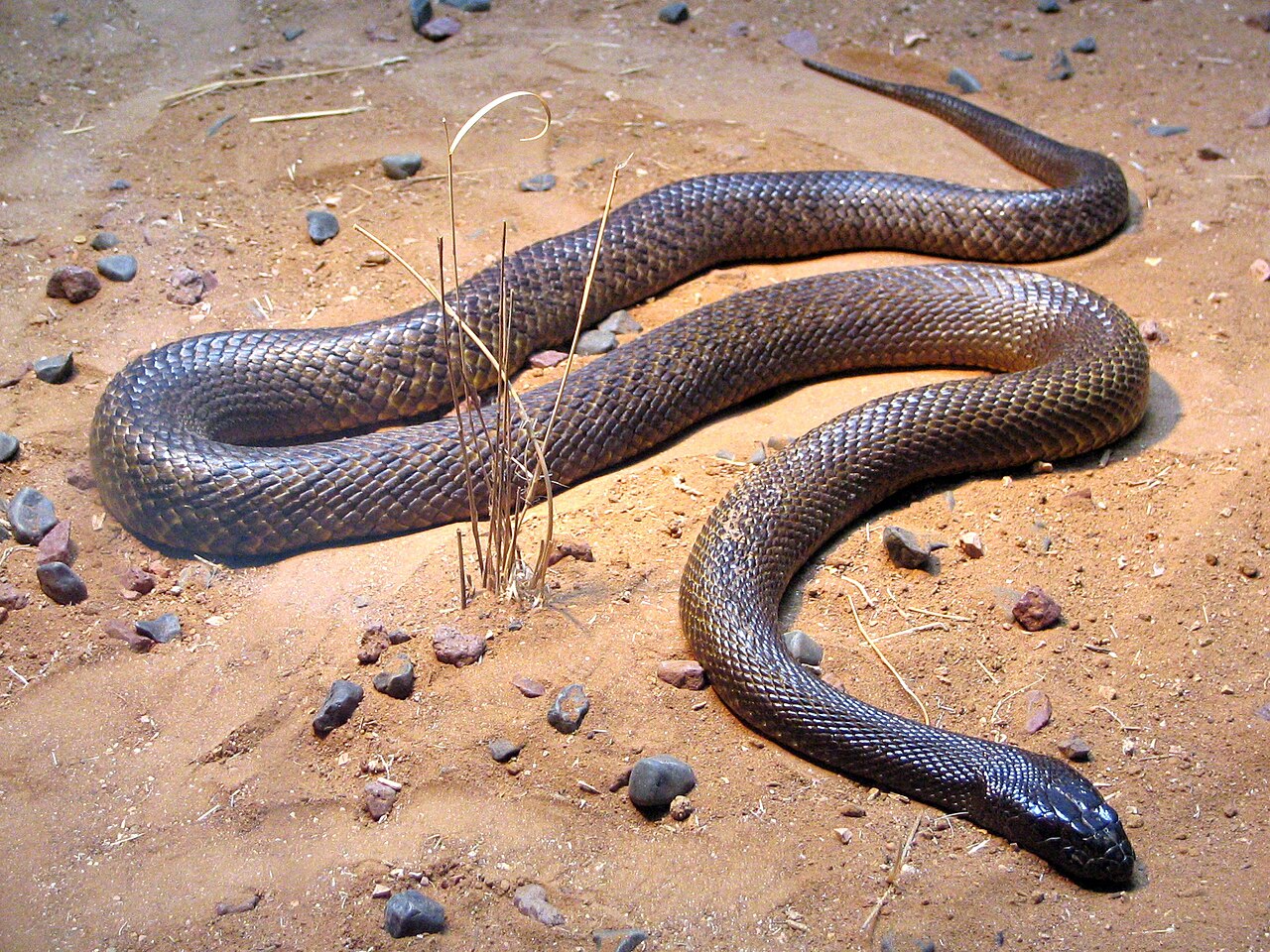
What is the most venomous snake in the world has a clear answer if you measure venom by raw toxicity: the inland taipan of central Australia, also called the fierce snake. Drop for drop, its venom is the most toxic of any land snake ever measured in the lab, and a single bite carries enough to kill many adults in theory. By the strict definition of 'most venomous' — most potent venom — the inland taipan sits at the top.
But 'most venomous' and 'most deadly' are not the same claim, and confusing them is where most internet arguments start. Toxicity is measured by how little venom is needed to be lethal in controlled tests, usually expressed as an LD50 value. How deadly a snake actually is in the real world depends on far more: how often it bites people, how much venom it delivers, how aggressive or shy it is, and whether antivenom and hospitals are within reach. A supremely toxic snake that lives in remote desert and rarely meets anyone kills very few people.
The inland taipan is exactly that case. It inhabits sparsely populated arid country, is generally shy, and recorded human bites are rare — so despite its record-setting venom, it causes almost no deaths. Other elapids round out the 'most venomous' shortlist by toxicity, including several Australian species and sea snakes such as the beaked sea snake, but the same caveat applies: lab potency does not equal everyday danger.
If the real question is which snakes kill the most people, the answer shifts to entirely different species. Snakes like the saw-scaled viper, the Indian cobra, the common krait, and Russell's viper — the so-called 'Big Four' of South Asia — are responsible for huge numbers of bites and deaths each year, not because their venom is the most potent, but because they live close to dense human populations, are encountered often in fields and homes, and bite people who lack quick access to antivenom.
That gap between 'most venomous' and 'most deadly' is the part actually worth remembering. The deadliest snake in any given place is rarely the one with the most exotic venom; it is the locally common species you are most likely to step near. Knowing which dangerous snakes share your region — and what they look like — protects you far more than memorizing the global toxicity leaderboard ever will.
That is where identification matters more than rankings. The snake that matters to you is the one in your yard or on your trail, not a desert taipan a continent away. If you encounter one and want to know whether it is a harmless local or a species that warrants real caution, photograph it from a safe distance and let SerpentID compare its markers against likely species in your area — and if a venomous match comes back, keep your distance and contact local emergency or wildlife services.