


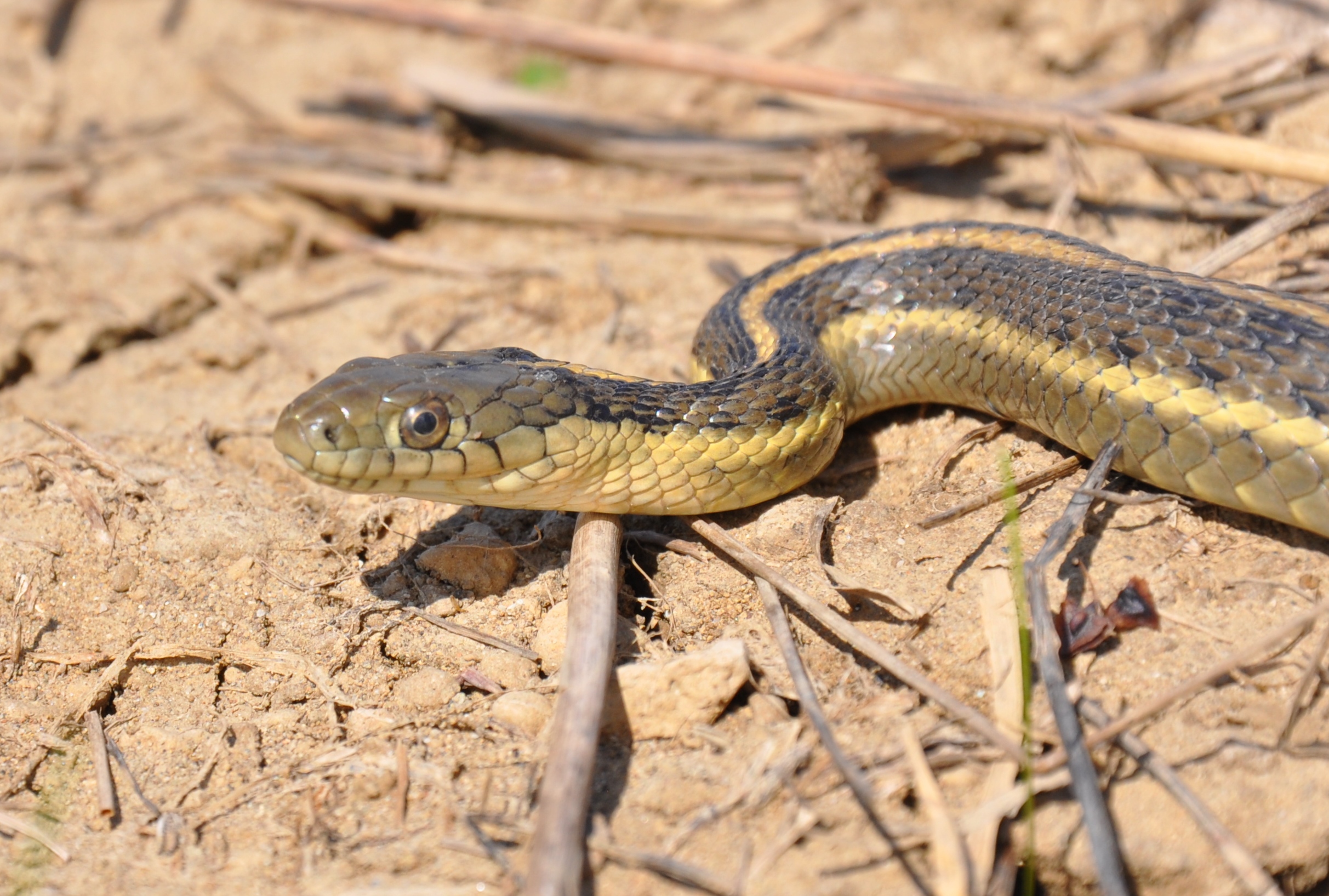
If you ask herpetologists to name the most common snake in the United States, most will point to the common garter snake, Thamnophis sirtalis. No national snake census exists, so the honest answer depends on what you mean by common. It could mean the widest geographic range, the highest local numbers, or simply the snake people run into most often. By the first measure, the common garter snake is the clear winner. It has the broadest distribution of any snake in North America and occurs in nearly every state in the lower 48. It is missing mainly from the driest parts of the Southwest, and its range extends deep into Canada. It also tolerates people well, so it turns up in lawns, vacant lots, parks, farm fields, and suburban gardens as readily as in wetlands and woods.
Garter snakes do well for a few reasons. They are generalist feeders that take earthworms, slugs, frogs, toads, salamanders, small fish, and sometimes small rodents, so they can live almost anywhere with some moisture and cover. They give birth to live young rather than laying eggs, which helps them survive in colder northern climates where eggs might not develop. A single litter can be large. They also stay active at relatively cool temperatures and often emerge early in spring, which is one reason homeowners notice them so often. Most have three light stripes running down a darker body, often with a checkered pattern between them. Colors vary a lot by region, though, and some individuals show red, blue, green, or nearly black tones.
Range is not the same as abundance, and several other species are extremely common within their own areas. DeKay's brown snake is a small, secretive snake that thrives in cities and suburbs across much of the eastern and central US, where it often hides under mulch, boards, and stones. Ring-necked snakes are rarely seen because they spend so much time under cover, but some field studies have estimated remarkably high local densities in good habitat. North American racers and eastern rat snakes are widespread in fields, forest edges, and farmland. Northern and other water snakes are often the most visible snakes along ponds, creeks, and lakes. In the western states, gopher snakes and bullsnakes are among the snakes people most commonly report.
The snake you see most often also depends on your habits and your yard. A gardener who turns over mulch may meet brown snakes and ring-necked snakes regularly. A kayaker may mostly see water snakes basking on branches. A homeowner with a barn full of mice may keep running into rat snakes. Large, active, daytime snakes such as racers and rat snakes get noticed far more than small burrowing species, even when the small species actually outnumber them. So the most common snake in your neighborhood may not be the one that seems most common to you.
Some common snakes are venomous. In much of the eastern and southeastern US, the copperhead is the venomous snake people encounter most often, partly because it lives comfortably in suburban woodlots, leaf litter, and landscaped yards. Across the West and Southwest, several rattlesnake species are regularly seen near homes and trails. These snakes are not aggressive and generally bite only when stepped on, grabbed, or cornered. Still, a common snake is not automatically a harmless one. The same caution applies outside the US: in parts of Australia the eastern brown snake is a frequent suburban visitor and is highly venomous, and in India the harmless Indian rat snake shares villages and fields with dangerous species such as cobras and Russell's vipers. Garter snakes themselves are considered harmless to people. They may bite if handled and release a foul-smelling musk, and occasional mild local reactions have been reported, but they are not dangerous snakes. If anyone is bitten by any snake and the species is uncertain, seek professional medical help immediately.
Because so many look-alikes share the same yards, the safest way to learn which common snake you are dealing with is to identify it without getting close. Stay well back and leave the snake an escape route. Never try to pick it up, pin it, or kill it, since most bites happen during exactly those attempts. If you can, take a clear photo from a safe distance and let SerpentID compare its stripes, blotches, head shape, and color against the species most likely in your area. If the result suggests a venomous snake, or the snake is inside your home or somewhere people and pets can't avoid, contact your local wildlife services or a licensed snake removal professional instead of handling it yourself.