


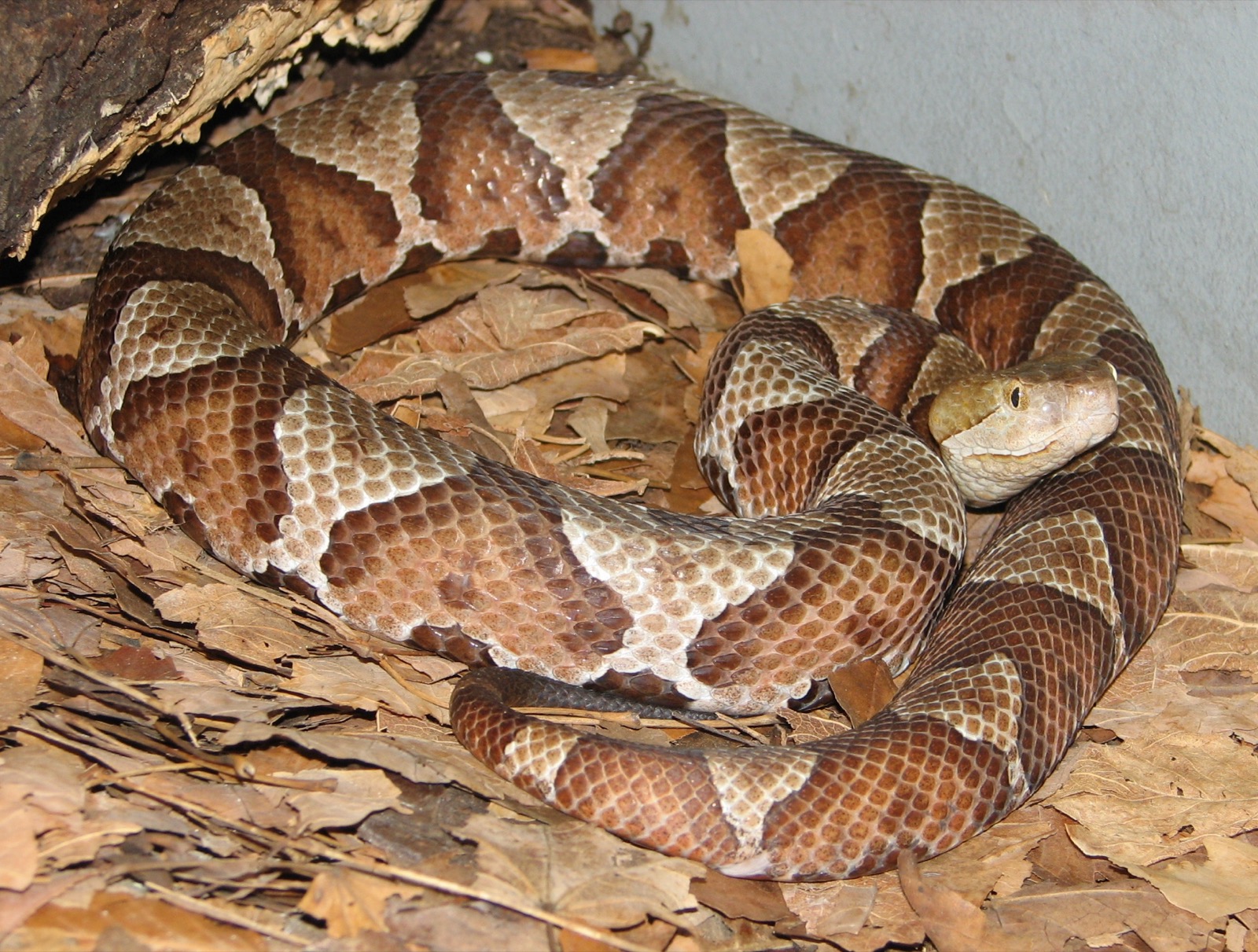
People search for the phrase pit viper after hearing it on a nature show, seeing it on a park sign, or reading it in a snakebite news story. The term is not a loose nickname for any dangerous-looking snake. It refers to a specific group of venomous snakes, the subfamily Crotalinae within the viper family Viperidae. More than two hundred species belong to it, and they live mainly in the Americas and Asia. What unites them is a pair of small, deep openings on the face, one on each side of the head between the eye and the nostril. Those openings are the pits that give the group its name, and they are one of the more remarkable sense organs in the animal kingdom.
Each pit is a heat-sensing organ. Inside the opening, a thin membrane packed with nerve endings stretches across an air-filled chamber, and it responds to infrared radiation given off by warm objects. In practical terms, a pit viper can detect the body heat of a mouse, bird, or other warm-blooded animal even in darkness, and the information from the pits is combined with what the snake sees through its eyes. This does not mean pit vipers see people as glowing outlines in the way films suggest, and it does not make them hunters of humans. The pits are a tool for finding and striking small prey and for sensing warm or cool spots in the environment. A person standing nearby is simply a large, warm object the snake would rather avoid.
Like all vipers, pit vipers have long, hollow fangs mounted on movable bones at the front of the upper jaw. The fangs fold back against the roof of the mouth when the mouth is closed and swing forward when the snake strikes, which allows relatively long fangs to fit inside a compact head. Their venoms vary a great deal between species and even within a species, but many pit viper venoms primarily cause local tissue damage, swelling, pain, and problems with blood clotting, while some, such as those of certain rattlesnake populations, also have significant effects on the nervous system. The variation is one reason any pit viper bite, regardless of species, is a medical emergency, and the only correct response is to seek professional medical help immediately.
In the United States, the pit vipers are the rattlesnakes, including the pygmy rattlesnakes and massasaugas, along with copperheads and cottonmouths, which are also called water moccasins. Together they account for the large majority of venomous snakebites in the country. The coral snakes of the Southeast and Southwest are also venomous, but they are elapids, related to cobras, and they have no facial pits, so they are not pit vipers. In India, pit vipers include the hump-nosed pit viper, the Malabar pit viper, and several green or bamboo pit vipers, many of them found in forested and hilly regions such as the Western Ghats and the Northeast. Two of India's best-known dangerous snakes, Russell's viper and the saw-scaled viper, are vipers but lack facial pits, which places them in a different subfamily often called true vipers. Australia has no native vipers of any kind. Its common death adders look strikingly viper-like, with a stout body and broad head, but they are elapids that evolved a similar shape for an ambush lifestyle.
Several popular shortcuts for spotting a pit viper are less reliable than people think. A triangular head is common in the group, yet many harmless snakes flatten their heads into a triangle when threatened, and some pit vipers have fairly modest head shapes. Vertical, cat-like pupils are typical of pit vipers, but pupils can look round in dim light, and they are impossible to judge safely at a distance anyway. A rattle is a strong clue in the Americas, but rattles can be broken off, newborn rattlesnakes have only a single button, and some harmless snakes vibrate their tails in dry leaves to produce a convincing buzz. The facial pit itself is the most dependable family feature, but it is small, and getting close enough to see it with the naked eye means getting within striking range. Overall body pattern, local range, and habitat, taken together, are far more useful than any single rule of thumb.
Most pit vipers rely on camouflage and stillness rather than flight, which is why many bites happen when someone steps on, sits beside, or reaches toward a snake they never saw. Copperheads in leaf litter, rattlesnakes beside rocks or logs, and green pit vipers on low branches can all be nearly invisible until you are very close. Watching where you put your hands and feet, using a light at night, and wearing sturdy footwear in snake country prevent most encounters from becoming bites. If you do spot a snake, stop, back away slowly, and give it plenty of room. Never try to handle, pin, or kill it, since attempts to kill snakes are a well-documented cause of bites.
When you want to know whether the snake in front of you is a pit viper, let a camera do the close work. Photograph the snake from a safe distance, zooming in rather than stepping closer, and try to capture the overall pattern and the side of the head if the angle allows. SerpentID can then compare the markings, body shape, and your location against the species most likely to occur in your area, whether that is a copperhead in a Virginia backyard, a hump-nosed pit viper on a Kerala plantation, or a harmless look-alike. If the result points to a venomous species near your home, school, or workplace, keep people and pets away from the area and contact your local wildlife service or a licensed snake removal professional rather than dealing with it yourself.