


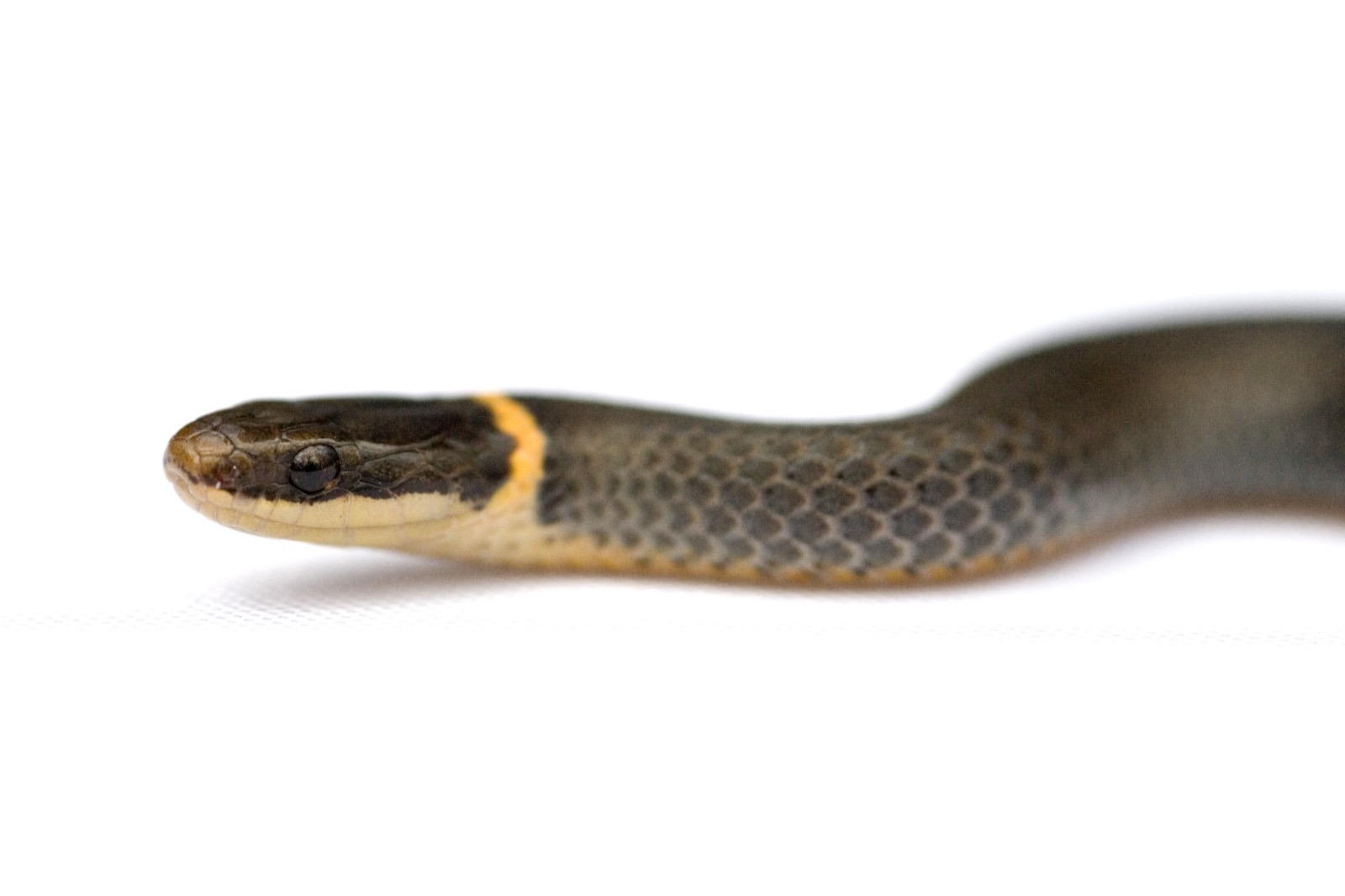
Most people who search for blind snakes have just found something small, dark, and wriggling in a plant pot, a bathroom, or a patch of freshly turned garden soil, and they want to know whether it is a worm, a baby snake, or something to worry about. Blind snakes are real snakes, belonging to a group of primitive burrowing families that includes the typhlopids and the closely related threadsnakes. They spend nearly their entire lives underground or under leaf litter, which explains both their odd appearance and why so few people have ever heard of them until one turns up unexpectedly.
The species found most often around homes is the Brahminy blind snake, Indotyphlops braminus. It is native to South and Southeast Asia, including India, where it is a familiar sight in gardens and around drains after heavy rain. Over the past century it has hitchhiked across the globe in the soil of nursery plants, earning the nickname flowerpot snake. It is now established in Florida, parts of Texas and other southern states, Hawaii, and many tropical islands, and it has been recorded in northern Australia. Australia also has dozens of its own native blind snakes in the genus Anilios, while the southwestern United States has native threadsnakes such as the Texas threadsnake. All of these share the same basic lifestyle and are harmless to people.
The Brahminy blind snake has one of the most unusual life histories of any snake: as far as researchers know, every individual is female. The species reproduces by parthenogenesis, meaning each snake lays eggs that develop without fertilization, producing genetic copies of the mother. This is a major reason it spreads so successfully, because a single snake tucked into a shipment of potting soil can found an entire new population. Adults are usually only 5 to 10 centimeters long, rarely reaching about 16 centimeters, and are roughly the thickness of a cooked spaghetti noodle.
Despite the name, blind snakes are not completely blind. Their eyes are reduced to tiny dark spots beneath translucent head scales, and they can sense light and dark, which helps them stay hidden underground. They do not need sharp vision because they hunt by scent, following chemical trails into ant and termite nests, where they eat eggs, larvae, and pupae. Their mouths are very small and set underneath the head, which is one reason they pose no bite risk to people or pets. A short spine at the tip of the tail helps them brace against soil as they push forward, and if disturbed they may press that tail tip against your skin or release a musky smell, neither of which is harmful.
Telling a blind snake from an earthworm is usually straightforward once you know what to look for. Earthworms are soft, moist, and visibly ringed with segments, and they stretch and contract like an accordion as they move. Blind snakes are covered in smooth, shiny, overlapping scales that give them a polished look, usually dark brown, black, or purplish gray, and they keep a nearly constant thickness from end to end. They move with the side-to-side wriggle typical of snakes rather than stretching, and if you look closely you may see a tiny forked tongue flicking. Both ends look blunt, so people often struggle to tell head from tail, which is another hint you are looking at a blind snake rather than a juvenile of a more familiar species.
There are a few myths worth clearing up. Blind snakes are not baby versions of larger snakes, they are not venomous, and they are not a sign of a larger snake infestation. Finding one indoors usually means it came in with a potted plant, wandered up through a drain or gap after rain flooded its burrow, or was carried in on soil. They do not survive long in dry indoor air, and they are useful in gardens because they eat pest insects. That said, size alone should never be your only clue, because some genuinely venomous species, including young kraits in India and young elapids in Australia, can also be small and dark. If you are not certain what you are looking at, do not pick it up or try to move it by hand.
The safest approach is to keep your distance, keep children and pets away, and take a clear photograph that shows the head, body scales, and overall shape. SerpentID can compare those features against likely local species, helping you confirm whether you are dealing with a harmless blind snake or something that needs more caution. If the snake turns out to be, or might be, a venomous species, contact your local wildlife service or a licensed snake catcher rather than handling it yourself, and if anyone is ever bitten by an unidentified snake, seek professional medical help immediately.