


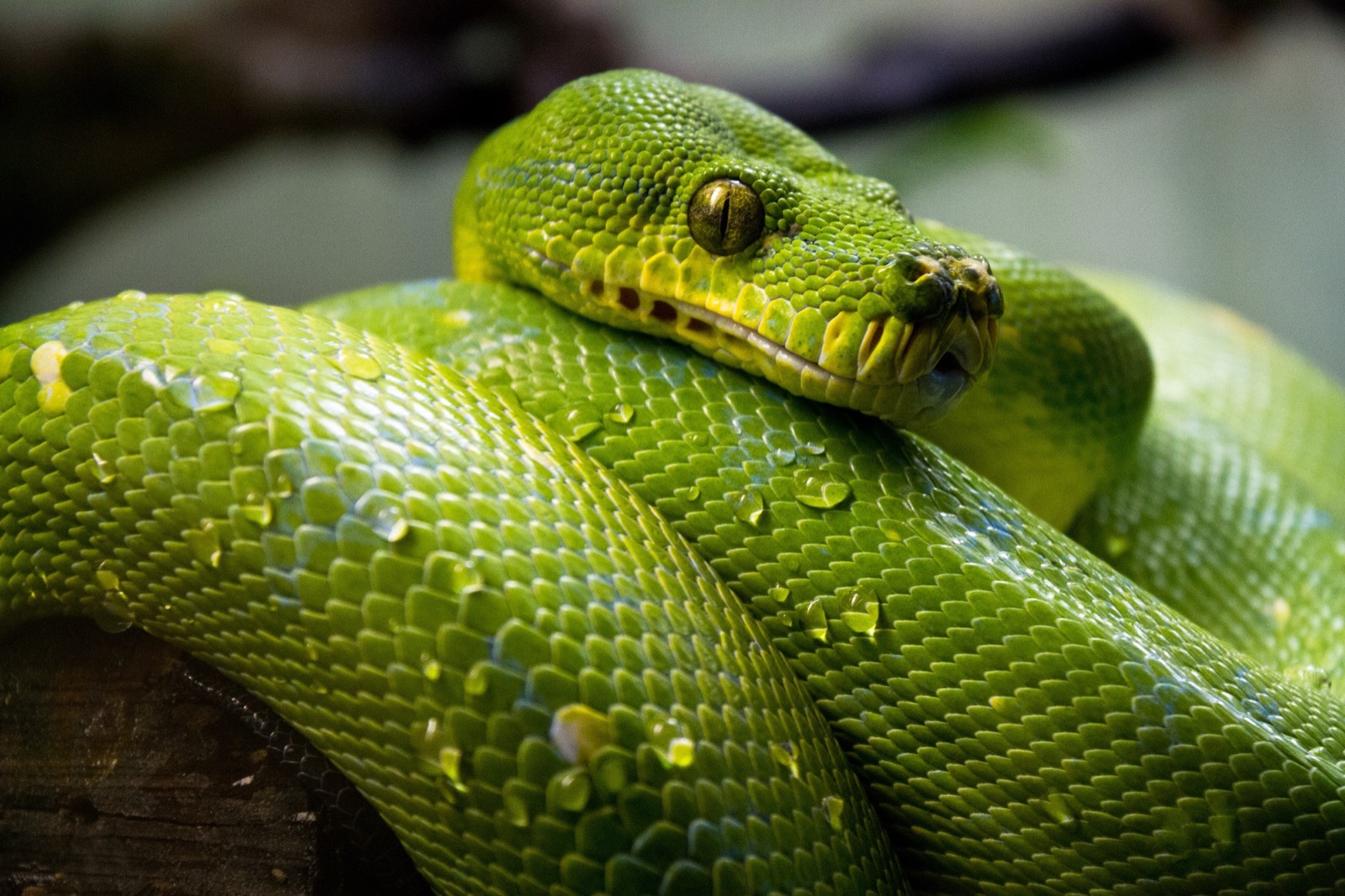
One of the most common myths about snakes is that their skin is slimy or wet. This couldn't be further from the truth. If you were to safely and appropriately touch a snake – which we strongly advise against in the wild – you would find its skin to be surprisingly dry, smooth, and typically cool. The actual texture is often likened to polished leather, firm plastic, or even a hardened, scaled fabric. This distinct feel is due to the snake's unique epidermal structure, which is entirely covered in keratin scales, not mucus-producing glands like an amphibian's skin.
The dry sensation of snake skin is a crucial adaptation for survival. As reptiles, snakes are well-equipped to prevent water loss from their bodies, a necessity for animals living in diverse environments, including arid deserts. Unlike amphibians, which absorb water through their moist skin and are prone to desiccation, snakes have evolved a protective, impermeable outer layer. This means their skin actively helps them retain moisture, making it feel dry to the touch, rather than damp or sticky.
The smoothness you perceive comes from the meticulous arrangement of thousands of individual scales. These scales, also made of keratin, overlap like shingles on a roof, creating a continuous, low-friction surface. This design is incredibly efficient for movement, allowing snakes to glide effortlessly over various terrains. While some snakes have smooth scales, others possess keeled scales, which have a raised ridge down the center. Even these keeled scales, which might feel slightly rougher due to their texture, are still fundamentally dry and never slimy.
The cool temperature of a snake's skin is another characteristic that often surprises people. As ectothermic animals, commonly referred to as 'cold-blooded,' snakes do not generate their own body heat internally in the same way mammals and birds do. Instead, their body temperature is regulated by their external environment. If a snake has been resting in the shade, burrowed underground, or in cooler ambient temperatures, its skin will feel cool to the touch, simply reflecting the temperature of its surroundings, not an inherent 'coldness' in its biology.
Beyond its distinctive feel, snake skin serves a multitude of vital functions. It acts as a robust armor, protecting the snake from physical injury, abrasions, and potential predators. It plays a critical role in camouflage, helping the snake blend seamlessly into its habitat to avoid detection. Furthermore, it is essential for maintaining hydration and preventing water loss, as previously mentioned. This remarkable covering is periodically shed in a process called ecdysis, allowing for growth and the repair of damaged scales, but at no point in this cycle does the skin become slimy.
Understanding the true nature of snake skin helps to demystify these often-misunderstood creatures. While their dry, smooth, and cool texture may spark curiosity, it's paramount to remember that wild snakes should never be approached or handled. If you encounter a snake and are curious about its identity, maintain a safe distance and snap a clear photograph. The SerpentID app can then help you identify the species, allowing you to appreciate these incredible animals without putting yourself or the snake at risk. If you suspect a snake is venomous, contact your local wildlife services for safe removal.