


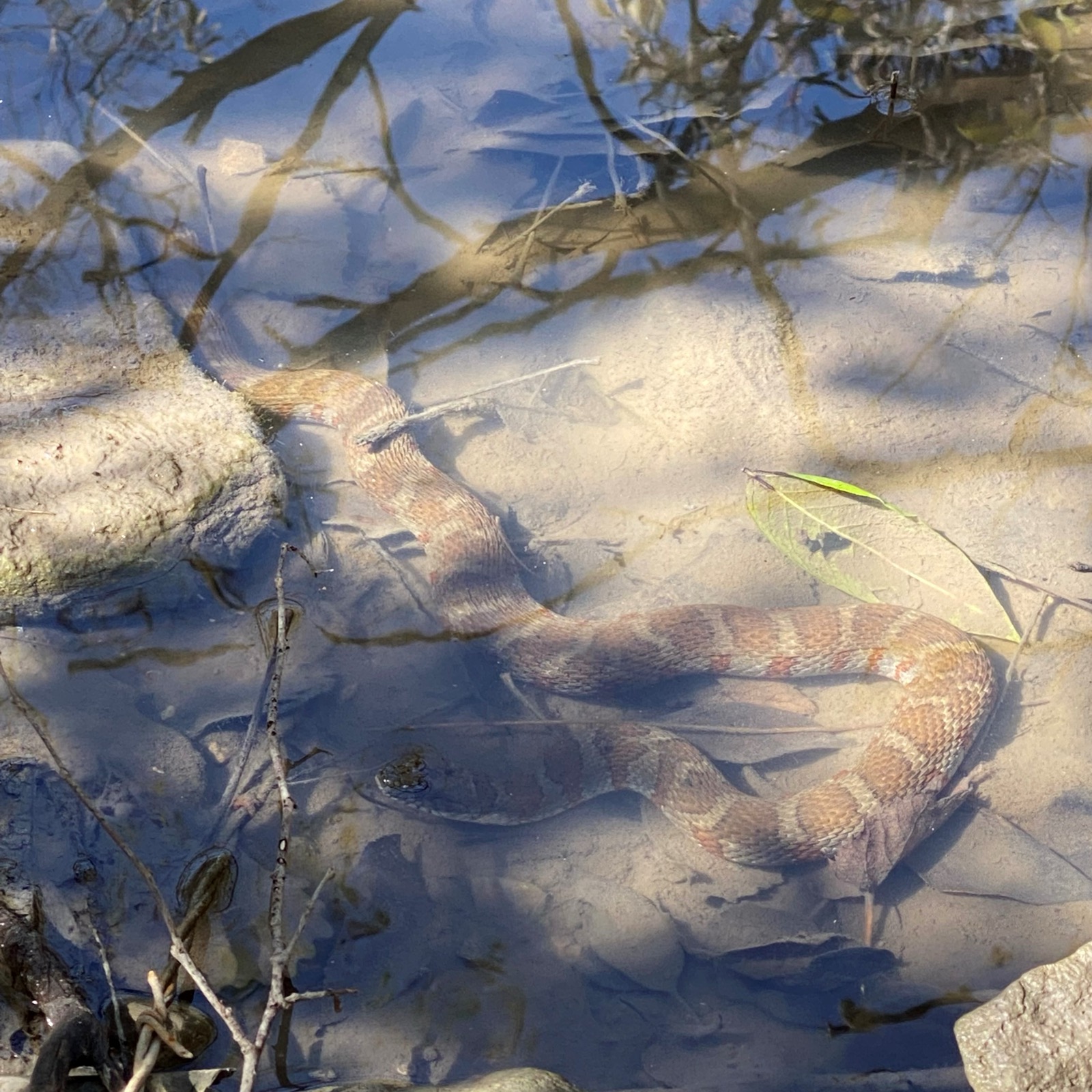
Water snake vs cottonmouth is a high-intent search because people often see a snake near a pond, canal, dock, or marsh and need a safer next step fast. The first mistake is assuming every thick-bodied snake near water is a cottonmouth.
Harmless water snakes are highly variable and can look dark, heavy, and defensive in ways that trigger false alarms. A single zoomed head photo can exaggerate those signals, especially when the snake is flattening its body or holding a tense posture.
Start with the scene. Is the snake actively swimming, basking near shallow water, or moving through shoreline vegetation? Then compare broad pattern zones along the body. Water snakes often keep enough blotch or band structure to remain visible even when the head is not clear.
Cottonmouth discussions online often over-index on head shape, but that marker is weaker than people think. Angle, lens distortion, and defensive posture can make many snakes look triangular. Whole-body pattern, behavior, and habitat context are more stable.
If SerpentID cannot separate cottonmouth from Nerodia with confidence, use that uncertainty correctly. Back up, block access for pets and children, and avoid trying to haze or capture the snake. For real-world safety, conservative distance beats overconfident identification.