


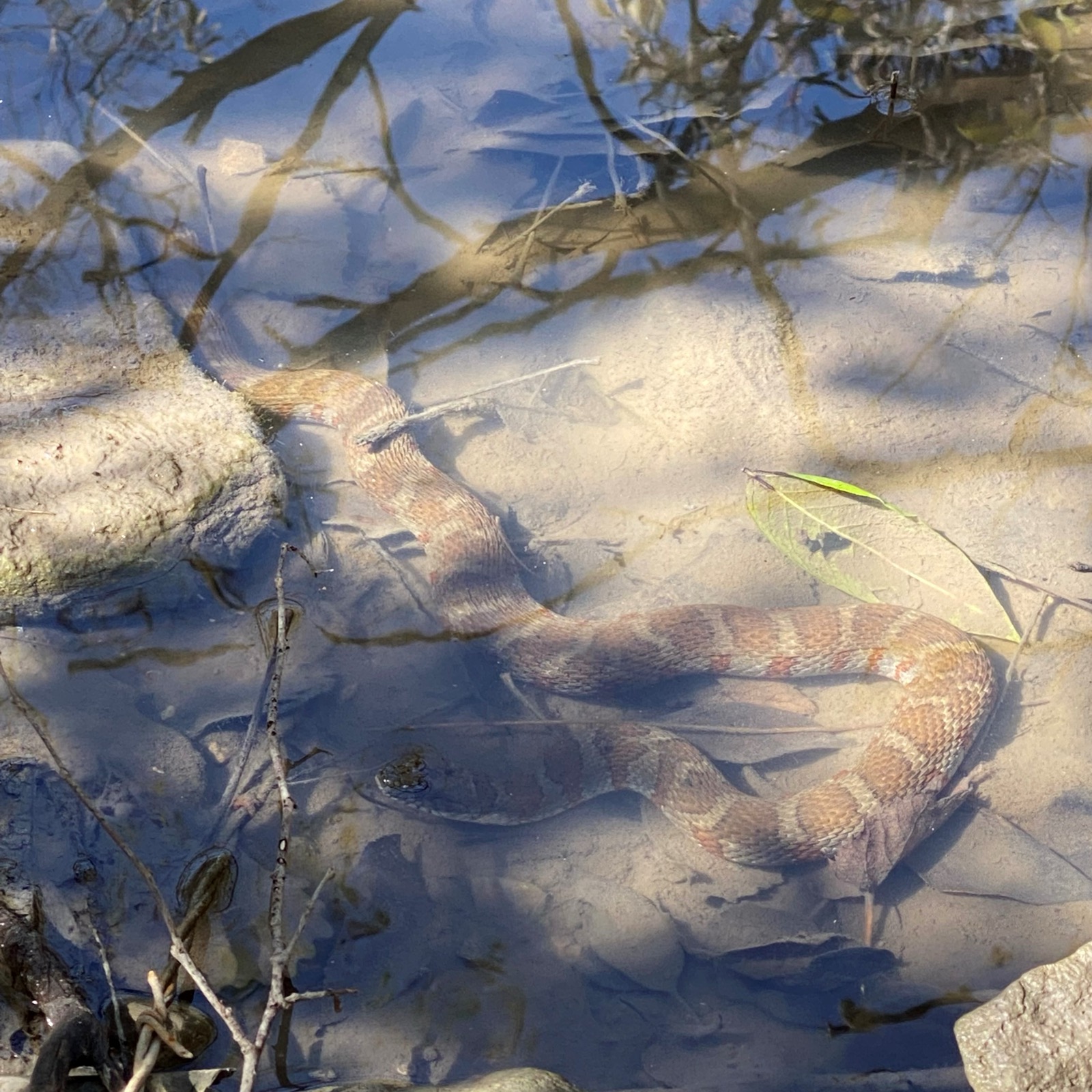
Water snake vs copperhead becomes a search query when someone finds a brown or tan snake near a creek bank, retention pond, wet ditch, or overwater rocks and wants a quick answer before kids or pets get closer. The challenge is that moisture and mud make many harmless snakes look darker, thicker, and more dramatic than they really are.
Habitat helps frame the comparison without settling it alone. Water snakes are strongly tied to shorelines, reeds, docks, culverts, and active water edges. Copperheads can turn up in damp places too, but the overall scene more often includes woodland litter, brushy edges, logs, and low cover instead of an obviously aquatic setting.
Pattern structure is usually more trustworthy than generic color. Copperheads are famous for crossbands that narrow across the spine and widen down the sides. Water snakes often keep bands or blotches too, but the pattern usually feels messier, more variable, and less like repeated hourglasses when you look across the full body.
People also over-read head shape in this comparison. A defensive water snake in a zoomed phone photo can look broad-headed enough to trigger a copperhead guess, especially if the body is flattened. A better workflow is to compare whole-body pattern, where the snake was found, and whether the posture reads aquatic and shoreline-oriented.
SerpentID is most useful after one clear mid-distance photo that shows both pattern and habitat context. If the result still includes copperhead or confidence remains low, do not push for one more close angle. Give the snake room, keep the bank clear, and let uncertainty drive caution instead of false certainty.