


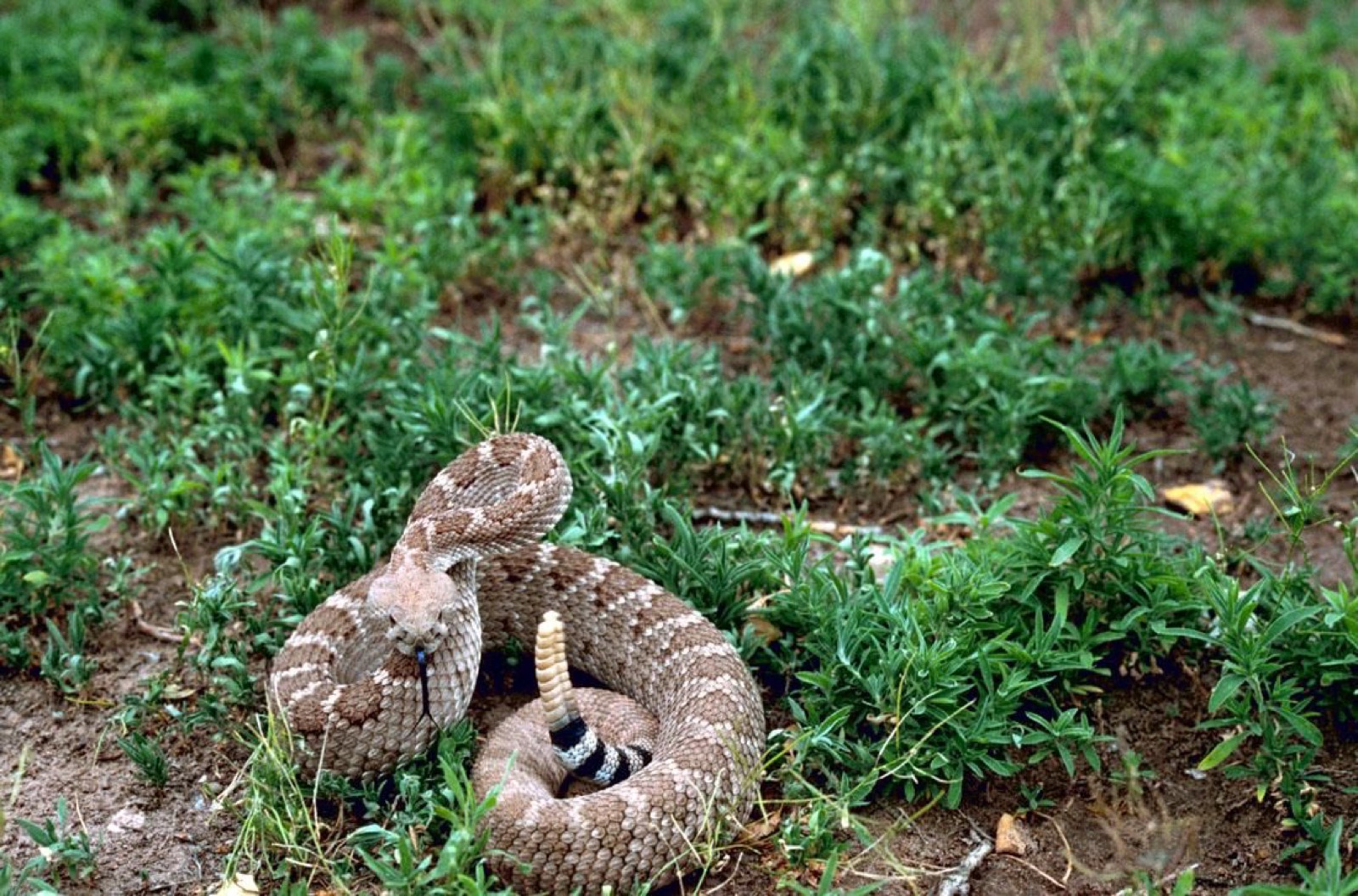
People across the United States often ask how many venomous snakes live near them, and the answer is simpler than most expect. Nearly all of the medically significant venomous snakes in the country fall into four groups: rattlesnakes, copperheads, cottonmouths (also called water moccasins), and coral snakes. Rattlesnakes, copperheads, and cottonmouths are pit vipers, a family of snakes with heat-sensing pits between the eye and nostril. Coral snakes belong to a different family, the elapids, which also includes cobras, mambas, and most of Australia's dangerous snakes. Learning these four groups gives you a far more useful mental map than trying to memorize every snake in a field guide.
Rattlesnakes are the largest and most widespread group. They occur in most of the lower 48 states, with the greatest diversity in the Southwest, where Arizona alone is home to more rattlesnake species than any other state. Familiar examples include the western and eastern diamondbacks, the timber rattlesnake of the eastern forests, the prairie and western rattlesnakes of the plains and mountains, and the small pygmy rattlesnakes and massasaugas. The rattle is the famous identifier, but it is not a guarantee: rattles can break off, newborns have only a single button that cannot make sound, and rattlesnakes frequently stay silent and rely on camouflage instead. A quiet snake is not automatically a harmless one.
Copperheads are found across much of the eastern and central United States, from southern New England through the Southeast and west into Texas. They have hourglass-shaped crossbands in tan, copper, and brown that blend remarkably well into leaf litter and mulch. Because they live comfortably near suburbs and often freeze rather than flee, copperheads are responsible for more venomous bites in the United States than any other snake. The good news is that their venom is comparatively mild, and deaths from copperhead bites are very rare, though a bite still needs urgent medical attention and can cause significant pain and tissue damage.
Cottonmouths live in the Southeast and south-central states, generally in or near swamps, slow streams, ponds, and wetlands. They are heavy-bodied, often dark olive to nearly black as adults, and are known for opening their mouths to show the white lining as a warning. Many harmless water snakes are mistaken for cottonmouths, which is why so many people believe cottonmouths live in places where they do not. Range matters a great deal here: if you are outside the cottonmouth's range, a snake swimming in a pond is almost certainly a nonvenomous water snake, though you should still give it space.
Coral snakes are the least frequently encountered of the four. The eastern coral snake lives in the coastal Southeast, the Texas coral snake ranges through Texas and nearby areas, and the small Sonoran coral snake occurs in Arizona and New Mexico. They are slender, secretive, and usually patterned with red, yellow, and black bands. The old rhyme about red touching yellow is a rough rule that works for most coral snakes in the United States, but it is not reliable everywhere, unusual color variants exist, and it fails entirely in other parts of the world. It is better treated as a reason for caution than as a confident identification tool. Coral snake bites are rare, but their venom is neurotoxic and every bite should be treated as a medical emergency.
A few footnotes round out the picture. The yellow-bellied sea snake occasionally washes up on beaches in Southern California and is venomous, though encounters are extremely rare. Some rear-fanged species, such as lyre snakes and night snakes in the West, produce mild venom that is not considered dangerous to people. Alaska has no native venomous snakes, and Hawaii has no native land snakes at all. Nationally, estimates suggest roughly 7,000 to 8,000 venomous snakebites occur each year, with only around five deaths, largely because antivenom and emergency care are widely available. Rattlesnakes cause most of the serious cases. If anyone is bitten by any snake, seek professional medical help immediately rather than trying home remedies.
The most reliable way to stay safe is not to rely on a single rule like head shape, pupil shape, or color rhymes, all of which have exceptions and require getting closer than is wise. Instead, keep at least several feet of distance, never try to handle, move, or kill a snake, and take a photo from where you stand. SerpentID can compare the markings, body shape, and pattern in your photo against the species most likely to occur in your area, which is especially helpful for separating copperheads from harmless lookalikes or cottonmouths from water snakes. If the result points to a venomous species near your home, trail, or workplace, contact your local wildlife services or a licensed snake removal professional and let them handle it.