


Few snake sightings stop people in their tracks like two snakes twisted around each other in the open. The scene gets filmed, shared, and debated constantly, usually with the caption that the snakes are mating. In many of these videos, though, the snakes are doing something else entirely. When two snakes rear up off the ground, wrap their bodies together, and seem to wrestle or sway in unison, the most likely explanation is male combat: two males competing for access to a female, for a patch of territory near her, or simply for dominance during the breeding season. Understanding the difference matters for curiosity's sake, but it also matters for safety, because both situations put two highly motivated snakes in one spot.
Male combat has been documented in a wide range of snakes. In the United States, it is well known in rattlesnakes, copperheads, cottonmouths, rat snakes, kingsnakes, and gopher snakes. In Australia, eastern brown snakes, red-bellied black snakes, mulga snakes, and carpet pythons are among the species regularly seen in combat. In India, the famous 'snake dance' of the Indian rat snake, or dhaman, is a classic example, and king cobras and other large species also engage in it. The behavior generally follows a pattern: the two males raise the front third or more of their bodies, intertwine, push against each other, and try to force the rival's head down to the ground. The contest can last minutes or more than an hour, and it usually ends when one male gives up and retreats. In many venomous species, especially vipers, the males typically do not bite each other during combat; it is a test of strength and stamina rather than an attempt to kill.
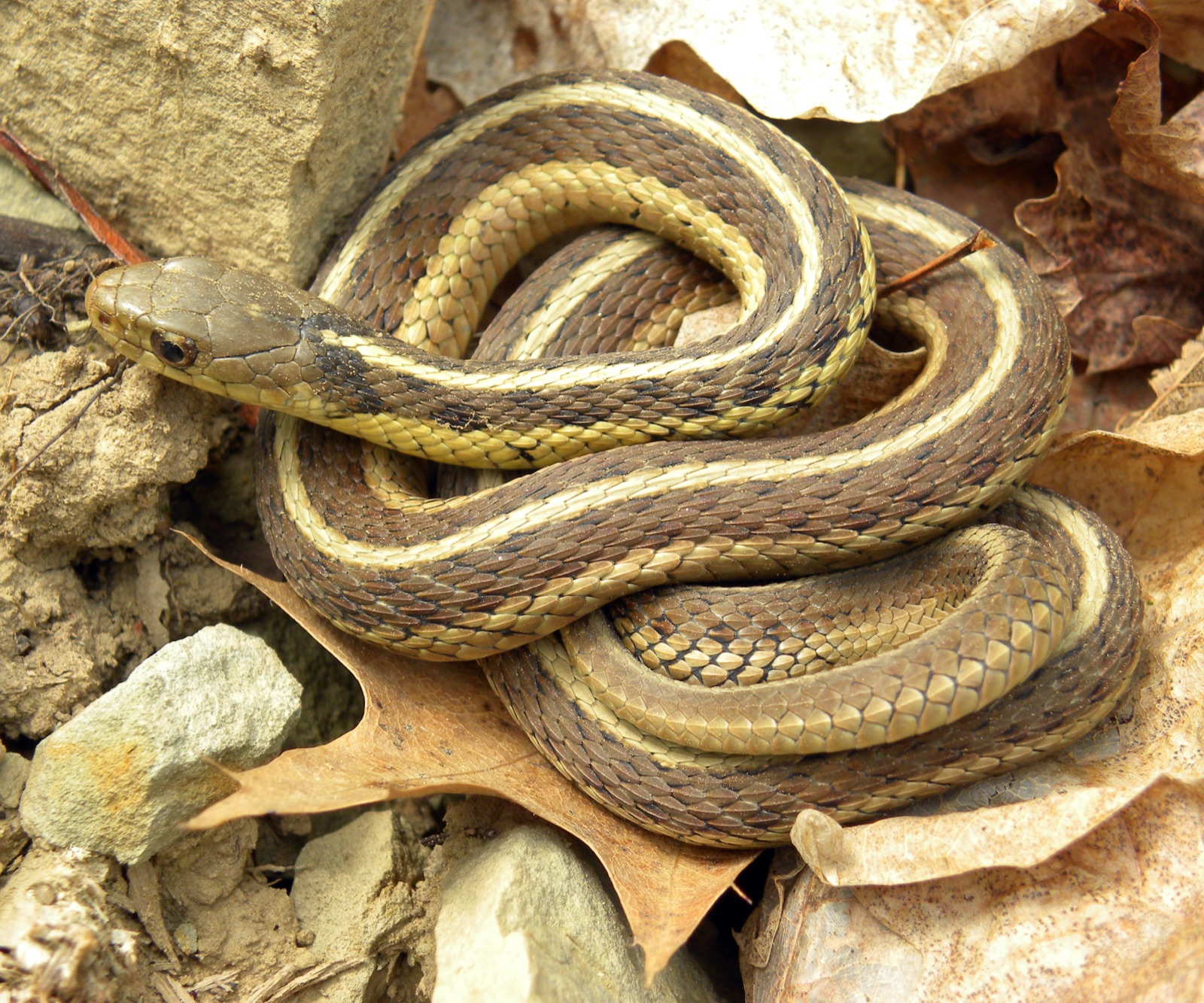
Mating looks noticeably different once you know what to look for. A courting male usually lies alongside the female, keeping his body parallel to hers and close to the ground, and often rubs his chin along her back while making small rippling movements. The tails are typically aligned and joined near the vent, and the pair may stay that way, largely motionless, for a long time. There is little of the dramatic rearing and twisting seen in combat. A useful rule of thumb is that vertical, upright, pushing behavior points toward two males fighting, while low, parallel, quiet contact points toward a mating pair. The main exception people encounter is the garter snake mating ball, where many males tangle around a single female in spring; this looks chaotic but is still mating behavior rather than combat, and it is most famous at large communal dens in Canada and the northern United States.
Several popular myths attach themselves to these sightings. In parts of India, the rat snake's dance is often described as a cobra and a rat snake mating, but snakes of different species do not pair up this way, and the dancing animals are typically two male rat snakes. Another common belief is that intertwined snakes are a sign of good or bad luck, or that disturbing them invites revenge; snakes do not hold grudges or recognize individual people in that sense. It is also not true that combating snakes are harmless because they are 'too busy.' They may ignore you for a while, but if they are startled or the contest ends suddenly, the loser often bolts away quickly and may not choose a direction that keeps it away from you.
Timing can help explain what you are seeing. In temperate parts of the United States and southern Australia, combat and mating are most often seen in spring and, for some species, again in late summer or autumn, when males are moving widely in search of females. In India, activity often increases with the monsoon and the warmer months around it. Seeing combat in your yard simply means that snakes are using the area and that at least one female may be nearby, which is a normal part of living alongside local wildlife. It does not mean a nest is under your house or that more snakes are about to arrive.
The safest response to any pair of intertwined snakes is to stay back, keep children and pets well away, and let the encounter run its course. Do not try to separate them with a stick, spray them with a hose, throw objects, or move in for a closer video, because these are exactly the actions that turn a distracted snake into a defensive one. Give them several body lengths of space at minimum, and more for large or fast species. If anyone is bitten, seek professional medical help immediately. Most of the time the snakes will finish and disperse on their own within the hour.
If you want to know what species you are watching, the best tool is a clear photo taken from a safe distance with your phone's zoom. Capture the head, the body pattern, and the overall color if you can, without stepping closer. SerpentID can compare those markings against the snakes most likely to live in your region and help you tell, for example, a pair of harmless rat snakes from combating copperheads or brown snakes. If the result suggests a venomous species is in your yard or near your home, contact your local wildlife service or a licensed snake catcher rather than trying to move the animals yourself.