


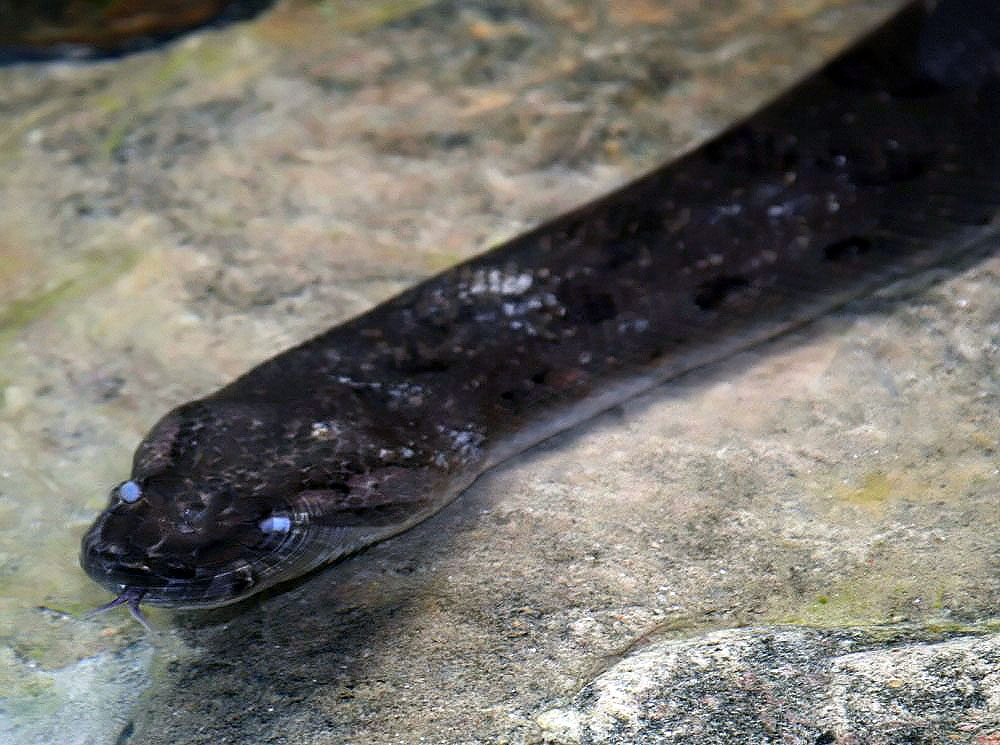
When people search for the biggest snake in the world, they usually mean a living species: the reticulated python for length, or the green anaconda for sheer bulk. The fossil record tells a much bigger story. About 58 to 60 million years ago, in the hot, swampy forests of what is now northern Colombia, there lived a snake so large that it changed how scientists think about the upper limits of snake size. It was named Titanoboa cerrejonensis, and it remains the largest snake ever confirmed from fossils.
Titanoboa was described in 2009 from fossils dug out of the Cerrejón coal mine in La Guajira, Colombia. The team behind the discovery included paleontologists Jason Head and Jonathan Bloch, and they did not find a complete skeleton. Instead, they worked mostly from vertebrae, the backbone segments that snakes have in the hundreds. Snake vertebrae change size and shape in predictable ways along the body, so comparing the fossils with living boas and anacondas let researchers estimate the animal's overall size. The commonly cited figures are a length of about 12.8 meters (roughly 42 feet) and a weight of around 1,100 kilograms (about 2,500 pounds). These are estimates with a real margin of error, but even the conservative end of the range dwarfs any snake alive today. For comparison, the longest reliably measured wild reticulated pythons reach around 7 meters, and record-sized green anacondas are usually estimated at a couple of hundred kilograms at most. Many larger claims for living snakes have never been properly verified.
Despite the dramatic name and its frequent appearance in documentaries as a crocodile-crushing monster, Titanoboa's lifestyle was probably more ordinary than its size suggests. It belonged to the boa family and was most closely related to modern boas and anacondas, which suggests it was a non-venomous constrictor that spent much of its time in or near water. The Cerrejón deposits are full of fossil fish, including large lungfish, and later study of skull material suggested Titanoboa's jaws and teeth were well suited to catching fish. It may have taken crocodile-like reptiles on occasion, as anacondas sometimes take caimans today, but the evidence points to a big-river ambush hunter rather than a land predator stalking large prey.
Titanoboa also became famous for what it might reveal about ancient climate. Because snakes are ectothermic and rely on outside warmth, the original researchers argued that a snake this large needed a very warm environment, and they estimated tropical temperatures several degrees hotter than today. That idea caught public attention, but other scientists have challenged the link between snake body size and climate, pointing out that body size depends on many factors, including food supply, habitat, and the absence of competing predators after the extinction of the dinosaurs. The careful takeaway is that Titanoboa lived in a hot, wet tropical world, but its size alone is not a precise thermometer.
Titanoboa may not hold the record alone. In 2024, researchers described Vasuki indicus from fossils found in a lignite mine in Kutch, Gujarat, in western India. Vasuki lived roughly 47 million years ago and belonged to an extinct group of snakes called madtsoiids. Based on its vertebrae, its length was estimated at somewhere between about 11 and 15 meters. That range overlaps with Titanoboa, though the estimate rests on incomplete remains, and the researchers suggested Vasuki was a slow-moving ambush predator rather than an active hunter. Other prehistoric giants include Gigantophis from North Africa, thought to have reached perhaps 7 meters or more. Australia had its own madtsoiid, Wonambi naracoortensis. Known from sites such as the Naracoorte Caves in South Australia, it reached around 5 to 6 meters and survived until roughly 50,000 years ago, recently enough to have shared the continent with early people.
It is worth addressing a persistent myth directly: there is no credible evidence that Titanoboa-sized snakes survive anywhere today. Stories of 15-meter anacondas in the Amazon or monster pythons in Southeast Asia have circulated for more than a century, but none has been backed by a measured specimen, and photographs of huge snakes are often distorted by forced perspective, with the snake held close to the camera. Today's tropics simply do not appear to support snakes anywhere near that size, and the biggest verified living snakes, while impressive, are a fraction of Titanoboa's length and weight.
In everyday life, the snakes most people actually meet are far smaller, but even a large harmless rat snake in the United States, a carpet python in Australia, or an Indian rock python can look enormous when it turns up unexpectedly in a garage, yard, or garden. Size tells you little about whether a snake is dangerous, so the safest approach is to stay well back, give the animal room to leave, and never try to handle or kill it. Take a photo from a safe distance and let SerpentID compare its markings, scale patterns, and body shape against the species most likely in your area. If the snake turns out to be venomous or is in a spot where it cannot easily leave on its own, contact your local wildlife service or a licensed snake catcher rather than dealing with it yourself.