


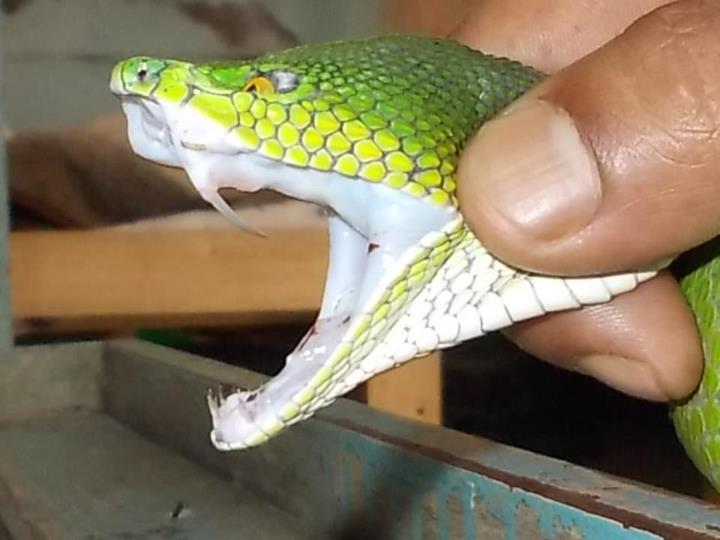
One of the most common questions people have about snakes, often rooted in a fundamental misunderstanding, is whether they are poisonous or venomous. The simple and correct answer is that snakes are venomous. While the terms are often used interchangeably in casual conversation, there is a significant biological difference that is crucial for understanding how these animals interact with their environment and, more importantly, how we should approach them for our safety.
The distinction between venomous and poisonous centers entirely on the method of toxin delivery. A venomous animal actively injects its toxins into another creature, typically through a bite or a sting. In the case of snakes, this involves specialized glands that produce venom, and modified teeth, known as fangs, which act like hypodermic needles to deliver this complex cocktail of proteins and enzymes into a victim. This venom serves various purposes, primarily for subduing prey and, secondarily, for defense against perceived threats. Rattlesnakes, cobras, vipers, and mambas are all classic examples of venomous snakes.
In contrast, a poisonous animal delivers its toxins passively. These toxins, or poisons, are typically secreted onto the skin, fur, or other tissues, and cause harm when they are ingested, inhaled, or absorbed through physical contact. A prime example of a poisonous animal is the poison dart frog, which secretes potent toxins through its skin, making it dangerous to touch or eat. Certain newts, some brightly colored caterpillars, and even specific types of mushrooms are also poisonous. No snake known to science produces or delivers toxins in this manner.
The widespread confusion between these terms often stems from colloquial language, where 'poisonous' has become a catch-all for anything toxic. However, from a biological standpoint, applying the term 'poisonous' to snakes is inaccurate. Even if one were to consume a snake, it would not inherently be poisonous. While a snake might carry bacteria or parasites, or if it had recently eaten a poisonous animal, those factors do not make the snake itself a poisonous species. The snake's own biological defense mechanism is to inject venom, not to passively secrete poison.
Understanding this distinction is not merely about linguistic precision; it has direct implications for safety. If a snake were poisonous, the primary danger would be in touching it, or perhaps in an unlikely scenario, eating it. Since snakes are venomous, the real danger lies in a bite, which is the mechanism by which they inject their venom. Knowing this helps us to react appropriately and safely when encountering a snake, focusing on avoiding bites rather than worrying about skin contact or other forms of exposure.
Therefore, when discussing snakes, it's always accurate to refer to them as venomous if they possess the ability to inject toxins. This correct terminology helps to educate the public and prevent misunderstandings that could lead to dangerous situations. Always maintain a safe distance from any snake you encounter. If you are unsure whether a snake is venomous or not, the safest approach is to assume it is and give it space. If you need to identify a snake from a safe distance, photograph its markings clearly and use the SerpentID app to compare it against local species, allowing you to determine its nature without risk.