


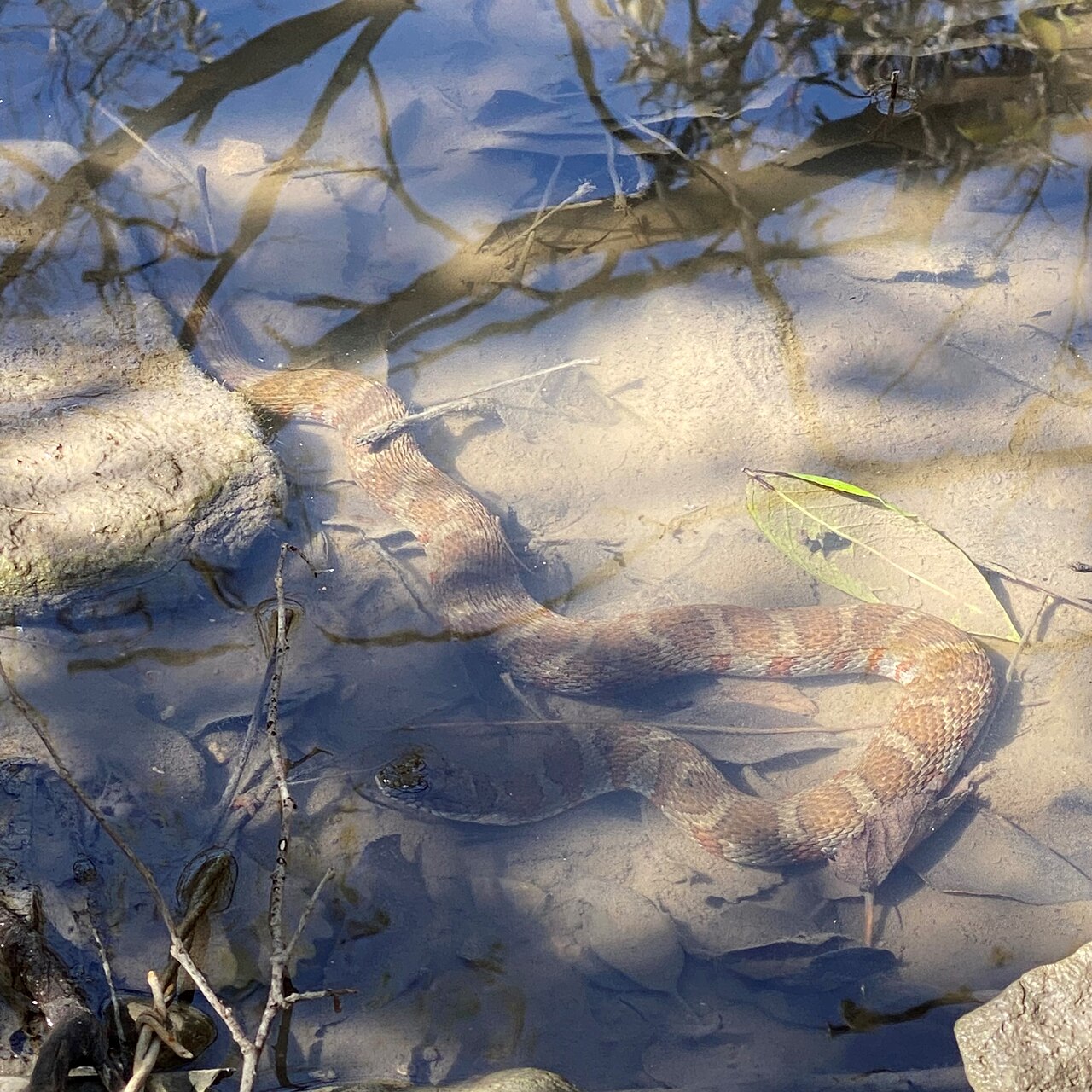
When rivers rise, storm surge rolls in, or monsoon rains saturate the ground, snakes lose their shelter along with everyone else. Burrows flood, leaf litter washes away, and the rodent holes and rock crevices where snakes normally hide fill with water. Snakes are capable swimmers, so most survive the water itself. What follows is predictable: they head for anything dry and elevated. That includes porches, garages, sheds, car engine bays, fence lines, tree branches, and the debris piles that build up after a storm. This is why sighting reports reliably climb after hurricanes on the US Gulf and Atlantic coasts, after floods in Queensland and New South Wales, and during the monsoon across much of India.
It helps to understand what is not happening. Floodwater does not make snakes angry or more likely to seek out people. A snake on your doorstep after a storm is a stressed, cold, and displaced animal looking for somewhere to rest. You will often hear that snakes gather into floating rafts or deliberately board boats to attack. Neither holds up. Fire ants are known for forming living rafts, but snakes do not. An individual snake may climb onto floating debris, a dock, or a moored boat simply because it is the nearest dry surface. The danger is real, but it comes from proximity and surprise rather than intent.
Regional patterns differ. In the southeastern United States, people cleaning up after hurricanes most often encounter water snakes, rat snakes, and garter snakes. They may also find cottonmouths and copperheads, which are venomous pit vipers. In eastern Australia, floods have pushed eastern brown snakes, red-bellied black snakes, and pythons into yards and homes. In India, the monsoon season coincides with a well-documented rise in snakebites. Russell's vipers, saw-scaled vipers, cobras, and kraits move into houses, grain stores, and raised paths as fields flood. Kraits are mostly active at night and have bitten people sleeping on the floor. That is why sleeping on a raised bed under a tucked-in mosquito net is long-standing advice in rural areas during the rains.
Most bites after a flood happen during cleanup, so the way you work matters more than anything else. Wear sturdy closed boots and long, thick trousers. Use heavy work gloves, and remember that gloves reduce risk but do not make it safe to reach blindly. Use a rake, shovel, or long-handled tool to lift and turn debris before you put your hands near it, and lift boards and sheet metal so the far side rises first, away from your body. Never reach into piles of wood, drywall, insulation, or vegetation where you cannot see. Pull stored items, cushions, and boxes out of flooded garages and sheds slowly, and give each one a moment before you carry it inside.
Avoid wading through floodwater whenever possible. Murky water hides snakes along with sharp debris, open drains, and contamination that is a serious hazard in its own right. If you must move through water, go slowly, use a pole to probe ahead, and watch the surface and the edges of floating debris. Once the water drops, carry a flashlight even in daytime when you check dark corners, under appliances, behind water heaters, and inside cabinets. Snakes that sheltered indoors during the storm may stay there for days. If you are bitten by any snake during a flood or cleanup, seek professional medical help immediately, and remember that emergency services may be stretched after a disaster, so plan your route to care in advance.
If you find a snake, the safest response is the same as at any other time: stop, back away to a safe distance, and leave it alone. Do not try to handle it, pin it, or kill it. Many bites happen during attempts to kill or move snakes, and most displaced snakes will leave on their own once conditions dry out and they can return to cover. Keep children and pets away from debris piles and standing water until the area has been checked. If a snake is inside your home or blocking a doorway you need, close off the room if you can and wait for help rather than forcing the issue.
Knowing what kind of snake you are dealing with makes these decisions far easier, especially when stress is already high. Take a photo from a safe distance, without stepping closer or moving debris for a better angle, and let SerpentID compare the markings against the species most likely in your area. A harmless water snake or rat snake can usually be left to move on. If the app suggests a venomous species such as a cottonmouth, brown snake, or Russell's viper, keep everyone well back and contact your local wildlife service or a licensed snake removal service. During the recovery period after a flood or storm, that call is often the safest part of the whole cleanup.