


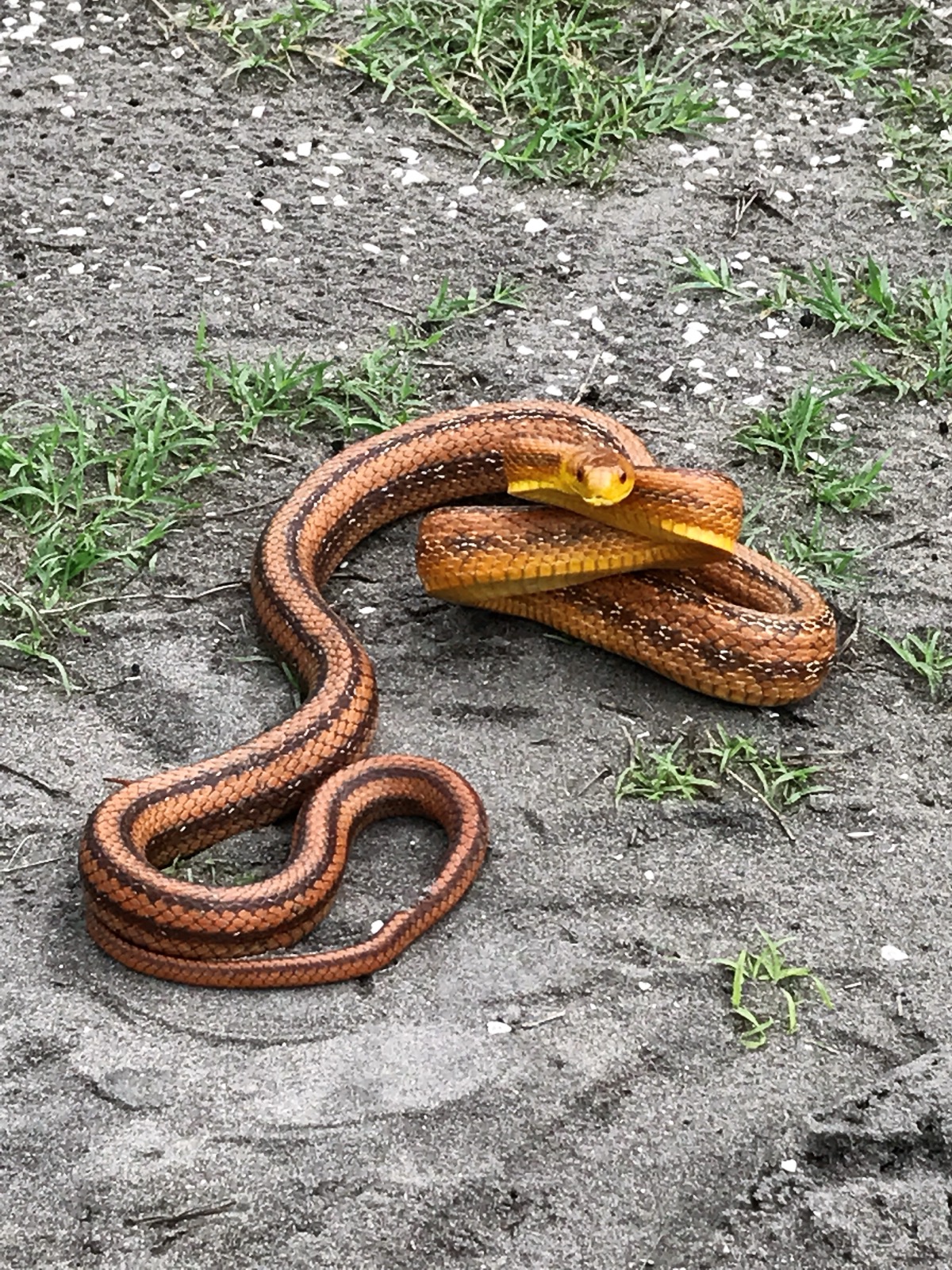
Snake under the porch is a high-intent search because the sighting feels close to the home and hard to monitor. Unlike a snake crossing the yard, a porch or deck creates the impression that the snake has chosen your house as permanent territory. Usually the simpler answer is that the structure provides exactly what snakes like: shade, cover, stable temperature, and prey access.
The first move is space, not confrontation. Keep children and pets away from the porch edge, avoid kneeling down to peer into a tight gap, and do not try to flush the snake out with a broom or hose. Pressure usually drives the snake deeper into concealment and makes identification harder at the same time.
Porches keep working for snakes when there is clutter, crawlspace access, moisture, rodent activity, stacked lumber, dense foundation planting, or open lattice that creates easy shelter. One sighting often means the space is useful habitat, not that the snake is trying to enter the living room. Fixing the attractors matters more than winning one dramatic removal moment.
If identification is needed, take one photo from a safe angle that shows as much of the body as possible near the porch edge. Avoid reaching underneath for a close-up. Porch encounters often involve rat snakes, racers, and other common shelter-seeking species, but a hidden snake should never be forced into a guess when visibility is poor.
SnakeSnap can narrow the likely species if you get a clear image, but the action plan stays conservative when the result is uncertain. Let the snake leave if possible, call local wildlife help if the app suggests a venomous species, and then close the habitat loop with gap sealing, clutter removal, and rodent control.