


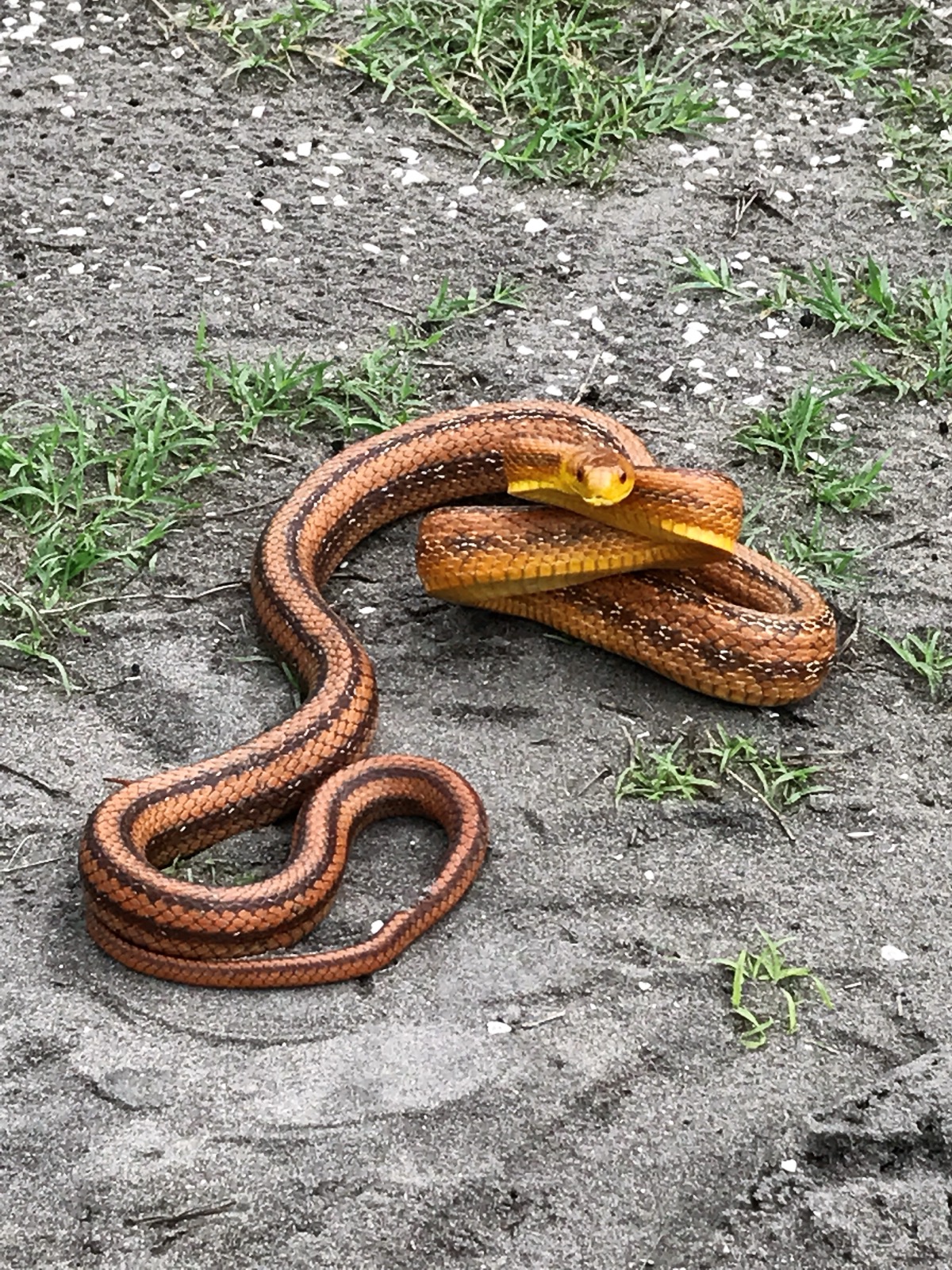
Snake under patio heater what to do is a high-stakes patio search because the animal may be close to a heavy base, wheel kit, propane tank, hose, ignition knob, or stored cover. Stop setup, keep people and pets away, and do not light or move the heater while the snake's position is uncertain.
Do not roll the heater, tilt the base, swap a tank, lift the cover, or reach under the stand to check by hand. Patio heaters create narrow dark gaps near metal, fuel hardware, and furniture legs, which makes it easy to lose track of the head and exit route.
Patio heaters attract snakes indirectly through warmth after use, shade below the base, insects around lights, rodents near food residue, and clutter from covers, cushions, firewood, or outdoor storage. A heater beside shrubs, a fence, deck steps, or a grill station can become a sheltered stopping point.
If the snake remains visible, take one photo from outside striking distance and include the heater base, tank area, nearby furniture, and visible body pattern. Do not move the cover or crouch beside the fuel connection for a clearer image. A context photo is safer and gives SerpentID more useful scene information.
SerpentID can help compare visible markings, but patio-heater encounters should stay conservative because fuel hardware and heavy bases change the risk. If the app suggests a venomous possibility, the snake is under the tank ring, or the heater must be moved soon, contact local wildlife help. Afterward, clean food residue, store covers off the ground, reduce clutter around the heater, and inspect before lighting it.