


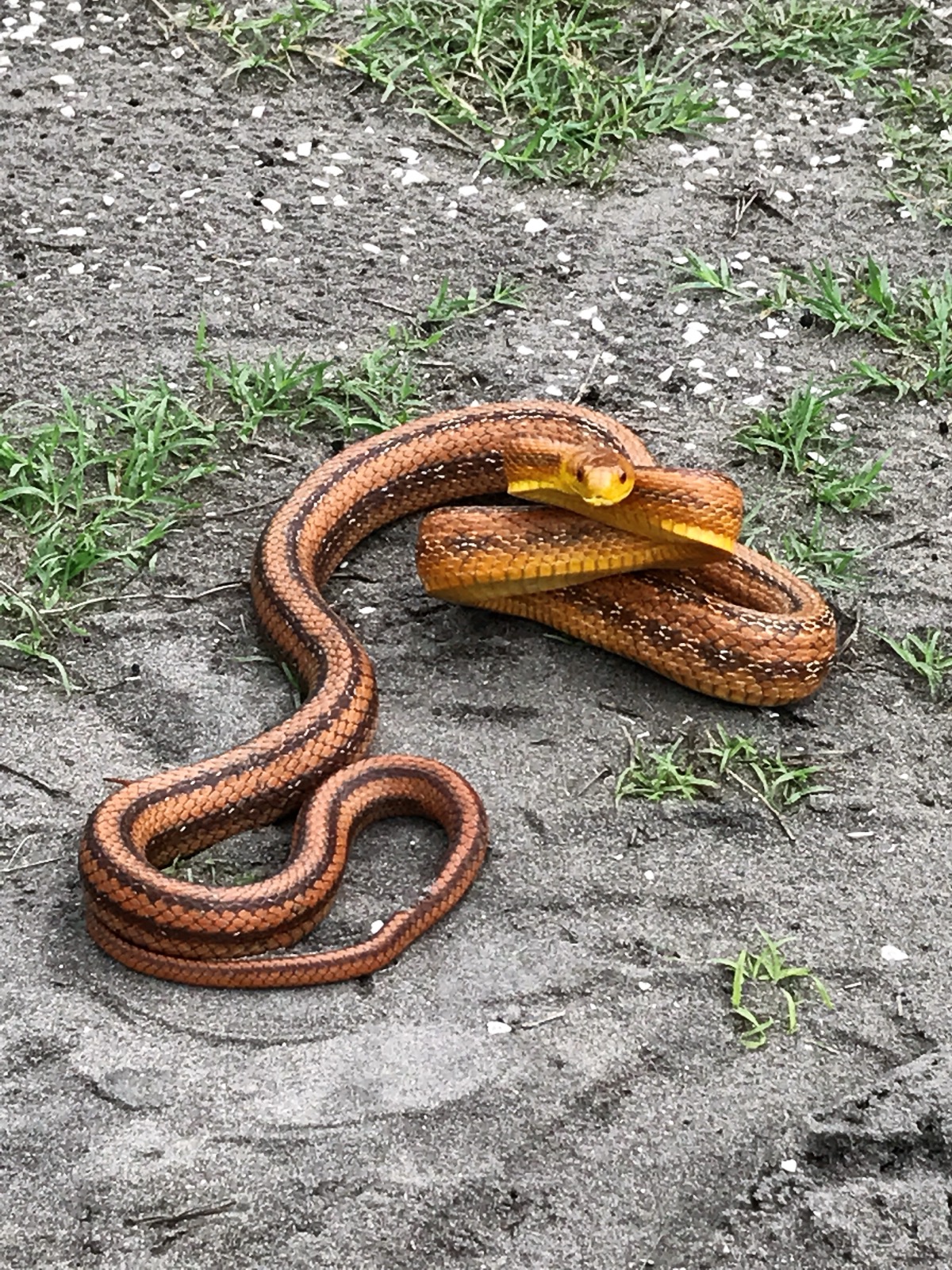
Snake under generator what to do is a high-stress search because the animal may be close to fuel, hot metal, extension cords, garage doors, storm cleanup, or backup power work. Stop using the equipment area, keep people and pets away, and do not put hands near the frame, wheels, handles, or cable exits.
Do not pull the starter cord, tilt the generator, refill fuel, unplug cords from below, or drag the machine while the snake's position is uncertain. A generator can hide the head, tail, and escape route at the same time, and sudden movement can push the snake toward your shoes or into a garage, shed, or porch gap.
Generators attract snakes indirectly through warmth after operation, shade below the frame, vibration-free shelter after shutdown, rodents around stored equipment, insects near lights, and clutter from cords, tarps, fuel cans, or storm debris. A unit stored beside a fence, wall, wood pile, or tall grass can become part of a sheltered travel route.
If the snake remains visible, take one photo from outside striking distance and include the generator, cords, nearby cover, and visible body pattern. Do not crouch beside the exhaust, reach under the axle, or lift a tarp for a clearer image. A wider scene is safer and helps explain why the snake chose the spot.
SerpentID can help compare visible markings from a safe photo, but generator encounters should stay conservative because equipment movement can change the situation quickly. If the app suggests a venomous possibility, the snake is under a running or recently hot unit, or power work cannot wait, contact local wildlife help. Afterward, store cords off the ground, clear debris around equipment, let machines cool in open view, and inspect before startup.