


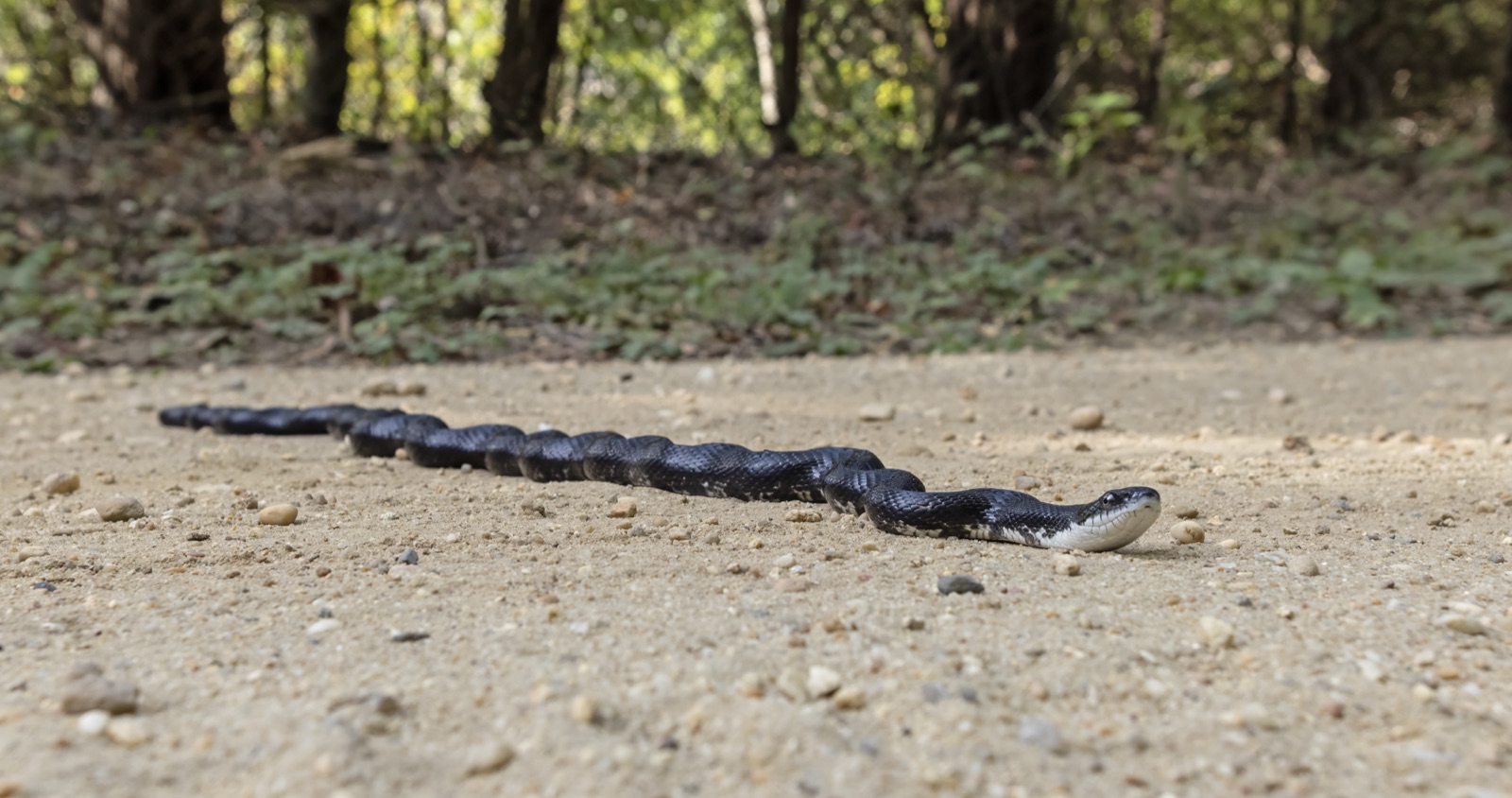
Snake-proof fencing is one of the few snake-control methods with a sound practical basis. Unlike scent sprays, granules, and ultrasonic gadgets, a physical barrier does not depend on a snake being bothered by anything; it simply blocks the route. That said, a snake fence is not a magic boundary around an entire property. It works best for a smaller, clearly defined area that you want to protect, such as a children's play space, a vegetable garden, a dog run, a patio, or the immediate perimeter of a home in high-activity snake country. Wildlife agencies in the United States and snake-safety advice in Australia generally present exclusion fencing as a targeted tool, not a whole-farm solution, and that is the right way to think about it.
The material matters more than anything else. Ordinary chain-link, picket, or wide-gauge wire fencing does almost nothing, because many snakes can pass through surprisingly small openings, and juveniles can slip through gaps that look impossibly narrow. The commonly recommended material is rigid galvanized hardware cloth or welded mesh with openings of about a quarter inch, or roughly 6 mm. Solid sheeting such as smooth metal panels or cement board can also work. Avoid soft plastic garden netting or bird netting as a snake barrier; it does not stop snakes reliably, and it is a well-known entanglement hazard that injures and kills snakes and creates a dangerous situation for whoever finds one caught in it.
Height and the base of the fence are where many homemade barriers fail. Most guidance suggests a fence standing at least 30 to 36 inches, or about 75 to 90 cm, above the ground, with the bottom edge buried roughly four to six inches, or 10 to 15 cm, so snakes cannot push underneath or use rodent burrows to slip through. Many designs also angle the fence outward, away from the protected area, at about 30 degrees, which makes it much harder for a snake to raise its body high enough to get over the top. The mesh should sit flush against posts placed on the inside of the fence, because posts on the outside give climbing snakes a convenient ladder.
A fence is only as good as its weakest point, and gates are usually that point. Gaps beneath or beside a gate, a sagging hinge side, or a latch that does not close fully can let a snake straight in. Gates should close tightly against a threshold or a strip of mesh, and they need to be kept shut. Just as important is what surrounds the fence. Overhanging branches, shrubs pressed against the mesh, stacked firewood, tall grass, bins, ladders, and outdoor furniture placed beside the barrier can all act as bridges. Strong climbers such as rat snakes in North America, tree snakes and pythons in Australia, and rat snakes and some cats-eyed snakes in India are capable of using these routes, so keeping a clear strip of short grass or gravel along both sides of the fence is part of the design, not an optional extra.
It also helps to be realistic about limits. A snake fence does not remove the reasons snakes visit, such as rodents, shelter, water, and warm hiding places, so pairing it with habitat changes like controlling rodents, removing debris piles, and keeping feed and pet food sealed gives far better results than the fence alone. Before closing up a newly fenced area, check that no snake is already inside under decking, in a shed, or in garden beds, because a barrier that traps a snake in a play yard is worse than no barrier at all. Inspect the fence after storms, heavy rain, digging by pets, and garden work, since erosion and small tears are common ways a once-solid fence quietly stops working. In parts of India, where compound walls are common, the same principle applies: drain openings, gaps under gates, and cracks at the base of the wall usually matter more than the wall's height.
Finally, remember that no fence makes it safe to drop your guard entirely. Keep doing the simple habits that prevent most bites: look before reaching into hidden spaces, use a light at night, wear closed footwear outdoors, and teach children to back away and tell an adult if they see a snake. If a snake does appear inside or near your fenced area, do not try to handle, corner, or kill it. Step back, keep children and pets away, and take a photo from a safe distance so SerpentID can compare its markings against the species most likely in your region. If the app suggests it may be venomous, or you are unsure, contact your local wildlife service or a licensed snake catcher to remove it, and if anyone is bitten, seek professional medical help immediately.