


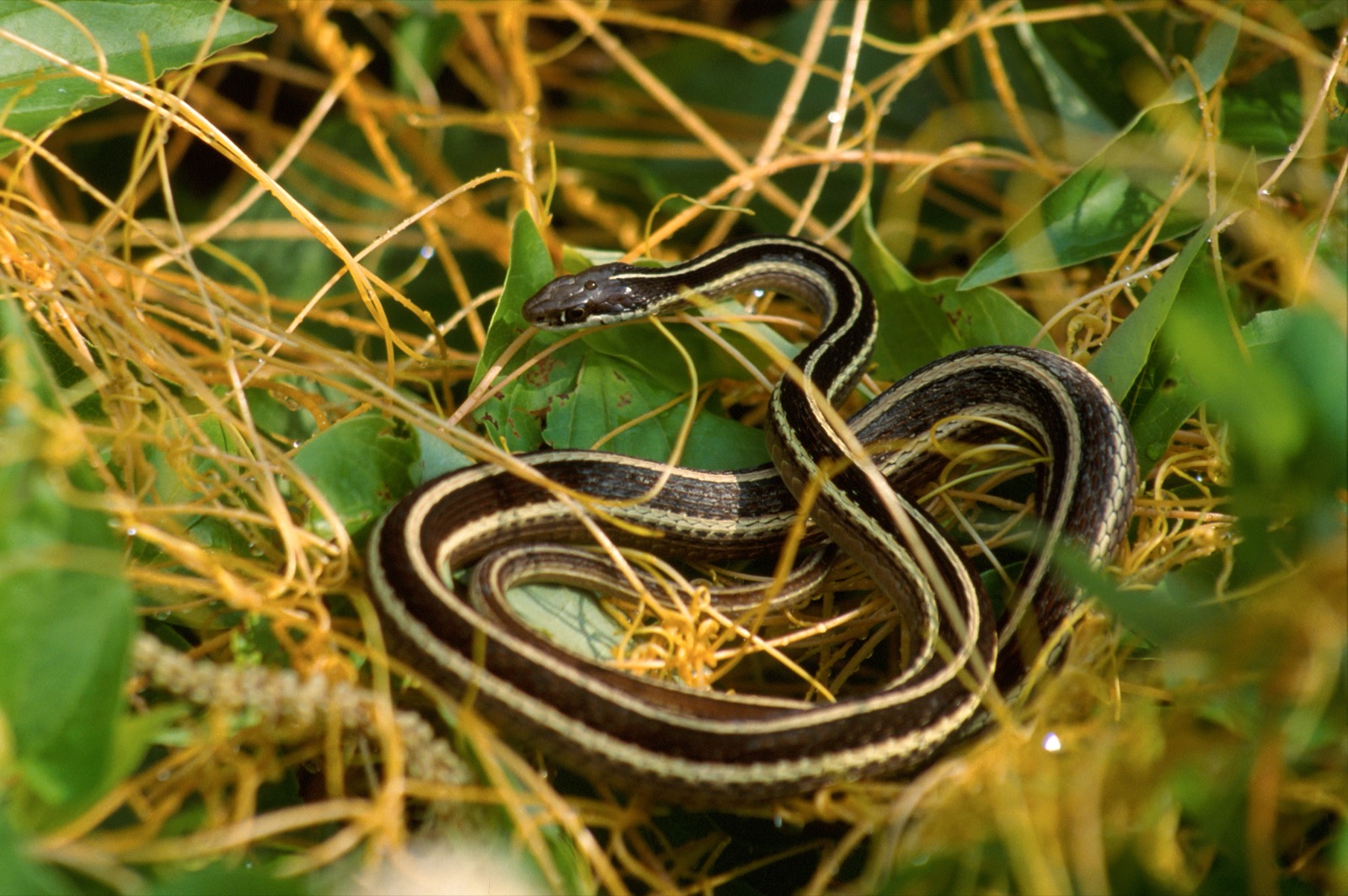
Snake on playground what to do is a search where the first action matters more than the exact species. Children may run, point, crowd the animal, or reach into mulch before adults understand where the snake is moving. The safer response is to create a simple perimeter and slow the scene down.
Do not let children resume play while the snake is under a slide, inside border mulch, near a climbing wall, or beside equipment posts. Move the group to a clear distance, keep curious hands back, and watch the snake's direction of travel. The goal is not to chase it away; the goal is to avoid losing track of it in a child-level hiding place.
Playgrounds can attract snakes through edge habitat rather than play equipment itself. Mulch, retaining timbers, irrigation, nearby shrubs, trash, insects, frogs, and rodents can all make the area useful cover. A snake may be moving between landscape edges and only briefly cross the play surface.
If a safe photo is possible from outside the play area, take one without sending anyone closer. Do not lift mulch, shake plastic panels, or probe gaps under slides to confirm the species. Those actions place hands in exactly the spots a hidden snake may use to retreat.
SerpentID can help compare likely species from the photo, but the practical decision is still about reopening the area safely. If the app suggests a venomous possibility, confidence is low, or the snake disappears into equipment, keep the playground closed and contact park staff, property management, or local wildlife help. Before play resumes, check mulch edges, under steps, and shaded equipment bases from a safe distance.