


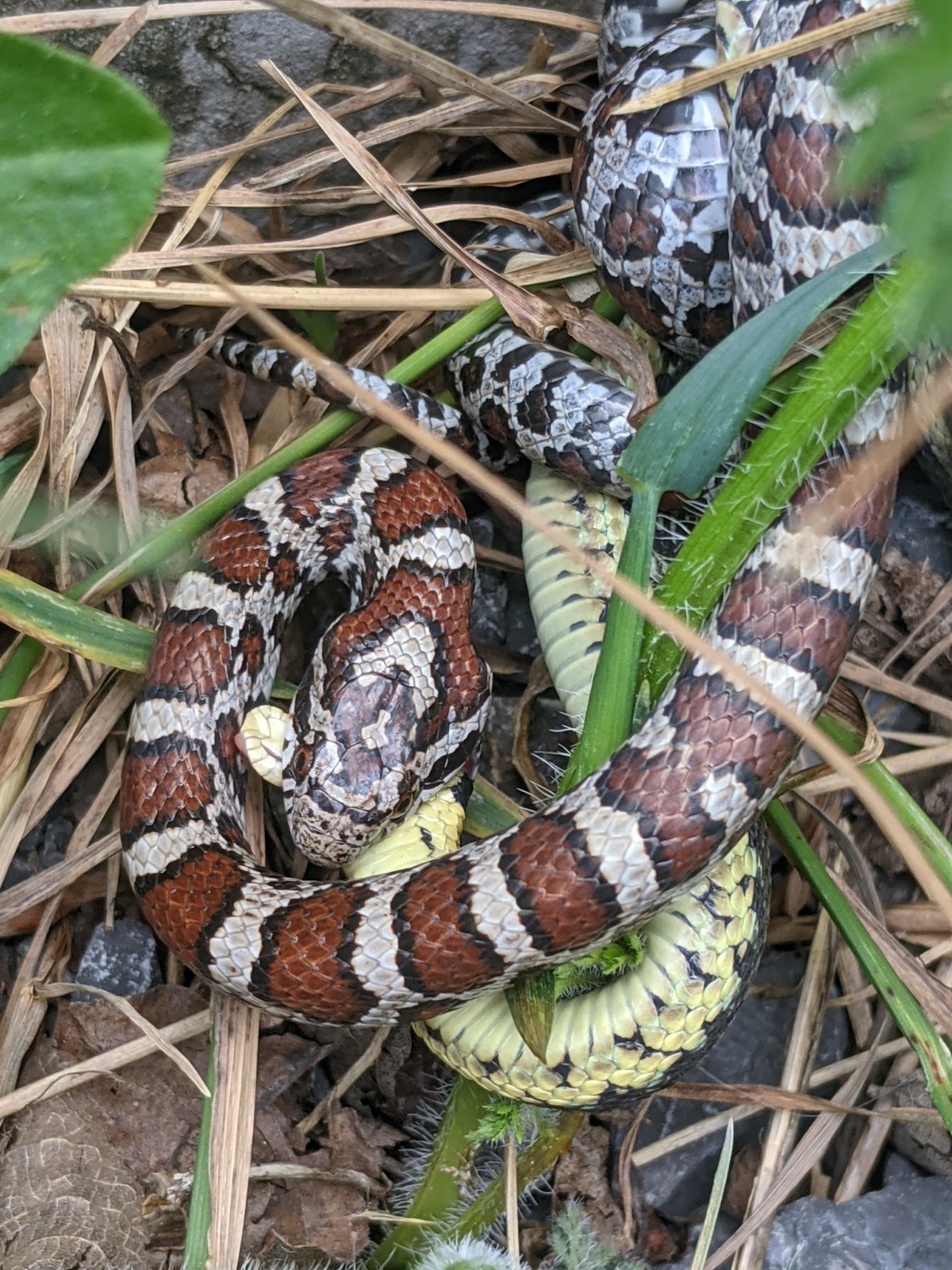
Snake near stone wall what to do is a common yard and trail question because rock edges are natural cover. The risky move is treating the wall like ordinary landscaping and pulling weeds, lifting loose stones, or reaching into gaps while the snake's position is uncertain.
Do not put fingers into wall cracks, move capstones, or yank vines from the base to flush the animal out. Step back, keep pets away, and watch where the snake is traveling. Note whether it is sunning on top, slipping into a crevice, moving along leaf litter, or using the shaded base as a route.
Stone walls attract snakes through heat and structure. Rocks warm quickly, cracks offer tight retreats, and the same edges often support insects, lizards, mice, and frogs. A snake seen at one point in the wall may have several hidden exits nearby, so close hand work should stop until the area is clear.
If the snake remains visible, take one photo from outside striking distance and avoid blocking its route. Do not try to lift rocks to expose the head or tail. Partial views are frustrating, but forcing the scene usually makes identification worse and puts your hands where the snake is most likely to retreat.
SerpentID can help compare body pattern, color bands, and build from a safe image, but rock shadows can reduce confidence. Treat low confidence as unresolved. If the app suggests a venomous possibility or the snake disappears into a wall you need to repair, contact local wildlife help first. Long term, keep dense vegetation trimmed from wall bases and avoid bare-hand work in hidden cracks.