


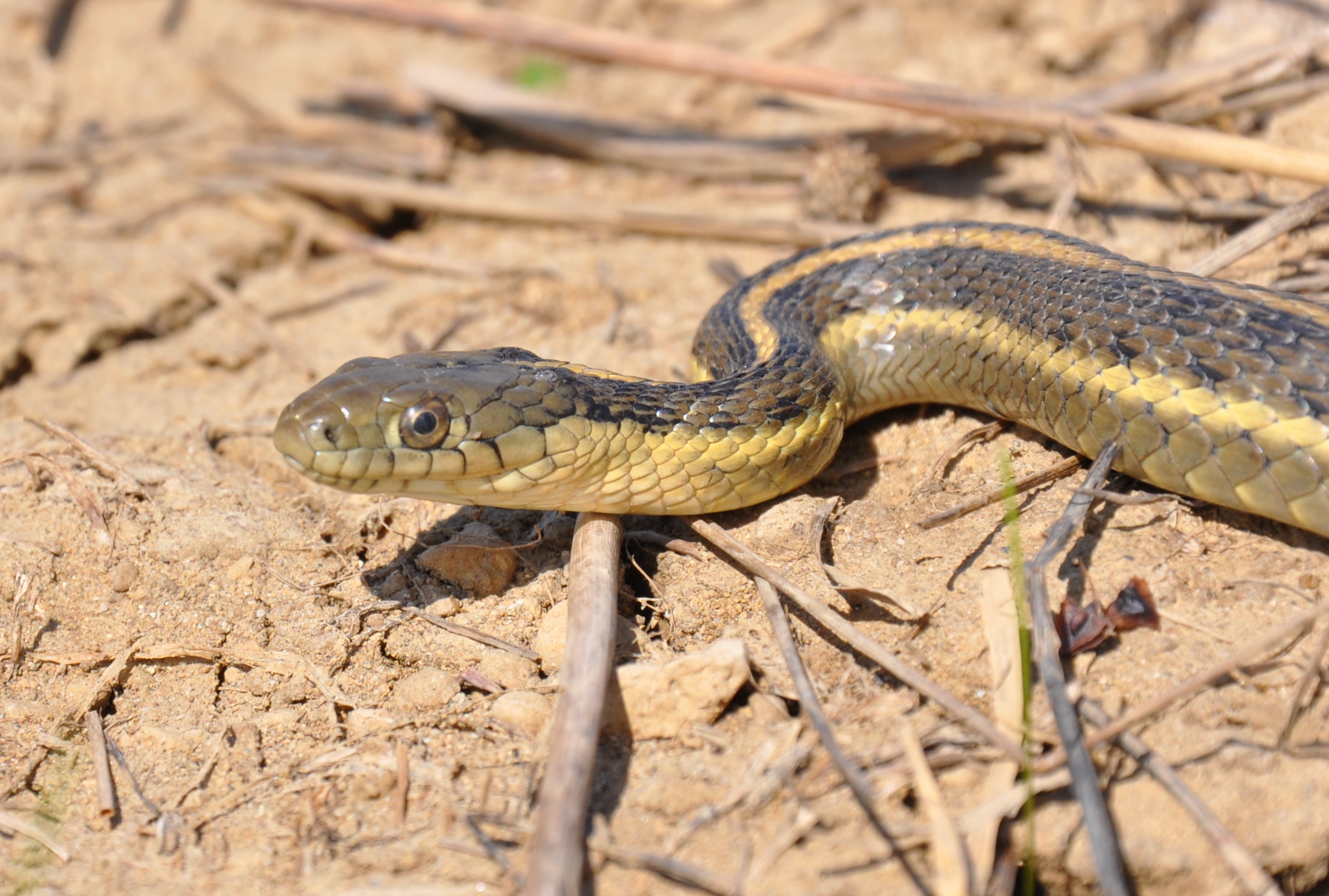
Snake near bird feeder what to do is a backyard search that usually has more to do with the food chain than the feeder pole itself. Spilled seed attracts insects and rodents, shrubs provide cover, and watering or shade can make the feeder zone a useful hunting route for snakes passing through the yard.
Do not walk straight to the pole, reach into mulch, or let a dog investigate the ground below the feeder. Step back, keep pets inside or leashed, and watch whether the snake is under seed debris, near a shrub base, wrapped around a low support, or moving toward a fence line or garden bed.
Bird feeders can create a small habitat hotspot when seed accumulates on the ground. The snake may not be interested in birds at all; it may be following mice, frogs, lizards, or insects that use the same sheltered patch. That is why cleanup should wait until the animal is accounted for.
If the snake remains visible, take one photo from outside striking distance and include the feeder base, ground cover, and nearby escape routes. Do not shake the pole, spray water, or drag seed trays to flush the snake out. Forcing movement often sends the animal into denser cover and makes identification less reliable.
SerpentID can help compare visible stripes, blotches, and body build from a safe photo, but uncertain results should still pause feeder maintenance. If the app suggests a venomous possibility or the snake disappears under the feeder setup, contact local wildlife help before reaching down. Long term, use catch trays, clean spilled seed, trim dense cover, and place feeders where the ground can be inspected easily.