


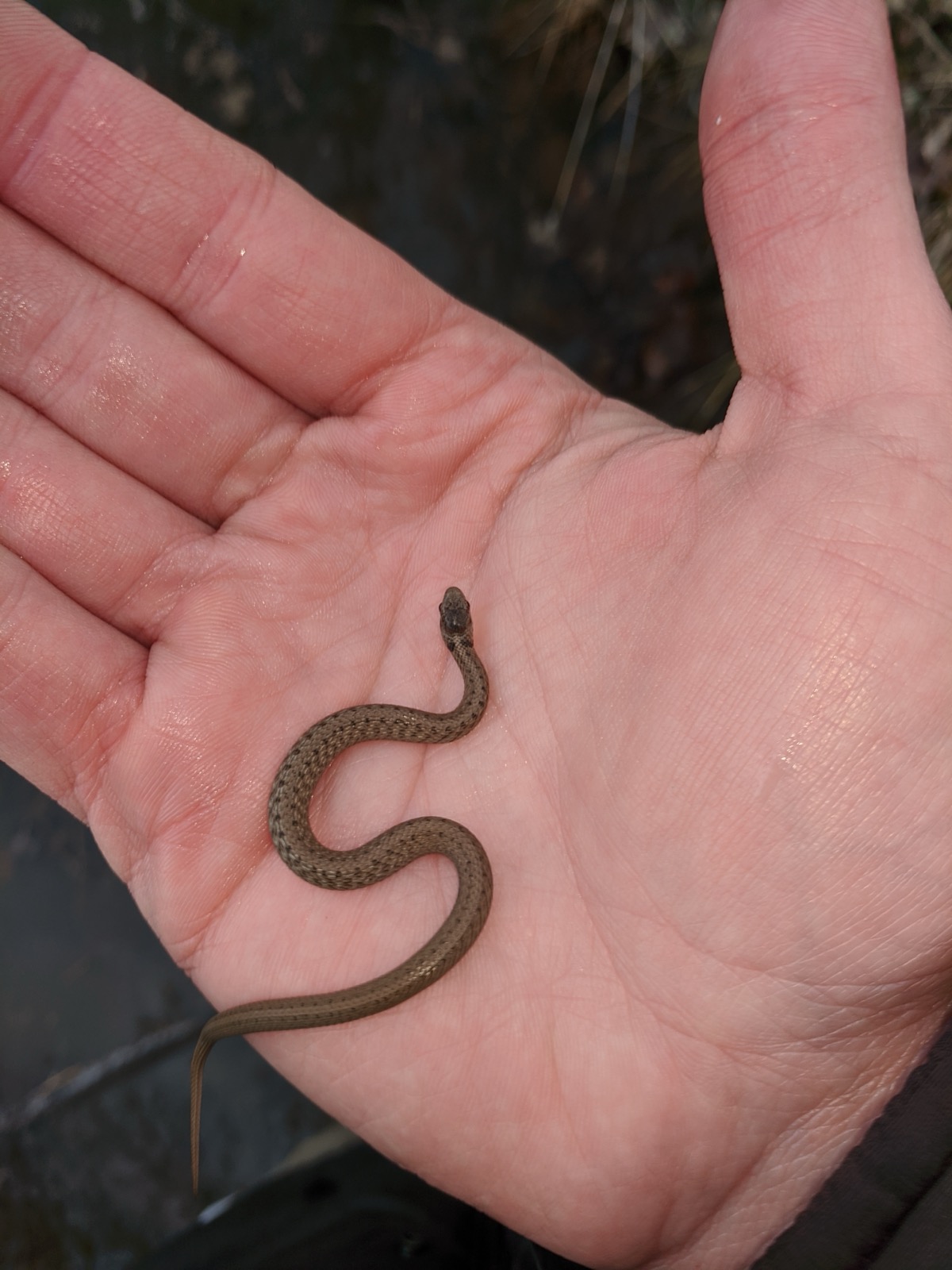
Snake in water meter box what to do is a careful curbside search because the animal may be coiled around the brass pipe, hooked under the cast-iron lid, wedged into the gravel base, or stretched along the inside wall exactly where fingers grab to lift the cover at the next reading or shutoff. Pause the lid pry, keep children and pets off the parkway strip, and do not slide the cover all the way off, reach inside, or turn the shutoff key until the interior is visibly clear from a careful flashlight check at the lid edge.
Do not flip the lid back hard against the curb, jam a screwdriver into the pit to feel around, dump water from a hose into the box to flush the snake out, or stick a hand down to twist the valve blind. A meter pit hides body direction inside the dark cavity where a slim brown snake's color blends with damp earth, brass, and shadow, and a quick reach can put fingers directly on a coiled body draped across the dial.
Water meter boxes attract snakes indirectly through retained moisture inside the pit, insects and slugs along the damp walls, small lizards and frogs that drop through the lid gap, mice nesting in the gravel base, and protected gaps along the lid lip and pipe penetrations. Boxes set in low spots, boxes with broken or cracked lids, boxes flush with overgrown grass, and boxes next to mulch beds or downspouts sit on a quiet route between yard cover and underground shelter.
If the snake remains visible, take one photo from outside striking distance and include the open lid, the visible pipe, the box wall, and the body pattern. Do not crouch over the open pit for a top-down shot or kneel on the curb to reach in for a clearer angle. A wider scene gives SerpentID enough markings to compare while keeping your face well above the lid line and your hands on the pry tool instead of the rim.
SerpentID can help compare visible markings, but meter-pit encounters should stay conservative because the next normal action is reaching head-down into a dark cavity at curb height to turn a brass key. If the app suggests a venomous possibility, the snake slips behind the pipe, or you cannot see the head and tail at the same time, contact local wildlife help or your water utility and close the lid. Afterward, replace cracked or warped lids promptly, keep grass and mulch trimmed back around the pit, fill obvious gaps along pipe penetrations with foam or mesh, and inspect the box with a flashlight from a step back before each reading.