

Snake in vegetable garden row what to do is a common gardening search because the animal may be coiled under a tomato cage, between squash leaves, beside a drip line, or along the mulch edge exactly where hands and knees land on the next harvest pass. Stop the work, keep children and pets back from the row, and do not reach into the foliage or kneel down until the row is visibly clear from a step back.
Do not yank a tomato cage, kick the mulch to scare the snake out, swing a hoe blindly into the leaves, or set a harvest basket down in the row while you check. Dense vegetable foliage hides body direction at the same time, and a sudden movement can send the snake toward bare arms, sandals, or a second gardener working the next row.
Vegetable garden rows attract snakes indirectly through shade under leaves, retained warmth from mulch and irrigation lines, rodents drawn to fallen fruit, frogs and toads in damp beds, and protected gaps along edging boards and drip tape. Rows near compost bins, sheds, fences, or stacked seed trays often sit on a quiet wildlife travel route between cover and water.
If the snake remains visible, take one photo from outside striking distance and include the row, nearby cages, mulch edge, and visible body pattern. Do not push leaves aside or lift a cage for a clearer view. A wider scene gives SerpentID enough markings to compare while keeping hands well above the foliage and feet on the path between rows.
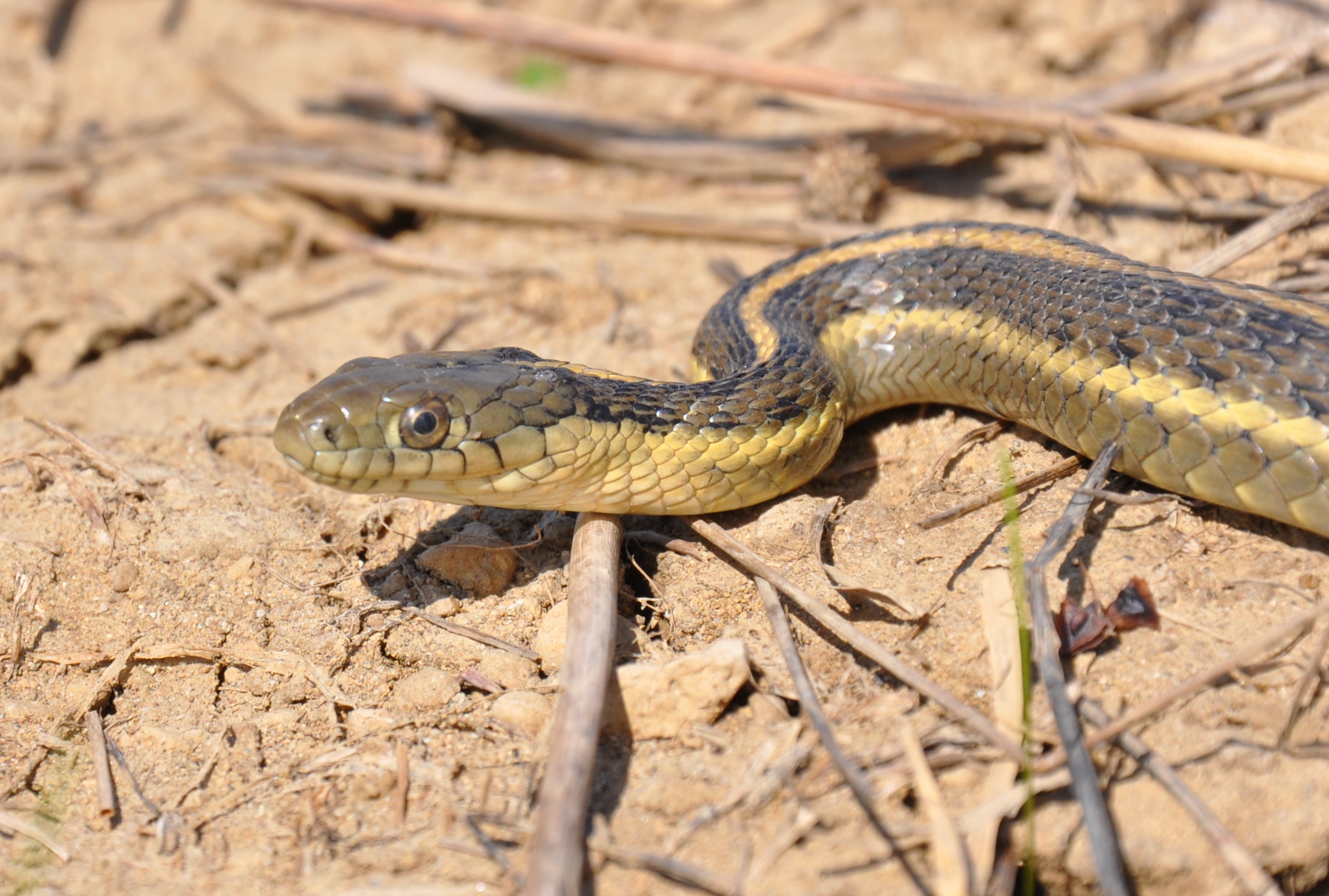
SerpentID can help compare visible markings, but garden-row encounters should stay conservative because most beneficial snakes like garter or ribbon snakes look nothing like a venomous species until you slow down to compare. If the app suggests a venomous possibility, the snake slips under a mulch layer, or kids are waiting to harvest, contact local wildlife help and step back from the bed. Afterward, keep mulch pulled back from row edges, clear fallen fruit promptly, walk rows in long pants and closed shoes, and inspect cages and drip lines with a tool before kneeling in.