


Snake in toilet what to do is a search that almost always happens with the lid open and a phone in one hand. Most cases are non-venomous species that climbed up through plumbing vents, entered via a damaged sewer line, or slipped in from an adjacent crawl space when the bathroom was the closest dark, humid pocket. Rare cases involve venomous species in regions where they live near homes. Either way, the right first move is the same: stop, do not flush, and do not reach in.
Close the lid carefully if you can do so without forcing the snake's body. Place something heavy on top of the lid — a stack of books, a small toolbox, a full laundry basket — so it cannot push the lid up. Close the bathroom door, place a rolled towel along the bottom gap, and step out of the room. The goal is to contain the snake in the smallest possible space while you call for help, not to remove it on impulse.
Do not flush the toilet repeatedly to try to push the snake back down. Flushing can stress the snake, fail to dislodge it, or in some cases cause it to retreat into a section of plumbing where it gets stuck and dies — leading to a much bigger problem later. Do not pour bleach, ammonia, boiling water, or other chemicals into the bowl. These cause suffering, do not reliably remove the animal, and damage your plumbing.
Do not try to grab the snake with tongs, pliers, or grabber tools unless you are trained in snake handling and confident in the species identification. A snake in a toilet bowl is already stressed, has limited escape routes, and may strike defensively. The bathroom layout — narrow space, hard floor, doorway behind you — makes a poor environment for an improvised capture.
Call a licensed wildlife removal service, animal control, or in some areas the fire department. Tell them you have a confirmed snake inside the toilet bowl, give the species if you took a safe photo, and confirm the bathroom is sealed off. Most professionals can remove the snake within an hour or two and inspect the plumbing route to see whether further entry is likely. Cost is usually modest compared to attempting a DIY removal that fails or causes a bite.
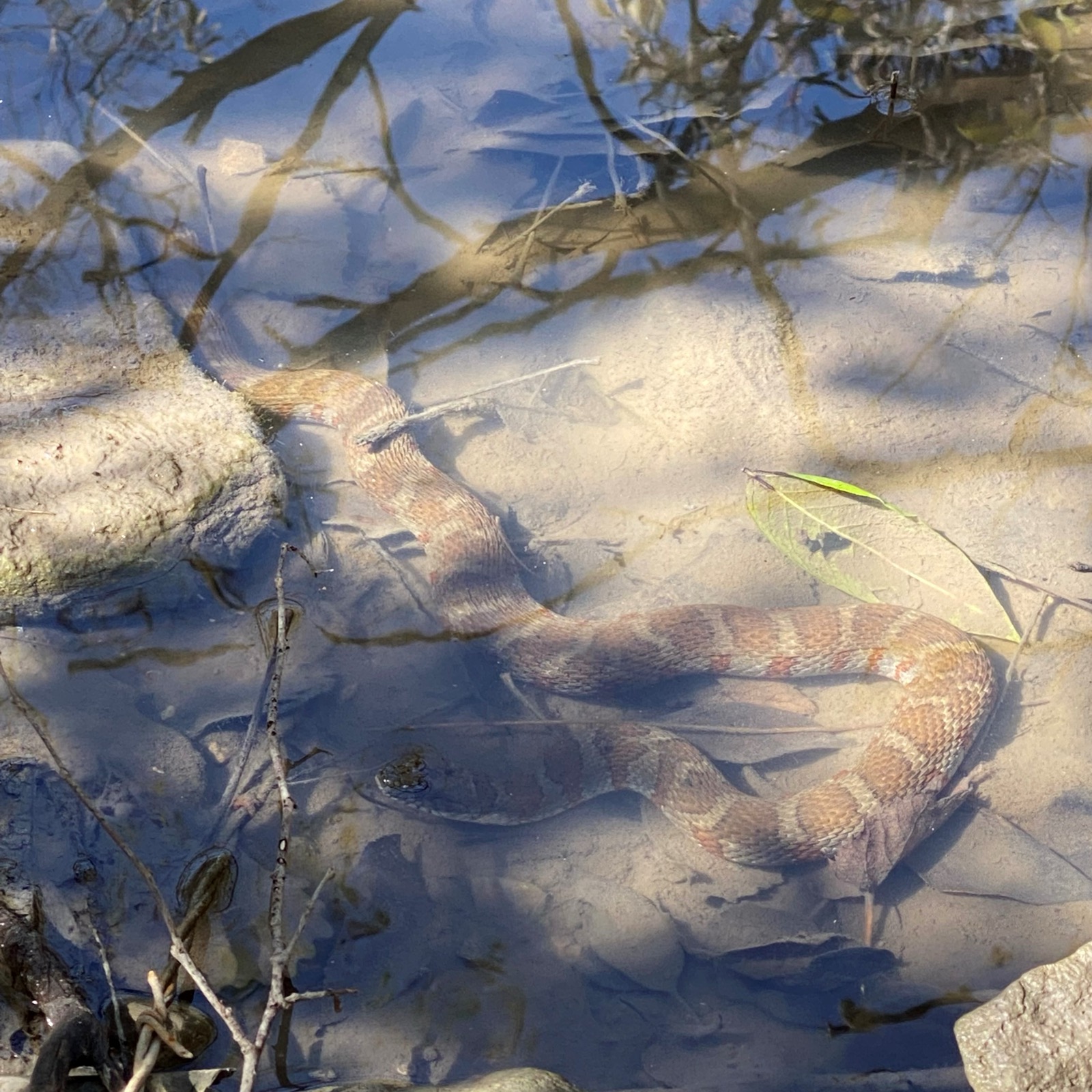
If you can take a safe photo through a glass shower door, mirror, or partially open lid without reaching in, do it once and stop. SerpentID can compare the pattern against common species that exploit damp plumbing paths — water snakes, rat snakes, garter snakes, and in some regions cottonmouths or pit vipers. Knowing whether the visitor is non-venomous or medically significant helps both you and the wildlife technician plan the response. Afterward, ask the technician to check vent stacks, sewer line caps, and crawl-space plumbing penetrations so the route does not stay open.