


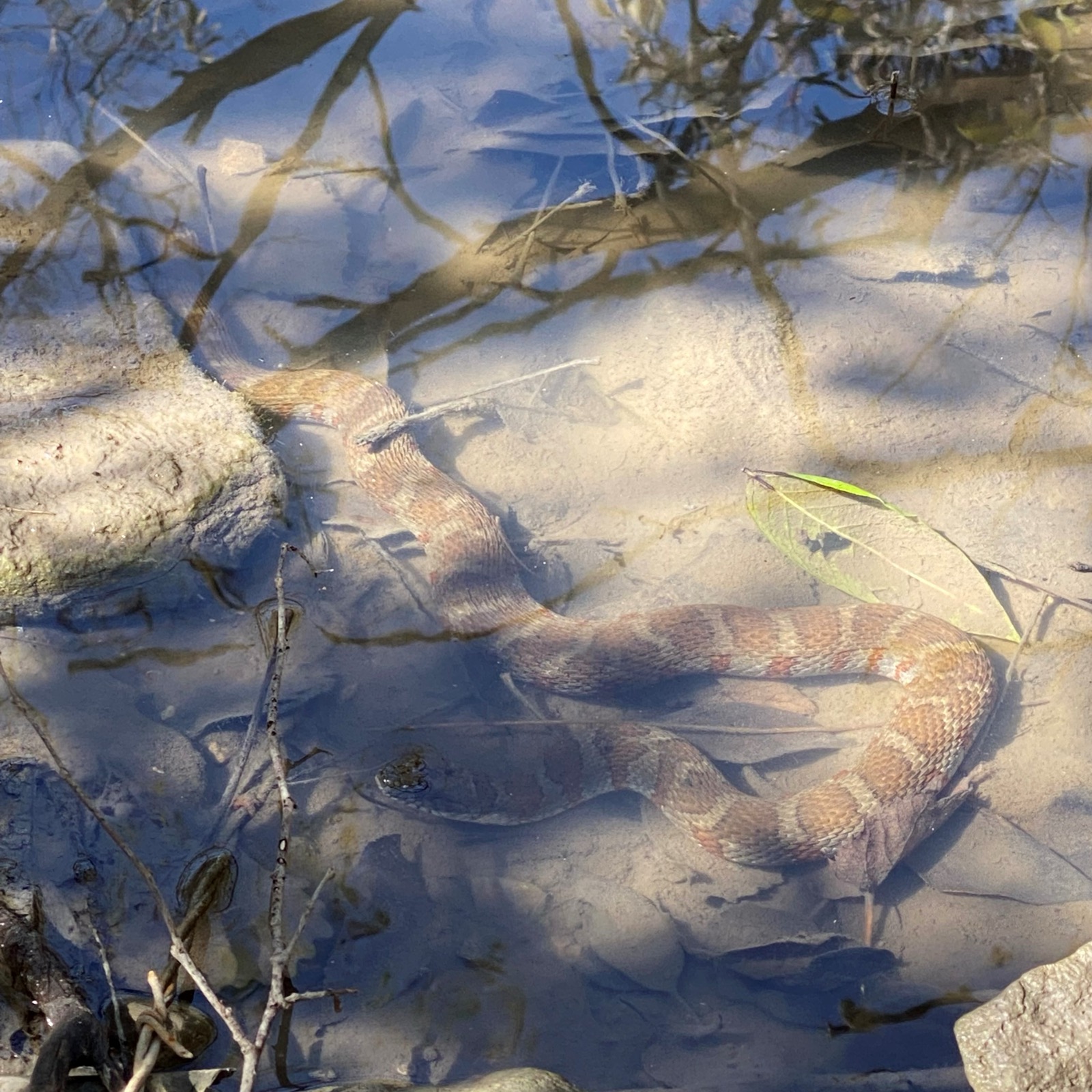
A hot tub looks like an odd place for a snake, but from a snake's point of view it offers several things at once. The insulated cover traps warmth, the surrounding deck or steps create shaded gaps, and the equipment cabinet holds a warm, dark space near the pump and heater. Splashed water and condensation keep the area damp, which draws frogs, insects, and rodents, and those animals in turn draw snakes. Most snakes found at a spa are passing through, sheltering, or hunting, and they have no interest in the people who use it. The real risk comes from surprise: a hand slid under a cover, a foot stepping onto a dark step, or an arm reaching into a cabinet without looking.
The first thing to do is stop and create space. Back away calmly to at least six feet, or roughly two body lengths of the snake if it is large, and bring children and pets inside or well away from the area. Do not try to lift the cover for a better look, poke the snake with a stick, spray it with a hose, or try to scoop it out. These are exactly the actions that turn a calm snake defensive, and most bites in residential settings happen when people try to move, catch, or kill a snake rather than simply leaving it alone. If the snake is out in the open on the deck, it will often leave on its own once the area is quiet.
Where the snake is sitting changes what you should do next. A snake resting on top of the cover or on the steps can usually be watched from a distance until it moves off. A snake that has slipped under the cover or into the gap between the cover and the shell is harder to track, so leave the cover closed and avoid pressing down on it. A snake inside the equipment cabinet is the situation that most needs professional help, because the space is cramped and full of wiring and plumbing. Do not open the cabinet door and reach in, and do not start the pump or jets to flush it out. If you are concerned about electrical equipment, turn off the spa at a breaker panel only if that panel is located well away from the snake.
Occasionally a snake ends up in the water itself, especially if the cover was left off. Hot tub water is usually kept around 37 to 40 degrees Celsius (about 100 to 104 degrees Fahrenheit), which is warmer than most snakes can tolerate for long, and the smooth, high walls can make it difficult for a snake to climb out. Resist the urge to grab it or lift it with improvised tools, since a stressed snake in water can still bite and a close approach puts your hands and face within reach. Keep everyone out of the tub, keep watching from a distance so you know where the snake goes, and contact a local wildlife service or licensed removal operator who can deal with it safely.
The species involved depend heavily on where you live. In the southeastern United States, harmless water snakes and rat snakes are common visitors near backyard water, but copperheads and cottonmouths also turn up around decks and damp yards. In Australia, eastern brown snakes and red-bellied black snakes are frequently reported around houses, outbuildings, and pool areas, and both are dangerously venomous. In India, rat snakes are common near homes, but spectacled cobras and kraits also shelter in warm, sheltered spots around buildings, and kraits in particular are active at night. Because size, color, and head shape are unreliable shortcuts, treat any snake you cannot confidently identify as potentially venomous. If anyone is bitten, seek professional medical help immediately.
Once the snake is gone, a few habitat changes make a return visit less likely. Keep the cover closed and secured when the tub is not in use, seal gaps in the cabinet panels and around plumbing entry points, and clear stacked items, overgrown plants, and debris from beneath and beside the spa and its steps. Reducing standing water and food scraps nearby helps cut down the rodents and frogs that attract snakes in the first place. Make a habit of switching on outdoor lighting and glancing at the steps, cover edges, and surrounding deck before stepping out at night, especially in warm months when snakes are most active after dark.
If you do find a snake at your hot tub, the most useful thing you can do is identify it without getting any closer. Take a clear photo from a safe distance, ideally showing the head, body pattern, and tail, then let SerpentID compare the markings against the species most likely to occur in your area. Knowing whether you are looking at a harmless water snake or rat snake versus a copperhead, brown snake, or cobra helps you decide whether to simply wait for it to leave or to call for help. If the snake is venomous, unidentified, trapped in the water, or tucked inside the equipment cabinet, contact your local wildlife service or a licensed snake removal professional rather than handling it yourself.