


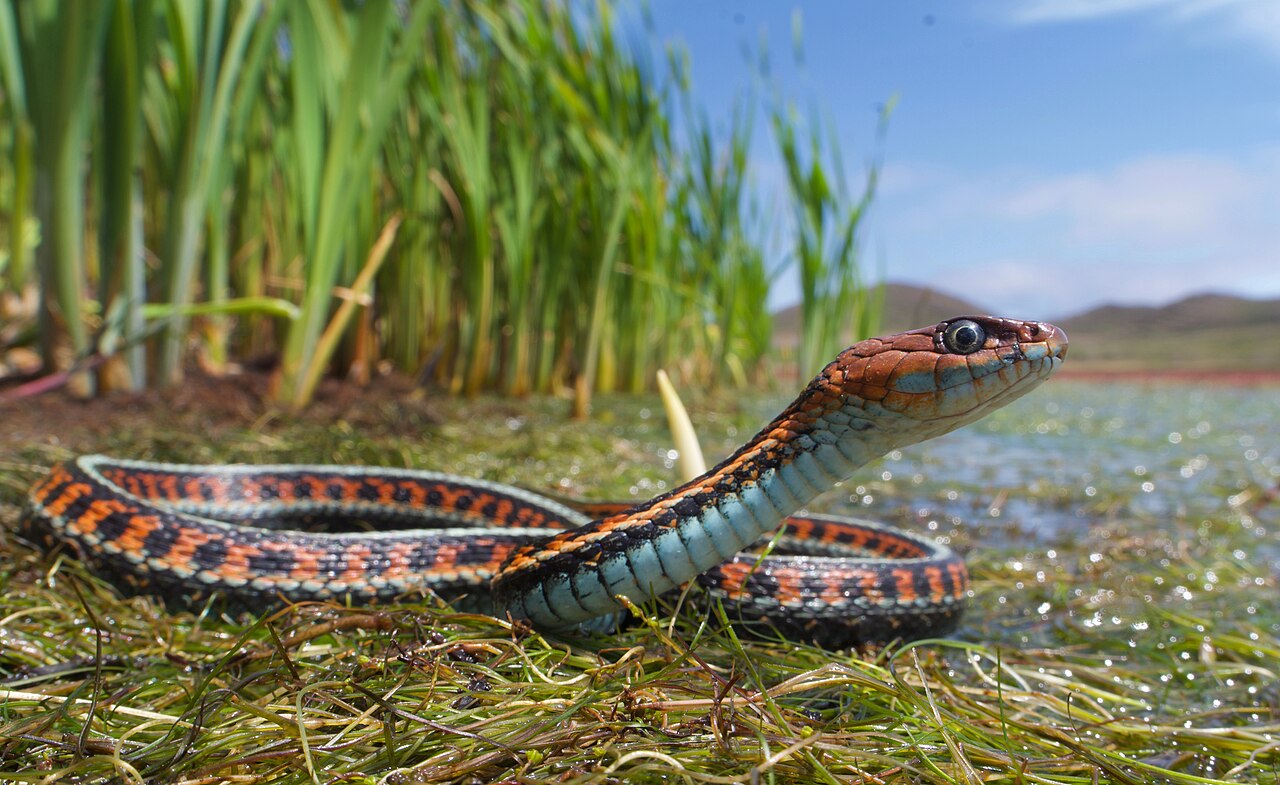
Finding a snake in a greenhouse is surprisingly common. A greenhouse is a near-perfect snake shelter: it holds heat on cool mornings, stays humid, has dripping water and damp soil, and is full of hiding places under benches, between stacked pots, and beneath bags of potting mix. It also tends to attract the animals snakes eat. Slugs, earthworms, and insects thrive among seedlings, frogs and toads come in for the moisture, and mice and rats are drawn to stored seed, bulbs, and fallen fruit. From a snake's point of view, the greenhouse is not an accident but a well-stocked refuge, so the goal is to handle the encounter calmly and then make the space less inviting.
The first thing to do is simply stop. Do not reach for the snake, and do not keep working around it. Back slowly out the way you came, giving the snake at least a full body length of space and preferably much more, because you may only be seeing part of it. Keep children and pets out of the structure. Most bites happen when people try to catch, move, or kill a snake, or when they put a hand somewhere they cannot see, so stepping away is the single most effective safety measure. Snakes do not chase people, and a snake that has room to retreat will almost always use it.
Once you are outside, give the snake a way to leave. Prop the main door open and, if you can do so without walking past the snake, open any low vents or side panels. Then leave the area quiet for a few hours. Many snakes wait until the light shifts, the temperature changes, or the activity stops before moving on, and some will leave overnight. Avoid spraying the snake with a hose, banging on the glass, or poking under benches with a broom handle. These tactics tend to drive a snake deeper into cover, which makes it harder to know where it is and raises the chance of an unexpected close encounter later.
Before you go back in, assume the snake could still be there and change how you work. Do not lift pots, slide trays, or pull bags of compost toward you with bare hands. Use a long-handled tool to tip items away from your body so you can see underneath before your hands get close. Look before you water hanging baskets or reach onto high shelves, since climbing species such as rat snakes in North America, tree snakes in Australia, and rat snakes or cat snakes in India readily use shelving. Sturdy gloves and closed footwear help with general garden safety, but they are not bite-proof, so treat them as a backup rather than permission to reach blindly.
Identification matters, because the right response depends on what is in there. In much of the United States, greenhouse snakes are usually harmless garter snakes, brown snakes, or rat snakes hunting slugs and rodents, though copperheads and other pit vipers do turn up in some regions. In Australia, a greenhouse can shelter anything from a harmless green tree snake or keelback to a highly venomous eastern brown snake or red-bellied black snake. In India, rat snakes and wolf snakes are frequent visitors, but cobras and kraits also enter garden buildings, and the common krait is notorious for hiding in cluttered, sheltered spots and moving at night. Because harmless and dangerous species can look alike at a glance, never assume, and never try to confirm by getting closer. If anyone is bitten, by any snake, seek professional medical help immediately.
Prevention is mostly about removing what the snake came for. Store seed, grain, and bird food in sealed metal or heavy plastic bins so rodents are not drawn in. Clear the clutter under benches, keep spare pots stacked neatly off the ground, and avoid leaving piles of empty compost bags or folded shade cloth in corners. Fit a door sweep or threshold strip to close the gap at the bottom of the door, and cover low vents and gaps around the base with fine wire mesh while keeping airflow for your plants. Fix leaking irrigation lines that create permanently wet patches, and keep grass and weeds trimmed around the outside walls so snakes have less cover on the approach. Scent repellents, mothballs, and similar products are not reliable and some are hazardous around food plants, so habitat changes are the better investment.
If you spot a snake in your greenhouse, the safest next step is a photograph taken from a comfortable distance, through the glass or from the doorway if possible, rather than any attempt to get a closer look. SerpentID can compare the markings, body shape, and head features in your photo against the species most likely in your area, which helps you decide whether this is a slug-eating garden visitor that will leave on its own or a snake that needs professional attention. If the result suggests a venomous species, or if the snake stays put near a door or work area, contact your local wildlife services or a licensed snake catcher and keep everyone out of the greenhouse until it has been safely dealt with.