


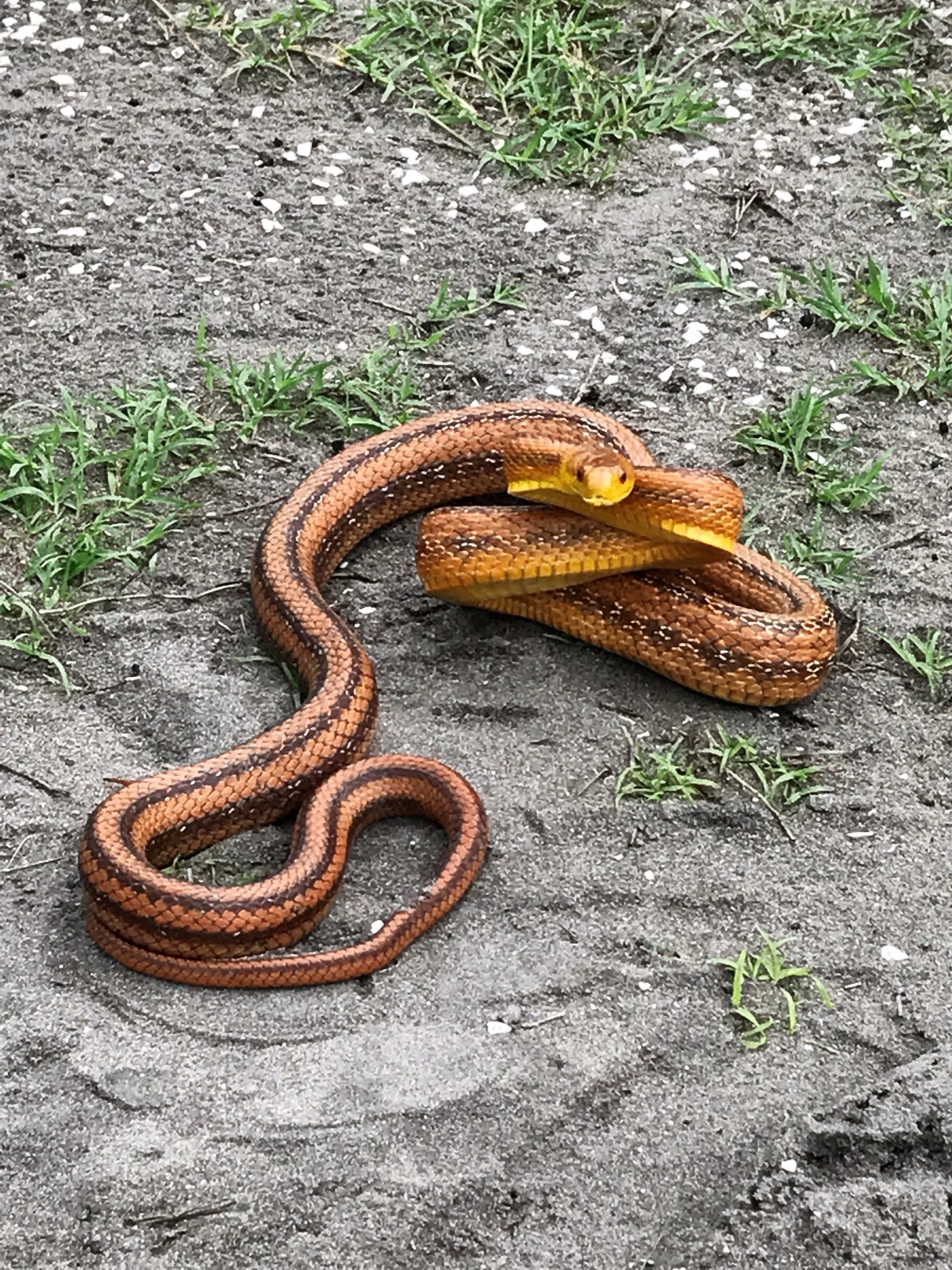
Discovering a snake near an attic fan, gable vent, or ridge line can be startling, but it is actually a well-documented phenomenon. Excellent climbers like rat snakes, racers, and bullsnakes routinely scale brick walls, textured siding, downspouts, and overhanging tree branches to explore high structures. Attic vents and motorized fans provide an irresistible combination of warmth, sheltered cover, and the scent of prey. Birds often nest in gables, and rodents frequently use roof lines to enter homes, drawing hungry snakes straight to the top of your house.
When a snake is positioned right inside an attic fan housing or tucked beneath a ridge vent cap, safety must be your top priority. Motorized fans can turn on automatically via thermostat, which poses a severe hazard to both you and the animal if you attempt to reach into the assembly. Never insert hands, sticks, or tools into a fan compartment while power is connected. Furthermore, trying to pry open roof vents while standing on a ladder creates an extreme fall risk if the snake suddenly moves or drops toward you.
Most snakes found at roof level in North America are non-venomous rodent predators, but you should never rely on height alone to rule out a dangerous species. Certain pit vipers, including copperheads and timber rattlesnakes, are capable of low-level climbing on rough bark or stacked materials, even if they rarely ascend all the way to a roof. Before taking action, observe the snake from a secure position on the ground or through an upper-floor window to evaluate its patterns, body shape, and exact location without disturbing it.
In many cases, a snake perched near an exterior roof vent will move on by itself once it finishes exploring or realizes the area lacks accessible food. If the snake is trapped inside the attic space behind the fan mesh or vent cover, cut power to the fan unit at the breaker box to prevent mechanical injury. Avoid using chemical sprays, mothballs, or sticky traps near vents, as these are ineffective at driving snakes away and often introduce harmful fumes or glue messes into your household ventilation system.
Long-term prevention requires addressing the pathways that allowed the snake to reach your roof in the first place. Trim back tree branches and heavy ivy that touch or overhang your roofline, as these act as direct highways for climbing wildlife. Inspect exterior vent covers, wire mesh screens, and soffit gaps around the fan to ensure they are securely fastened and free of tears. Securing these entry points not only keeps snakes outside, but also keeps out the mice, squirrels, and birds that attract them.
If you need to confirm what kind of snake is resting near your attic fan before taking action, take a clear photo from a safe vantage point. You can upload the image to SerpentID, where smart pattern recognition compares your photo against local species to give you a fast, accurate identification. If the app indicates a venomous snake or if the animal is stuck deep inside your home's mechanical systems, contact local humane wildlife removal professionals to handle the situation safely.